
Executive Development Programme in Implementing Safety Procedures and Protocols
Unlock career potential with comprehensive implementing safety procedures and protocols training. Prepare for advancement and new challenges.
Executive Development Programme in Implementing Safety Procedures and Protocols
Programme Overview
The Executive Development Programme in Implementing Safety Procedures and Protocols is designed for mid-to-senior-level executives and managers who are responsible for ensuring workplace safety and compliance. This program equips participants with the strategic and tactical knowledge necessary to implement, manage, and enforce safety protocols effectively. It is tailored to leaders in various industries, including manufacturing, healthcare, construction, and hospitality, where safety is paramount.
Participants will develop critical skills in risk assessment, hazard identification, and mitigation strategies. They will learn how to create and maintain a safety culture, manage emergency response plans, and integrate safety into the corporate governance framework. Key knowledge areas include compliance with local, national, and international safety standards, incident management, and the use of technology and data analytics to enhance safety practices.
This program significantly impacts participants' careers by enhancing their leadership capabilities and equipping them with the tools to create safer work environments. Graduates are better positioned to drive organizational change, improve safety performance metrics, and contribute to a company's overall success while adhering to regulatory requirements. The program also fosters personal growth, enabling leaders to become more effective communicators and collaborators in health and safety initiatives.
What You'll Learn
The Executive Development Programme in Implementing Safety Procedures and Protocols is designed to equip high-potential leaders with the comprehensive knowledge and skills necessary to enhance workplace safety and compliance. This program is invaluable for professionals looking to advance their careers in industries where safety is paramount, such as manufacturing, healthcare, and construction.
Key topics include risk assessment, emergency response planning, regulatory compliance, and advanced safety technologies. Participants will learn to develop and implement effective safety protocols, manage safety-related incidents, and foster a culture of safety within their organizations. The program combines theoretical knowledge with practical, hands-on experience, ensuring that graduates are well-prepared to apply their skills in real-world scenarios.
Upon completion, participants will be able to lead safety initiatives, conduct thorough safety audits, and ensure regulatory compliance. They will also possess the ability to train and mentor employees, enhancing overall safety awareness and practices. Graduates can pursue careers as safety managers, risk management consultants, or health and safety officers, with opportunities to advance to executive leadership roles within safety or compliance departments.
By investing in this program, executives and professionals will not only improve workplace safety but also contribute to the organizational success and reputation.
Programme Highlights
Industry-Aligned Curriculum
Developed with industry leaders for job-ready skills valued by employers worldwide.
Globally Recognised Certificate
Recognised by employers across 180+ countries as a mark of professional excellence.
Flexible Online Learning
Study at your own pace with lifetime access to all course materials and updates.
Instant Access
Start learning immediately — no application process or waiting period required.
Constantly Updated Content
Stay ahead with the latest industry trends, best practices, and emerging insights.
Career Advancement
87% of graduates report measurable career progression within 6 months of completion.
Topics Covered
- 1. Introduction to Safety Procedures and Protocols: Learners will explore the importance of safety in organizational operations and the foundational principles of safety management. They will gain an understanding of the key components of safety protocols and how to develop a safety culture within their organization.
- 2. Risk Assessment and Management: This module covers the methodologies for identifying, assessing, and mitigating risks. Learners will study various risk assessment tools and techniques and practice applying them to real-world scenarios.
- 3. Emergency Response Planning: Learners will learn how to develop comprehensive emergency response plans, including evacuation procedures, first aid, and incident management. They will practice creating and reviewing emergency plans.
- 4. Hazard Identification and Control: This module focuses on identifying potential hazards in the workplace and implementing effective control measures to prevent accidents and injuries. Learners will apply hazard identification tools and learn to develop control strategies.
- 5. Compliance and Regulatory Requirements: Learners will study the legal and regulatory requirements for safety in various industries. They will learn how to ensure compliance with relevant laws and regulations and understand the implications of non-compliance.
- 6. Safety Training and Education: This module covers the design and delivery of safety training programs. Learners will practice creating training materials and delivering safety training sessions to different audience groups.
- 7. Leadership in Safety: Learners will explore the role of leadership in promoting a culture of safety. They will develop skills in leading safety initiatives, fostering a safety-oriented work environment, and managing safety performance.
- 8. Advanced Safety Technology and Tools: This module introduces advanced safety technologies and tools, such as safety management systems, risk management software, and safety analytics. Learners will learn how to integrate these tools into their organizations and evaluate their effectiveness.
- 9. Incident Investigation and Analysis: Learners will study the principles and practices of incident investigation and analysis. They will practice conducting incident investigations and using the findings to improve safety processes and prevent future incidents.
- 10. Continuous Improvement in Safety: This module focuses on continuous improvement strategies in safety management. Learners will learn how to set safety goals, track progress, and implement corrective actions to enhance safety performance over time.
What You Get When You Enroll
Secure checkout • Instant access • Certificate included
Key Facts
Audience: Mid-level managers, safety officers
Prerequisites: Basic understanding of workplace safety
Outcomes: Enhanced safety procedures knowledge, improved protocol implementation skills
Ready to get started?
Join thousands of professionals who already took the next step. Enroll now and get instant access.
Enroll Now — $199Why This Course
Enhanced Safety Management Skills: Participating in an executive development program focused on safety procedures and protocols equips professionals with advanced skills in hazard identification, risk assessment, and mitigation strategies. These skills are crucial for creating and maintaining safe work environments, which can lead to improved safety records and reduced incidents, directly benefiting both the organization and employees.
Leadership and Decision-Making: The program provides opportunities to develop leadership qualities and enhance decision-making abilities, essential for managing safety initiatives effectively. Participants learn to make informed decisions based on data-driven insights and predictive analytics, fostering a proactive approach to safety management that can significantly reduce operational risks.
Regulatory Compliance and Best Practices: Understanding and adhering to regulatory requirements and industry best practices is vital for any professional in safety management. The program ensures participants are up-to-date with the latest regulations and standards, such as OSHA guidelines in the U.S. or similar in other regions. This knowledge enables professionals to implement compliant protocols, avoiding legal penalties and operational disruptions.
Networking and Collaboration: Engaging in such a program provides professionals with a network of industry peers and experts. Collaborative learning experiences and access to a robust professional network can lead to sharing best practices, gaining insights, and forming strategic alliances that enhance both personal and organizational safety management capabilities.
Your Path to Certification
Trusted by Professionals Worldwide
Course Brochure
Download our comprehensive course brochure with all details
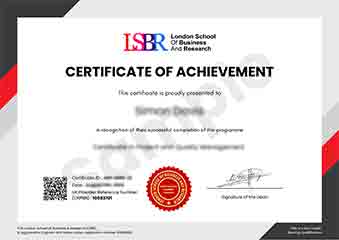
Sample Certificate
Preview the certificate you'll receive upon successful completion of this program.
Get Free Course Info
Enter your details and we'll send you a comprehensive course information pack straight to your inbox.
Employer Sponsored Training
Let your employer invest in your professional development. Request a corporate invoice and get your training funded.
Request Corporate InvoiceWhat People Say About Us
Hear from our students about their experience with the Executive Development Programme in Implementing Safety Procedures and Protocols at LSBRX - Executive Education.
Sophie Brown
United Kingdom"The course content was incredibly comprehensive and well-structured, providing a solid foundation in safety procedures and protocols that I can directly apply in my role. Gaining these practical skills has already enhanced my ability to implement safety measures effectively, which is invaluable for my career advancement."
Sophie Brown
United Kingdom"This course has been incredibly practical, equipping me with the latest safety procedures and protocols that are directly applicable in my industry. It has not only enhanced my professional skills but also opened up new opportunities for career advancement."
Ashley Rodriguez
United States"The course structure was well-organized, providing a clear path from foundational safety concepts to advanced protocols, which greatly enhanced my understanding and application of safety procedures in real-world scenarios. It offered invaluable knowledge that has significantly contributed to my professional growth in ensuring a safer work environment."