
Executive Development Programme in Infection Control Training: Developing Effective Programs
This program equips executives with the knowledge and skills to develop effective infection control strategies, enhancing organizational health and safety.
Executive Development Programme in Infection Control Training: Developing Effective Programs
Programme Overview
The Executive Development Programme in Infection Control Training: Developing Effective Programs is designed for healthcare executives, managers, and leaders who are responsible for implementing and overseeing infection control strategies within their organizations. This comprehensive program equips participants with the latest knowledge and practical tools to enhance infection prevention and control efforts, ensuring the health and safety of patients and staff. It covers critical aspects such as epidemiology of infections, infectious disease management, infection control policies and procedures, and the integration of effective communication strategies to mobilize staff and stakeholders.
Participants in this program will develop key skills including the ability to conduct risk assessments, implement evidence-based infection control measures, manage outbreaks, and develop and enforce infection control policies. They will also learn to foster a culture of safety and continuous improvement, leveraging current research and best practices to adapt their programs to meet the evolving needs of their organizations. Additionally, learners will gain proficiency in integrating technology and data analytics to optimize infection control practices and improve patient outcomes.
This program significantly enhances career prospects by preparing participants to lead with confidence in infection control. Graduates are better positioned to spearhead initiatives that not only comply with regulatory requirements but also exceed industry standards. They will be well-equipped to address emerging challenges, such as antimicrobial resistance, and contribute to the development of innovative strategies that safeguard public health.
What You'll Learn
The Executive Development Programme in Infection Control Training: Developing Effective Programs is an intensive, month course designed for healthcare executives and professionals aiming to enhance their skills in infection control and management. This program equips participants with the latest knowledge and practical tools to develop and implement robust infection control strategies that safeguard patient and staff health.
Key topics include epidemiology of infectious diseases, infection prevention and control policies, healthcare-associated infection (HAI) surveillance, antimicrobial stewardship, and the impact of infection control on patient outcomes and healthcare costs. Through interactive case studies, hands-on exercises, and expert-led discussions, participants gain a comprehensive understanding of the complexities involved in managing infection control programs.
Graduates of this program are well-prepared to lead and influence infection control initiatives in healthcare settings. They can apply their skills to design and implement effective infection control programs, reduce the incidence of HAIs, and improve overall patient safety. Career opportunities abound for program graduates, including roles as infection control practitioners, hospital epidemiologists, public health managers, and quality improvement leaders.
By joining this program, you gain access to a network of experienced professionals and innovative resources, setting you on a path to becoming a leader in the field of infection control and public health.
Programme Highlights
Industry-Aligned Curriculum
Developed with industry leaders for job-ready skills valued by employers worldwide.
Globally Recognised Certificate
Recognised by employers across 180+ countries as a mark of professional excellence.
Flexible Online Learning
Study at your own pace with lifetime access to all course materials and updates.
Instant Access
Start learning immediately — no application process or waiting period required.
Constantly Updated Content
Stay ahead with the latest industry trends, best practices, and emerging insights.
Career Advancement
87% of graduates report measurable career progression within 6 months of completion.
Topics Covered
- 1. Fundamentals of Infection Control: Learners will study core concepts such as infection transmission, control measures, and the role of hygiene in preventing infections. They will gain practical skills in assessing infection risks and implementing basic infection control protocols.
- 2. Epidemiology of Infections: This module covers the epidemiological principles and patterns of infectious diseases, enabling learners to understand the spread and control of infections in different settings. Practical skills include analyzing infection data and developing targeted prevention strategies.
- 3. Microbiology and Infection Control: Learners will explore the role of microorganisms in infections and the importance of microbiological testing in infection control. Practical skills include sample collection, basic microbiological techniques, and interpreting laboratory results.
- 4. Infection Control Policies and Procedures: This module focuses on the development, implementation, and evaluation of infection control policies. Learners will gain skills in drafting policies, training staff, and monitoring compliance to ensure effective infection control practices.
- 5. Advanced Infection Control Techniques: Covering advanced topics such as sterilization, disinfection, and the use of personal protective equipment (PPE), learners will learn how to manage and prevent infection in high-risk settings. Practical skills include performing sterilization processes and selecting appropriate PPE.
- 6. Environmental Infection Control: This module examines the role of environmental factors in infection control, including the design and maintenance of facilities to prevent the spread of infections. Practical skills include assessing environmental risks and implementing cleaning and disinfection procedures.
- 7. Infection Control in Healthcare Settings: Focused on infection control practices in healthcare facilities, this module covers patient care, staff safety, and the management of healthcare-associated infections (HAIs). Practical skills include developing infection control plans for healthcare settings and managing outbreaks.
- 8. Infection Control in Community Settings: This module addresses infection control strategies in community settings such as schools, workplaces, and public spaces. Learners will gain skills in educating the public, implementing preventive measures, and responding to infection outbreaks in community environments.
- 9. Emerging Infections and Innovation in Infection Control: Covering emerging infectious diseases and the latest innovations in infection control, this module prepares learners to address new and evolving challenges. Practical skills include staying informed about new developments and adapting infection control practices accordingly.
- 10. Leadership in Infection Control: This final module focuses on leadership and management skills necessary for effective infection control. Learners will gain skills in leading teams, making strategic decisions, and promoting a culture of infection prevention.
What You Get When You Enroll
Secure checkout • Instant access • Certificate included
Key Facts
Audience: Healthcare professionals, managers
Prerequisites: Basic infection control knowledge
Outcomes: Enhanced program development skills
Outcomes: Improved infection control practices
Outcomes: Stronger leadership in infection control
Ready to get started?
Join thousands of professionals who already took the next step. Enroll now and get instant access.
Enroll Now — $199Why This Course
Enhance Professional Competence: Professionals who undertake the 'Executive Development Programme in Infection Control Training: Developing Effective Programs' gain a deep understanding of infection control principles and best practices. This includes advanced knowledge of infection transmission pathways, the latest hygiene and disinfection techniques, and the implementation of effective infection control strategies in various settings such as healthcare facilities, schools, and public transportation.
Career Advancement: By mastering the skills and knowledge in this program, professionals can take on more complex roles and responsibilities in their organizations. For instance, they can lead or coordinate infection control teams, design and implement comprehensive infection prevention programs, and contribute to policy development and public health initiatives. This can lead to career advancement opportunities within their current organizations or in higher-level positions in the field.
Improved Patient and Public Health Outcomes: Participants in this program will develop the skills necessary to reduce the incidence of infections in various settings. This not only enhances patient safety but also contributes to broader public health goals. For healthcare professionals, this can lead to improved patient outcomes and satisfaction, while for those in public health, it can contribute to the reduction of infectious disease prevalence and save lives.
Your Path to Certification
Trusted by Professionals Worldwide
Course Brochure
Download our comprehensive course brochure with all details
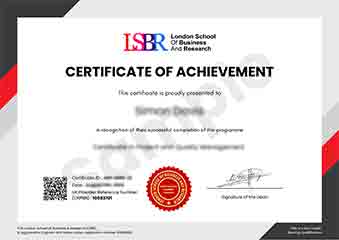
Sample Certificate
Preview the certificate you'll receive upon successful completion of this program.
Get Free Course Info
Enter your details and we'll send you a comprehensive course information pack straight to your inbox.
Employer Sponsored Training
Let your employer invest in your professional development. Request a corporate invoice and get your training funded.
Request Corporate InvoiceWhat People Say About Us
Hear from our students about their experience with the Executive Development Programme in Infection Control Training: Developing Effective Programs at LSBRX - Executive Education.
Sophie Brown
United Kingdom"The course content was incredibly comprehensive, providing a deep dive into infection control strategies that are directly applicable in real-world settings. Gaining hands-on skills in developing effective infection control programs has been invaluable for my career, offering practical tools to enhance patient safety and compliance in healthcare facilities."
Kai Wen Ng
Singapore"This course has significantly enhanced my ability to develop and implement effective infection control programs in healthcare settings, making my approach more evidence-based and industry-relevant. It has opened up new opportunities for career advancement by equipping me with the practical skills needed to lead infection control initiatives."
Zoe Williams
Australia"The course is meticulously organized, providing a clear path from foundational concepts to advanced strategies in infection control, which has significantly enhanced my ability to develop effective programs in a practical setting. The comprehensive content not only deepens my theoretical knowledge but also equips me with actionable insights that I can immediately apply in my professional role."