
Executive Development Programme in Infectious Disease Mitigation Techniques
This programme equips executives with advanced techniques for mitigating infectious diseases, enhancing organizational resilience and public health response.
Executive Development Programme in Infectious Disease Mitigation Techniques
Programme Overview
The Executive Development Programme in Infectious Disease Mitigation Techniques is designed for senior-level healthcare administrators, public health officials, and senior executives from the pharmaceutical and biotech industries who are committed to leading and implementing strategies to mitigate infectious diseases. The programme equips participants with a comprehensive understanding of current and emerging infectious diseases, their global impact, and the latest mitigation techniques, including epidemiological modeling, public health interventions, and innovative medical technologies. It also emphasizes leadership and strategic planning, ensuring that participants are well-prepared to navigate and address the complex challenges in infectious disease management.
Participants in this programme will develop key skills in risk assessment, emergency response planning, and resource management, alongside a deep understanding of global health policies and protocols. They will learn to analyze data from various sources to inform public health decisions, manage cross-sectoral collaborations, and foster effective communication strategies to engage diverse stakeholders. The programme also focuses on ethical considerations in infectious disease mitigation and the importance of community engagement.
The career impact of this programme is significant, as it enables participants to lead with confidence in addressing public health crises, influencing policy at local, national, and international levels, and driving innovation in the healthcare and biotech sectors. Graduates will be better equipped to make informed decisions and implement effective strategies to protect public health and mitigate the spread of infectious diseases, thereby contributing to global health security.
What You'll Learn
The Executive Development Programme in Infectious Disease Mitigation Techniques is an intensive, month curriculum designed for healthcare executives, public health leaders, and executives in related industries. This program equips participants with advanced strategies and tools to effectively manage and mitigate infectious disease outbreaks, enhancing their ability to lead comprehensive public health responses.
Key topics include epidemiology, infectious disease modeling, risk assessment and management, public health communication, and global health policy. Participants engage in hands-on training, real-world case studies, and interactive workshops, ensuring they can apply theoretical knowledge in practical settings. The program also emphasizes leadership development, fostering skills in strategic planning, crisis management, and interdisciplinary collaboration.
Graduates are well-prepared to assume leadership roles in public health agencies, healthcare systems, pharmaceutical companies, and research institutions. They gain the expertise to implement effective prevention strategies, improve community health outcomes, and contribute to global health initiatives. Career opportunities include roles as public health directors, healthcare administrators, infectious disease specialists, and policy advisors, making a significant impact on public health and disease control.
Programme Highlights
Industry-Aligned Curriculum
Developed with industry leaders for job-ready skills valued by employers worldwide.
Globally Recognised Certificate
Recognised by employers across 180+ countries as a mark of professional excellence.
Flexible Online Learning
Study at your own pace with lifetime access to all course materials and updates.
Instant Access
Start learning immediately — no application process or waiting period required.
Constantly Updated Content
Stay ahead with the latest industry trends, best practices, and emerging insights.
Career Advancement
87% of graduates report measurable career progression within 6 months of completion.
Topics Covered
- 1. Introduction to Infectious Diseases: Learners will study the basic principles of infectious diseases, including modes of transmission, pathogen biology, and epidemiology. They will gain foundational knowledge to understand the dynamics of infectious diseases and identify key factors influencing disease spread.
- 2. Public Health Strategies for Disease Control: This module covers public health interventions such as vaccination programs, quarantine measures, and contact tracing. Learners will learn to design and implement effective public health strategies to mitigate infectious disease outbreaks.
- 3. Epidemiological Methods and Data Analysis: Focusing on advanced epidemiological methods, learners will study statistical techniques for analyzing disease data and interpreting outbreak trends. Practical skills include using software tools for data analysis and risk assessment.
- 4. Biostatistics in Infectious Disease Research: This module delves into the application of biostatistical methods in infectious disease research. Learners will gain skills in designing clinical trials, interpreting study results, and using statistical software for data analysis.
- 5. Advanced Pathogen Genomics: Learners will explore advanced techniques in pathogen genomics, including next-generation sequencing and bioinformatics tools. Practical skills include analyzing genomic data to understand pathogen evolution and transmission patterns.
- 6. Antibiotic Stewardship and Resistance: This module covers the principles of antibiotic stewardship and the growing problem of antibiotic resistance. Learners will learn to develop and implement strategies to optimize antibiotic use and reduce resistance.
- 7. Emerging Infectious Diseases: Focusing on emerging pathogens, learners will study the factors contributing to the emergence of new infectious diseases and the challenges they pose. Practical skills include identifying and assessing emerging threats and developing mitigation strategies.
- 8. Global Health Security: This module examines the role of global health security in preventing and responding to infectious disease threats. Learners will learn to develop international cooperation and coordination strategies for disease mitigation.
- 9. Crisis Management in Infectious Disease Outbreaks: Learners will study the principles of crisis management in the context of infectious disease outbreaks. Practical skills include developing crisis communication plans, managing resources, and coordinating with stakeholders during emergencies.
- 10. Leadership and Management in Infectious Disease Control: This module focuses on leadership and management strategies for effective infectious disease control. Learners will develop skills in strategic planning, decision-making, and team leadership to manage complex public health challenges.
What You Get When You Enroll
Secure checkout • Instant access • Certificate included
Key Facts
Audience: Healthcare professionals, researchers
Prerequisites: Basic medical knowledge, relevant experience
Outcomes: Enhanced disease mitigation skills, network expansion
Ready to get started?
Join thousands of professionals who already took the next step. Enroll now and get instant access.
Enroll Now — $199Why This Course
Expanding Expertise: Professionals in healthcare, public health, and related fields can significantly enhance their knowledge and skills in managing infectious diseases through this program. It covers advanced techniques in disease surveillance, outbreak management, and public health interventions, equipping participants with the latest tools and strategies to mitigate the spread of infectious diseases effectively.
Career Advancement: Participants gain valuable credentials that can lead to higher positions within their organizations or new opportunities in emerging areas of public health. The program's focus on leadership and strategic planning prepares individuals to take on more complex roles in health management and policy.
Networking Opportunities: Engaging with peers and experts from diverse backgrounds fosters a strong professional network. These connections can provide mentorship, collaborative opportunities, and access to resources that are crucial for career growth and innovation in the field of infectious disease mitigation.
Adapting to Global Health Challenges: As infectious diseases pose increasing global threats, professionals who complete this program are better prepared to address these challenges. The curriculum includes modules on global health security, pandemic preparedness, and emergency response, ensuring that participants are well-equipped to tackle future health crises effectively.
Your Path to Certification
Trusted by Professionals Worldwide
Course Brochure
Download our comprehensive course brochure with all details
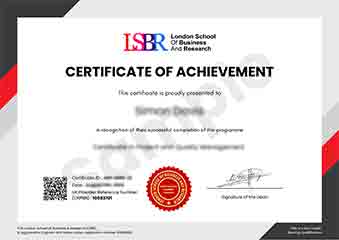
Sample Certificate
Preview the certificate you'll receive upon successful completion of this program.
Get Free Course Info
Enter your details and we'll send you a comprehensive course information pack straight to your inbox.
Employer Sponsored Training
Let your employer invest in your professional development. Request a corporate invoice and get your training funded.
Request Corporate InvoiceWhat People Say About Us
Hear from our students about their experience with the Executive Development Programme in Infectious Disease Mitigation Techniques at LSBRX - Executive Education.
James Thompson
United Kingdom"The course content was incredibly comprehensive, covering a wide range of mitigation techniques that are directly applicable in real-world scenarios. Gaining hands-on experience in these techniques has significantly enhanced my ability to address infectious disease outbreaks effectively."
Ryan MacLeod
Canada"The Executive Development Programme in Infectious Disease Mitigation Techniques has significantly enhanced my understanding of current global health challenges and provided me with practical tools to address them effectively. This program has not only broadened my professional network but also opened up new career opportunities in the field of public health management."
Charlotte Williams
United Kingdom"The course structure is well-organized, providing a clear path from foundational concepts to advanced mitigation techniques, which greatly enhances understanding and application in real-world scenarios. It offers a wealth of knowledge that is directly applicable to improving public health outcomes."