
Executive Development Programme in Information Security for Journal Authors
This program equips journal authors with advanced information security knowledge and skills, enhancing their research integrity and cybersecurity practices.
Executive Development Programme in Information Security for Journal Authors
Programme Overview
This Executive Development Programme in Information Security for Journal Authors is tailored for professionals in the field of journalism who are seeking to understand and navigate the complex landscape of information security. The programme equips participants with the latest advancements in cybersecurity practices, legal frameworks, and ethical considerations relevant to the media industry. By the end of the programme, participants will gain comprehensive knowledge in data protection, secure communication, and risk management strategies, essential for safeguarding journalistic integrity and protecting sensitive information.
Key skills and knowledge learners will develop include the ability to implement secure data handling practices, understand the importance of compliance with data protection regulations (such as GDPR and CCPA), and effectively communicate cybersecurity risks to non-technical stakeholders. Participants will also learn to develop robust cybersecurity policies and procedures that align with journalistic standards and ethical guidelines.
This programme has a significant impact on participants' career trajectories, enabling them to lead initiatives that enhance the security of digital assets and improve the overall resilience of news organizations against cyber threats. By fostering a deeper understanding of information security, participants will be better positioned to protect the confidentiality, integrity, and availability of critical information, thereby contributing to more trustworthy and secure journalism.
What You'll Learn
The Executive Development Programme in Information Security for Journal Authors is crafted to empower leading researchers and scholarly authors with the critical skills necessary to navigate the complex landscape of information security. This program is designed to enhance your understanding of cybersecurity principles, risk management strategies, and data privacy laws, equipping you with the knowledge to safeguard sensitive research data and ensure compliance with international standards.
Key topics include cybersecurity fundamentals, ethical hacking, secure coding practices, and the legal and regulatory aspects of information security. Participants will engage in interactive workshops, case studies, and hands-on labs, providing a practical approach to learning. By the end of the program, you will be able to implement robust security measures, assess risks, and guide your research teams on best practices for data protection.
This program opens up a multitude of career opportunities in academia, research institutions, and tech companies, where the ability to integrate information security into research processes is increasingly valued. Graduates may pursue roles such as Research Data Security Officer, Cybersecurity Consultant for Academic Institutions, or Research Compliance Manager, contributing significantly to the integrity and security of global scholarly research.
Programme Highlights
Industry-Aligned Curriculum
Developed with industry leaders for job-ready skills valued by employers worldwide.
Globally Recognised Certificate
Recognised by employers across 180+ countries as a mark of professional excellence.
Flexible Online Learning
Study at your own pace with lifetime access to all course materials and updates.
Instant Access
Start learning immediately — no application process or waiting period required.
Constantly Updated Content
Stay ahead with the latest industry trends, best practices, and emerging insights.
Career Advancement
87% of graduates report measurable career progression within 6 months of completion.
Topics Covered
- 1. Introduction to Information Security: Learners will study the fundamental concepts of information security, including confidentiality, integrity, and availability. They will gain an understanding of the importance of security in today’s digital world and learn how to identify common security threats.
- 2. Cybersecurity Fundamentals: This module covers basic cybersecurity practices, tools, and technologies. Learners will understand how to secure their systems and networks, and gain hands-on experience with firewalls, antivirus software, and other security solutions.
- 3. Data Protection and Privacy: Learners will explore data protection laws and regulations, such as GDPR and HIPAA, and learn how to implement privacy-preserving measures in their work. They will also understand the ethical considerations of data handling.
- 4. Secure Coding Practices: This module focuses on secure coding techniques and best practices. Learners will learn how to write secure code to prevent common vulnerabilities such as SQL injection and cross-site scripting (XSS).
- 5. Threat Intelligence and Analysis: Learners will study threat intelligence gathering and analysis, including the use of threat intelligence feeds and incident response planning. They will gain skills to assess and mitigate potential risks to their information systems.
- 6. Advanced Encryption Techniques: This module covers advanced encryption methods and their application in secure communications. Learners will understand the principles of symmetric and asymmetric encryption and gain practical skills in using encryption tools.
- 7. Secure Cloud Computing: Learners will explore the security challenges and best practices associated with cloud computing. They will learn about cloud security models, such as the shared responsibility model, and gain experience securing cloud environments.
- 8. Security Incident Response and Management: This module covers the processes and procedures for responding to security incidents. Learners will understand the incident response lifecycle and gain hands-on experience in managing security incidents and conducting post-incident analysis.
- 9. Cybersecurity Leadership and Management: Learners will study the role of leadership in cybersecurity, including strategic planning and organizational change management. They will learn how to build and maintain a culture of security within their organizations.
- 10. Future Trends in Information Security: This module provides an overview of emerging trends in information security, such as AI and IoT security. Learners will understand the challenges and opportunities presented by these trends and gain insights into the future of cybersecurity.
What You Get When You Enroll
Secure checkout • Instant access • Certificate included
Key Facts
Audience: Journal authors interested in infosec
Prerequisites: Basic understanding of IT
Outcomes: Enhanced infosec knowledge, improved research integrity, better manuscript quality
Ready to get started?
Join thousands of professionals who already took the next step. Enroll now and get instant access.
Enroll Now — $199Why This Course
Enhance Expertise: This program provides a deep dive into the latest security trends and technologies, equipping professionals with up-to-date knowledge that is crucial for staying relevant in a rapidly evolving field. For instance, participants learn about advanced threat detection and mitigation strategies, which can significantly improve their ability to write insightful articles on cybersecurity.
Boost Career Prospects: By gaining recognized certifications and credentials, professionals can distinguish themselves in the job market. The program offers opportunities to obtain certifications that validate specialized knowledge in information security, making candidates more attractive to employers who seek experts in this critical area.
Develop Leadership Skills: The executive development aspect of the program focuses on leadership and strategic thinking. Participants learn to lead security initiatives, manage teams, and navigate complex organizational structures, all of which are essential for advancing to higher-level roles within the industry. This comprehensive skill set prepares professionals to take on leadership positions and contribute effectively to organizational security strategies.
Your Path to Certification
Trusted by Professionals Worldwide
Course Brochure
Download our comprehensive course brochure with all details
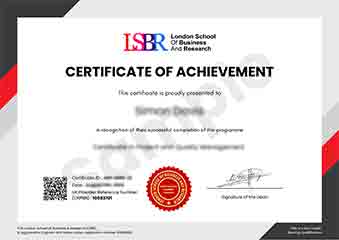
Sample Certificate
Preview the certificate you'll receive upon successful completion of this program.
Get Free Course Info
Enter your details and we'll send you a comprehensive course information pack straight to your inbox.
Employer Sponsored Training
Let your employer invest in your professional development. Request a corporate invoice and get your training funded.
Request Corporate InvoiceWhat People Say About Us
Hear from our students about their experience with the Executive Development Programme in Information Security for Journal Authors at LSBRX - Executive Education.
Charlotte Williams
United Kingdom"The course content was incredibly comprehensive, covering a wide range of information security topics that are directly applicable to my work as a journal author. Gaining a deeper understanding of these concepts has significantly enhanced my ability to evaluate and critique security-related articles, providing me with valuable practical skills that I can immediately apply in my career."
Ahmad Rahman
Malaysia"This course has significantly enhanced my understanding of information security, making my research more relevant and impactful in the industry. It has opened up new career opportunities by equipping me with practical skills that I can directly apply to my work."
Ahmad Rahman
Malaysia"The course structure was meticulously organized, providing a seamless flow from foundational concepts to advanced topics in information security, which greatly enhanced my understanding and practical application skills in the field. It offered a wealth of real-world examples that bridged the gap between theory and practice, significantly boosting my professional growth as a journal author."