
Executive Development Programme in Insect Forensic Science: Methods and Case Studies
This programme equips executives with advanced insect forensic science methods and real-case studies, enhancing investigative skills and analytical capabilities.
Executive Development Programme in Insect Forensic Science: Methods and Case Studies
Programme Overview
The Executive Development Programme in Insect Forensic Science: Methods and Case Studies is a cutting-edge educational initiative designed for professionals in the law enforcement, forensic science, and legal fields. This programme delves into the advanced techniques and methodologies employed in the analysis of insects and other arthropods as forensic evidence. It is tailored for individuals seeking to enhance their expertise in the application of insect forensic science to criminal investigations and legal proceedings.
Participants in this programme will develop a comprehensive understanding of the methodologies used in entomological forensic science, including insect life cycle analysis, post-mortem interval estimation, and the identification of insect species as indicators of environmental conditions and crime scenes. They will also gain practical skills in the use of advanced laboratory techniques and digital tools for data analysis, as well as the ability to interpret and present forensic entomology findings in a courtroom setting. This programme equips learners with the knowledge and skills necessary to contribute to high-profile cases and to advance the field of forensic entomology.
The career impact of this programme is significant, as participants will be better equipped to handle complex forensic entomology cases, leading to more accurate and effective convictions. They will also be well-prepared to lead or collaborate in research projects, develop new forensic methodologies, and contribute to policy and procedural improvements within their organizations. This programme not only enhances professional capabilities but also propels individuals into leadership roles within forensic science and related sectors.
What You'll Learn
Dive into the cutting-edge world of Insect Forensic Science with our Executive Development Programme. This program is designed for professionals in law enforcement, environmental agencies, and forensic science seeking to enhance their expertise in analyzing insect evidence to solve complex cases. Over the course of the program, you will explore the latest methodologies in insect forensic science, including species identification, temporal and spatial analysis, and the application of entomology in criminal investigations.
The program delves into real-world case studies, offering practical insights into how insects are used to determine time of death, identify victims, and link suspects to crime scenes. Participants will gain hands-on experience in laboratory practices and learn to use advanced forensic tools and software. By understanding the significance of insect ecology and behavior, you will be better equipped to interpret forensic entomological evidence accurately.
Upon completion, you will be able to confidently apply your knowledge to real-world scenarios, improving investigation efficiency and accuracy. This program opens doors to career advancement in specialized forensic roles, research and development, and teaching at the university level. Join us and become a leader in the field of insect forensic science, contributing to the resolution of challenging cases and the advancement of forensic science as a whole.
Programme Highlights
Industry-Aligned Curriculum
Developed with industry leaders for job-ready skills valued by employers worldwide.
Globally Recognised Certificate
Recognised by employers across 180+ countries as a mark of professional excellence.
Flexible Online Learning
Study at your own pace with lifetime access to all course materials and updates.
Instant Access
Start learning immediately — no application process or waiting period required.
Constantly Updated Content
Stay ahead with the latest industry trends, best practices, and emerging insights.
Career Advancement
87% of graduates report measurable career progression within 6 months of completion.
Topics Covered
- 1. Introduction to Insect Forensic Science: Learners will explore the fundamental principles and importance of insect forensic science, including its role in criminal investigations. They will gain an understanding of the basic biology of insects and their significance in forensic contexts.
- 2. Insect Life Cycle and Environmental Adaptations: This module delves into the life cycles and environmental adaptations of insects, focusing on how these attributes influence their presence and distribution at crime scenes. Learners will perform live specimen observations and analyze environmental samples.
- 3. Forensic Entomology: Collection and Preservation Techniques: Students will learn about various techniques for collecting and preserving insect evidence from crime scenes, ensuring the integrity of samples for subsequent analysis. Practical exercises include field collections and laboratory preservation methods.
- 4. Insect Forensic Analysis and Interpretation: This module covers the methods used in forensic laboratories to analyze insect samples, including entomological microscopy and DNA analysis. Learners will engage in hands-on labs to interpret forensic insect evidence.
- 5. Insect Forensic Science in Legal and Ethical Contexts: Students will examine the legal and ethical implications of using insect forensic science in criminal investigations. They will discuss case studies and participate in group discussions on the application of forensic entomology in court.
- 6. Insect Forensic Science in Mass Fatality Investigations: This module focuses on the unique challenges and applications of insect forensic science in mass fatality scenarios. Learners will study case studies and practice data analysis and interpretation specific to such cases.
- 7. Advanced Insect Forensic Techniques: Advanced topics in forensic entomology, including the use of insects as bioindicators and the application of stable isotope analysis, are covered. Learners will conduct experiments and analyze data using these advanced techniques.
- 8. Case Study Analysis in Insect Forensic Science: Students will analyze real and simulated case studies to apply the knowledge and skills gained throughout the programme. They will prepare and present case study analyses to assess their understanding and application of insect forensic science.
- 9. Emerging Trends and Future Directions in Insect Forensic Science: This module explores current research and emerging trends in the field of insect forensic science. Learners will participate in discussions on the future of the discipline and potential advancements in methodology and technology.
- 10. Professional Development in Insect Forensic Science: The final module focuses on career development in the field of insect forensic science. Learners will develop professional skills, including networking, resume writing, and preparing for interviews in the industry.
What You Get When You Enroll
Secure checkout • Instant access • Certificate included
Key Facts
Audience: Professionals, scientists, law enforcement
Prerequisites: Basic knowledge of forensics, biology
Outcomes: Expertise in insect forensic methods, case analysis skills
Ready to get started?
Join thousands of professionals who already took the next step. Enroll now and get instant access.
Enroll Now — $199Why This Course
Enhanced Professional Skills: The Executive Development Programme in Insect Forensic Science equips professionals with advanced skills in entomology and forensic entomology. Participants learn techniques for estimating time of death and identifying insect evidence, which are crucial in criminal investigations and legal proceedings. These skills can significantly enhance career prospects in forensic science, pathology, and related fields.
Interdisciplinary Knowledge: The programme bridges the gap between entomology and forensic science, providing a comprehensive understanding of how insects can be used to solve crimes. This interdisciplinary approach is highly valuable in modern forensic investigations, where the integration of different scientific disciplines is increasingly important. Graduates can apply this knowledge to develop innovative forensic strategies and methodologies.
Career Advancement Opportunities: By specializing in insect forensic science, professionals can differentiate themselves in a competitive job market. The programme offers case studies and practical applications that prepare individuals for complex forensic cases. This specialization can lead to advanced positions in law enforcement, forensic laboratories, and research institutions, offering higher salary potential and greater job security.
Your Path to Certification
Trusted by Professionals Worldwide
Course Brochure
Download our comprehensive course brochure with all details
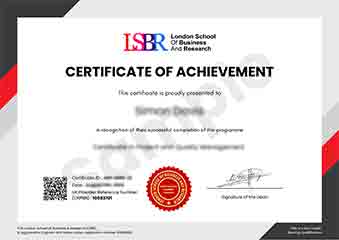
Sample Certificate
Preview the certificate you'll receive upon successful completion of this program.
Get Free Course Info
Enter your details and we'll send you a comprehensive course information pack straight to your inbox.
Employer Sponsored Training
Let your employer invest in your professional development. Request a corporate invoice and get your training funded.
Request Corporate InvoiceWhat People Say About Us
Hear from our students about their experience with the Executive Development Programme in Insect Forensic Science: Methods and Case Studies at LSBRX - Executive Education.
Charlotte Williams
United Kingdom"The course provided an in-depth look at the fascinating world of insect forensic science, equipping me with practical skills to analyze crime scenes and understand the timeline of events. Gaining this knowledge has opened up new career opportunities in forensic investigation and research."
Tyler Johnson
United States"This course has significantly enhanced my understanding of insect forensic science, making me more competitive in the field. The practical case studies provided real-world context and application, which are invaluable for career advancement in forensic entomology."
Tyler Johnson
United States"The course structure was meticulously organized, providing a seamless transition from theoretical concepts to practical case studies, which significantly enhanced my understanding and application of insect forensic science. The comprehensive content not only broadened my knowledge but also equipped me with valuable skills for real-world professional growth."