
Executive Development Programme in Integrating Climate Data into Decision-Making Processes
This programme equips executives with the skills to integrate climate data into strategic decisions, enhancing resilience and sustainability.
Executive Development Programme in Integrating Climate Data into Decision-Making Processes
Programme Overview
The Executive Development Programme in Integrating Climate Data into Decision-Making Processes is designed for business leaders, policymakers, and professionals in the public and private sectors who seek to enhance their capabilities in leveraging climate data for strategic decision-making. This comprehensive programme equips participants with advanced tools and methodologies to analyze climate data, understand its implications, and integrate it effectively into organizational strategies and public policies.
Participants will develop key skills in data analysis, climate science, and policy formulation, enabling them to make informed decisions that align with sustainability goals. They will learn to interpret complex climate data, assess risks and opportunities associated with climate change, and implement data-driven strategies to mitigate environmental impacts and ensure long-term resilience. Additionally, the programme provides insights into best practices for stakeholder engagement and communication, ensuring that climate data is effectively communicated and acted upon across various sectors.
This programme will significantly impact participants' careers by enhancing their ability to lead and influence climate-related initiatives within their organizations. Graduates will be well-prepared to navigate the evolving landscape of climate change, contribute to sustainable development, and drive impactful change in their industries and communities.
What You'll Learn
The Executive Development Programme in Integrating Climate Data into Decision-Making Processes is a transformative initiative designed for leaders and senior professionals aiming to leverage climate data for strategic advantage. This program equips participants with the knowledge and skills to integrate climate data into their decision-making frameworks, ensuring sustainable and resilient business practices. The curriculum covers essential topics such as climate data sources, risk assessment methodologies, and advanced analytics techniques. Participants learn to interpret and apply climate data in various contexts, from industry-specific analyses to broader environmental impact assessments.
Upon completion, graduates are well-prepared to lead climate-informed decision-making initiatives within their organizations, fostering innovation and sustainability. They gain the ability to drive policy changes, enhance operational efficiency, and mitigate environmental risks. The program also prepares participants for emerging career opportunities in climate data analytics, sustainability leadership, and environmental policy.
This program is ideal for executives, managers, and professionals in industries including energy, finance, manufacturing, and public service. By integrating climate data effectively, participants can navigate the complexities of climate change, ensuring their organizations are not just compliant but proactive in addressing environmental challenges.
Programme Highlights
Industry-Aligned Curriculum
Developed with industry leaders for job-ready skills valued by employers worldwide.
Globally Recognised Certificate
Recognised by employers across 180+ countries as a mark of professional excellence.
Flexible Online Learning
Study at your own pace with lifetime access to all course materials and updates.
Instant Access
Start learning immediately — no application process or waiting period required.
Constantly Updated Content
Stay ahead with the latest industry trends, best practices, and emerging insights.
Career Advancement
87% of graduates report measurable career progression within 6 months of completion.
Topics Covered
- 1. Fundamentals of Climate Data: Learners will study basic climate science principles and types of climate data. They will gain foundational knowledge on how climate data is collected, analyzed, and interpreted, essential for informed decision-making.
- 2. Data Acquisition and Management: This module covers the methods for acquiring climate data from various sources and managing data effectively. Learners will learn to use appropriate software and tools to handle large datasets and ensure data integrity.
- 3. Climate Data Visualization: Focusing on the visualization of climate data, learners will explore various techniques and tools to represent data visually. They will develop skills in creating meaningful visualizations that aid in understanding complex climate patterns and trends.
- 4. Advanced Statistical Analysis: This module delves into advanced statistical methods for analyzing climate data. Learners will gain skills in applying statistical models to interpret data, predict future climate conditions, and assess the reliability of climate projections.
- 5. Climate Data Integration with Business Intelligence: Learners will learn how to integrate climate data into business intelligence systems. They will understand the importance of climate factors in strategic planning and decision-making processes.
- 6. Decision-Making Frameworks: This module introduces learners to frameworks and methodologies for incorporating climate data into decision-making processes. They will learn how to evaluate the impact of climate change on various sectors and develop resilience strategies.
- 7. Case Studies in Climate Data Usage: Through real-world case studies, learners will analyze the application of climate data in different industries. They will explore successful examples of integrating climate data into decision-making and identify best practices.
- 8. Policy and Regulatory Considerations: Focusing on legal and regulatory aspects, learners will study the implications of climate data in policy-making and regulatory frameworks. They will understand how to navigate the complex landscape of climate-related policies and regulations.
- 9. Communication of Climate Data: This module covers effective communication strategies for presenting climate data to stakeholders. Learners will learn how to articulate climate-related information clearly and persuasively, fostering informed discussions and actions.
- 10. Future Trends and Innovations: Learners will explore emerging trends and innovations in climate data technology and applications. They will gain insights into new tools, technologies, and methodologies that are shaping the future of climate data integration in decision-making processes.
What You Get When You Enroll
Secure checkout • Instant access • Certificate included
Key Facts
Audience: Senior executives, decision-makers
Prerequisites: Basic understanding of climate data
Outcomes: Enhanced climate literacy, improved decision-making skills
Ready to get started?
Join thousands of professionals who already took the next step. Enroll now and get instant access.
Enroll Now — $199Why This Course
Enhance Competency in Climate Intelligence: The Executive Development Programme in Integrating Climate Data into Decision-Making Processes equips professionals with advanced skills in analyzing and interpreting climate data. This knowledge is crucial for making informed decisions that can mitigate risks and capitalize on opportunities related to climate change. For instance, businesses can better plan for extreme weather events or adapt to changing market conditions, leading to more resilient strategies.
Strengthen Leadership in Sustainability: By participating in this programme, executives can develop a strategic approach to sustainability, integrating climate considerations into their organizational policies and operations. This not only improves environmental outcomes but also enhances reputation and attracts stakeholders who value sustainability. Leaders who can effectively communicate and implement climate strategies are highly sought after in today’s market.
Foster Innovation and Competitive Advantage: The programme encourages the application of climate data in innovative ways, driving new business models and market opportunities. Companies that successfully integrate climate data into their decision-making processes are better positioned to innovate and stay ahead of competitors. For example, firms could develop new products or services that address climate challenges, which can lead to significant market differentiation and growth.
Your Path to Certification
Trusted by Professionals Worldwide
Course Brochure
Download our comprehensive course brochure with all details
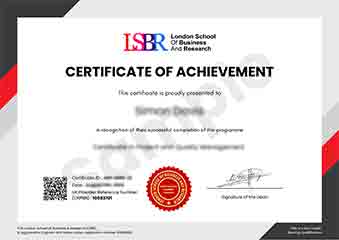
Sample Certificate
Preview the certificate you'll receive upon successful completion of this program.
Get Free Course Info
Enter your details and we'll send you a comprehensive course information pack straight to your inbox.
Employer Sponsored Training
Let your employer invest in your professional development. Request a corporate invoice and get your training funded.
Request Corporate InvoiceWhat People Say About Us
Hear from our students about their experience with the Executive Development Programme in Integrating Climate Data into Decision-Making Processes at LSBRX - Executive Education.
Charlotte Williams
United Kingdom"The course provided high-quality, up-to-date material that significantly enhanced my ability to integrate climate data into decision-making processes, equipping me with practical tools that I can immediately apply in my work. It has opened new career opportunities by deepening my understanding of climate impacts and sustainable practices."
Ruby McKenzie
Australia"This course has significantly enhanced my ability to integrate climate data into strategic business decisions, making my insights more valuable and actionable. It has opened new opportunities for career advancement in sustainability roles within my organization."
Anna Schmidt
Germany"The course structure was well-organized, providing a clear pathway to integrate climate data into decision-making processes, which significantly enhanced my understanding and practical skills in this area. The comprehensive content and real-world applications made the learning experience both informative and engaging, fostering professional growth in my field."