
Executive Development Programme in Machine Learning Data Validation Strategies
This programme equips executives with strategies for effective machine learning data validation, enhancing decision-making and model reliability.
Executive Development Programme in Machine Learning Data Validation Strategies
Programme Overview
The Executive Development Programme in Machine Learning Data Validation Strategies is designed for mid-to-senior level executives and data professionals seeking to enhance their understanding and application of advanced data validation techniques in machine learning (ML). This program equips participants with the knowledge and skills necessary to navigate the complexities of data-driven decision-making in today’s data-intensive environments. Participants will explore the latest methodologies in data validation, including data profiling, anomaly detection, and statistical validation, alongside the integration of these techniques with ML models.
Key skills and knowledge that learners will develop include a comprehensive understanding of data validation frameworks, the ability to implement robust data validation pipelines, and proficiency in using tools and technologies that support data validation in ML contexts. The program also emphasizes the importance of data quality in model performance and the ethical considerations associated with data validation. Upon completion, participants will be able to lead data validation initiatives, ensure the reliability of data inputs, and improve the accuracy and reliability of ML model predictions.
The career impact of this program is significant, as participants will be better prepared to make data-driven decisions, optimize business operations, and drive innovation through enhanced data quality. The program’s focus on strategic data management will enable executives and data professionals to lead their organizations towards data-driven excellence, fostering a culture of data integrity and informed decision-making.
What You'll Learn
Transform your career with the 'Executive Development Programme in Machine Learning Data Validation Strategies,' designed for professionals eager to harness the power of data in decision-making processes. This comprehensive programme equips you with advanced skills in data validation techniques, ensuring data integrity and reliability in machine learning models. Key topics include data cleaning, validation frameworks, and ethical considerations, all taught by industry leaders.
Participants will learn to implement robust data validation strategies, enhancing the accuracy and efficiency of machine learning models. By applying these skills, you can drive innovation in your organization, improve predictive analytics, and make data-driven decisions that lead to competitive advantage. This programme is ideal for executives, data scientists, and business leaders looking to stay ahead in a data-centric world.
Graduates will be well-prepared for roles such as Chief Data Officer, Data Science Manager, or Machine Learning Lead, where they can leverage their expertise to shape organizational strategy and foster a data-driven culture. The programme's hands-on approach and real-world case studies ensure that you leave with practical, actionable knowledge that can be immediately applied to your work. Join this transformative journey and elevate your executive skills in machine learning data validation today.
Programme Highlights
Industry-Aligned Curriculum
Developed with industry leaders for job-ready skills valued by employers worldwide.
Globally Recognised Certificate
Recognised by employers across 180+ countries as a mark of professional excellence.
Flexible Online Learning
Study at your own pace with lifetime access to all course materials and updates.
Instant Access
Start learning immediately — no application process or waiting period required.
Constantly Updated Content
Stay ahead with the latest industry trends, best practices, and emerging insights.
Career Advancement
87% of graduates report measurable career progression within 6 months of completion.
Topics Covered
- 1. Introduction to Machine Learning Data Validation: Learners will understand the importance of data validation in machine learning and explore foundational concepts. They will gain practical skills in identifying and addressing common data issues.
- 2. Data Quality Metrics and Assessment: This module covers the identification and measurement of data quality issues. Learners will learn to apply various data quality metrics and develop methods for assessing data integrity.
- 3. Data Preprocessing Techniques: Learners will study techniques for cleaning, transforming, and preparing data for machine learning models. Practical skills include handling missing values, removing duplicates, and scaling features.
- 4. Feature Engineering Strategies: This module focuses on the creation and selection of features to improve model performance. Learners will gain skills in feature extraction, transformation, and selection processes.
- 5. Validation Techniques for Supervised Learning: Here, learners will explore validation methods such as cross-validation, holdout validation, and bootstrapping. Practical skills include implementing these methods to evaluate model performance.
- 6. Validation Techniques for Unsupervised Learning: This module introduces validation techniques for unsupervised learning scenarios, such as clustering and anomaly detection. Practical skills include applying validation metrics like silhouette score and DBSCAN.
- 7. Advanced Topics in Data Validation: Learners will delve into advanced topics such as domain adaptation, transfer learning, and data augmentation. Practical skills include implementing these techniques to improve data validation processes.
- 8. Real-World Case Studies: This module provides insights into real-world applications of data validation strategies. Learners will analyze case studies and develop practical solutions to common data validation challenges.
- 9. Automated Data Validation Systems: Learners will learn to design and implement automated systems for data validation. Practical skills include using Python libraries and tools to create and maintain these systems.
- 10. Best Practices and Ethical Considerations: This module covers best practices for data validation and the ethical considerations involved. Learners will gain skills in maintaining data integrity and ensuring ethical use of data in machine learning projects.
What You Get When You Enroll
Secure checkout • Instant access • Certificate included
Key Facts
Audience: Mid-to-senior level executives
Prerequisites: Basic understanding of machine learning
Outcomes: Enhanced knowledge of data validation techniques
Ready to get started?
Join thousands of professionals who already took the next step. Enroll now and get instant access.
Enroll Now — $199Why This Course
Enhanced Data Quality and Trustworthiness: Executives who participate in a Machine Learning Data Validation Strategies programme gain in-depth knowledge of ensuring data accuracy and consistency. This is crucial for making informed business decisions, as unreliable data can lead to incorrect conclusions and suboptimal strategies. For instance, learning advanced data validation techniques can help in identifying and rectifying errors in large datasets, thereby increasing the reliability of predictive models.
Competitive Edge in Data-Driven Decisions: Today’s business environment is increasingly data-driven. Professionals who understand and can implement effective machine learning data validation strategies are better equipped to leverage data for strategic advantage. This programme equips individuals with the skills to validate data across various sources and formats, ensuring that the insights derived are robust and actionable. This capability can differentiate organizations by enabling quicker, more accurate decision-making processes.
Improved Model Reliability and Trust: Machine learning models heavily rely on the quality of input data. Through this programme, executives learn how to validate data at different stages of the machine learning lifecycle, from data ingestion to model deployment. This not only improves the reliability of the models but also builds trust among stakeholders. By understanding the importance of rigorous data validation, executives can ensure that their organization's predictive models are reliable, which is essential for maintaining stakeholder confidence and driving business growth.
Your Path to Certification
Trusted by Professionals Worldwide
Course Brochure
Download our comprehensive course brochure with all details
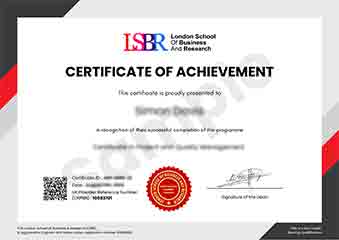
Sample Certificate
Preview the certificate you'll receive upon successful completion of this program.
Get Free Course Info
Enter your details and we'll send you a comprehensive course information pack straight to your inbox.
Employer Sponsored Training
Let your employer invest in your professional development. Request a corporate invoice and get your training funded.
Request Corporate InvoiceWhat People Say About Us
Hear from our students about their experience with the Executive Development Programme in Machine Learning Data Validation Strategies at LSBRX - Executive Education.
Charlotte Williams
United Kingdom"The course provided an in-depth look at machine learning data validation strategies, equipping me with practical skills to improve data quality and model reliability. It has significantly enhanced my ability to tackle real-world data challenges, making me more confident in my career."
Ashley Rodriguez
United States"The Executive Development Programme in Machine Learning Data Validation Strategies has significantly enhanced my ability to ensure data integrity in real-world applications, making my contributions more impactful in the industry. This course has not only deepened my technical skills but also provided me with practical tools to advance my career in data validation and machine learning projects."
Ruby McKenzie
Australia"The course structure is well-organized, providing a clear pathway from foundational concepts to advanced data validation techniques, which has significantly enhanced my understanding and ability to apply these strategies in real-world scenarios, fostering my professional growth in machine learning."