
Executive Development Programme in Managing Security Operations Centers
This program equips executives with strategic insights and practical skills to optimize Security Operations Centers, enhancing threat detection and response capabilities.
Executive Development Programme in Managing Security Operations Centers
Programme Overview
The Executive Development Programme in Managing Security Operations Centers (SOCs) is tailored for senior executives and security professionals aiming to enhance their leadership and operational management skills in the context of cybersecurity. The programme equips participants with a deep understanding of the latest security trends, technologies, and frameworks, focusing on risk management, incident response, and compliance in complex organizational environments. It also emphasizes the importance of integrating security operations with business objectives to drive strategic decision-making and foster a culture of security awareness within organizations.
Participants in this programme will develop critical skills in strategic planning, risk assessment, and crisis management, alongside technical expertise in security analytics, threat intelligence, and automation. They will learn to lead cross-functional teams, leverage advanced security tools and platforms, and build robust security strategies that align with broader organizational goals. The programme also includes hands-on workshops and case studies that simulate real-world scenarios, enabling learners to apply theoretical knowledge in practical situations and refine their leadership and problem-solving abilities.
By completing this programme, participants will be well-prepared to lead their organizations through evolving cybersecurity challenges, ensuring that their security operations centers are not only effective but also integral to the success of their business. They will gain the confidence and competence to navigate the complexities of modern cybersecurity, driving innovation and resilience in the face of emerging threats.
What You'll Learn
The Executive Development Programme in Managing Security Operations Centers (SOCs) is designed for executives and leaders in cybersecurity who wish to enhance their strategic and operational management skills. This comprehensive program equips participants with the knowledge and tools necessary to lead effective SOCs, ensuring robust cybersecurity practices and compliance across their organizations.
Key topics include threat intelligence, incident response strategies, cybersecurity risk management, and leadership in a digital age. Participants will learn from industry experts and practical case studies, providing insights into real-world challenges and solutions. The program also emphasizes the importance of integrating security operations with business objectives to drive organizational resilience and innovation.
Upon graduation, participants will be well-prepared to lead SOCs with a forward-thinking approach, capable of managing complex security threats and fostering a culture of security awareness. Graduates will have the skills to build and maintain a cohesive team, implement effective security strategies, and align security practices with business goals. This program opens doors to career advancement in executive-level cybersecurity roles, including Chief Information Security Officer (CISO), Security Operations Director, and Cybersecurity Strategy Manager.
By investing in this program, leaders will not only enhance their own capabilities but also position their organizations for success in an increasingly complex and interconnected digital landscape.
Programme Highlights
Industry-Aligned Curriculum
Developed with industry leaders for job-ready skills valued by employers worldwide.
Globally Recognised Certificate
Recognised by employers across 180+ countries as a mark of professional excellence.
Flexible Online Learning
Study at your own pace with lifetime access to all course materials and updates.
Instant Access
Start learning immediately — no application process or waiting period required.
Constantly Updated Content
Stay ahead with the latest industry trends, best practices, and emerging insights.
Career Advancement
87% of graduates report measurable career progression within 6 months of completion.
Topics Covered
- 1. Introduction to Security Operations Centers (SOC): Learners will study the basics of SOC operations, including the purpose and structure of SOCs. They will gain foundational knowledge on how SOCs function and the importance of maintaining security posture.
- 2. Incident Response and Management: This module covers the process of identifying, containing, and remediating security incidents. Learners will develop practical skills in rapid response and effective management of security breaches.
- 3. Security Information and Event Management (SIEM): Learners will explore SIEM tools and techniques used in monitoring and analyzing security events. They will gain proficiency in configuring and managing SIEM systems to detect and respond to threats.
- 4. Threat Intelligence and Analysis: This module focuses on the collection, analysis, and utilization of threat intelligence. Learners will learn how to interpret threat intelligence data to inform security strategies and improve organizational defenses.
- 5. Cybersecurity Operations Strategy: Learners will develop skills in creating and implementing comprehensive cybersecurity strategies. This includes understanding risk management, compliance requirements, and best practices in cybersecurity operations.
- 6. Advanced Threat Detection and Prevention: This module delves into advanced techniques for detecting and preventing sophisticated cyber threats. Learners will gain expertise in using advanced tools and methodologies to enhance SOC capabilities.
- 7. Automation and Orchestration in SOCs: Learners will study how automation and orchestration tools can streamline SOC operations. They will develop skills in deploying and managing these tools to improve efficiency and effectiveness.
- 8. Leadership and Team Management for SOCs: This module covers leadership principles and team management strategies specific to managing a SOC. Learners will gain skills in leading a team, fostering a culture of security awareness, and managing cross-functional teams.
- 9. Security Operations Center Metrics and KPIs: Learners will learn how to establish and use metrics and key performance indicators (KPIs) to measure SOC performance. They will develop the ability to analyze data and use it to drive continuous improvement in SOC operations.
- 10. Emerging Security Trends and Future Directions: This module examines current and emerging security trends, including new technologies and threats. Learners will gain foresight into future developments in cybersecurity and how SOCs can adapt to evolving challenges.
What You Get When You Enroll
Secure checkout • Instant access • Certificate included
Key Facts
Audience: Security professionals, team leaders
Prerequisites: Basic security knowledge, + years experience
Outcomes: Enhanced leadership skills, operational efficiency, threat detection expertise
Ready to get started?
Join thousands of professionals who already took the next step. Enroll now and get instant access.
Enroll Now — $199Why This Course
Enhanced Leadership Skills: An Executive Development Programme in Managing Security Operations Centers (SOC) provides professionals with advanced leadership training. This includes strategic planning, crisis management, and team leadership, which are crucial for overseeing complex security operations. These skills are directly applicable to managing a SOC, where the ability to lead a diverse team in a high-pressure environment is essential.
Advanced Cybersecurity Knowledge: The programme offers in-depth knowledge of cybersecurity trends, threats, and best practices. Participants learn about the latest technologies and methodologies to protect against cyber-attacks, which is vital for staying ahead in a rapidly evolving field. This knowledge ensures that professionals can make informed decisions that enhance their organization’s security posture.
Operational Efficiency: By focusing on operational efficiency, the programme teaches professionals how to optimize processes and resources within a SOC. This includes understanding automation tools, risk management, and threat intelligence platforms. These skills help in reducing response times to security incidents and improving overall operational effectiveness, which is critical for maintaining a robust security environment.
Your Path to Certification
Trusted by Professionals Worldwide
Course Brochure
Download our comprehensive course brochure with all details
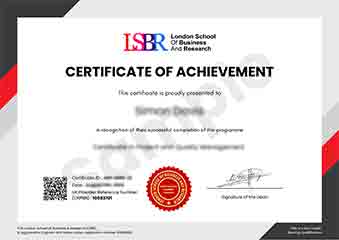
Sample Certificate
Preview the certificate you'll receive upon successful completion of this program.
Get Free Course Info
Enter your details and we'll send you a comprehensive course information pack straight to your inbox.
Employer Sponsored Training
Let your employer invest in your professional development. Request a corporate invoice and get your training funded.
Request Corporate InvoiceWhat People Say About Us
Hear from our students about their experience with the Executive Development Programme in Managing Security Operations Centers at LSBRX - Executive Education.
Oliver Davies
United Kingdom"The course content was incredibly detailed and relevant, providing a solid foundation in managing Security Operations Centers. I gained practical skills that have already improved my ability to handle real-world security operations challenges effectively."
Greta Fischer
Germany"The Executive Development Programme in Managing Security Operations Centers has significantly enhanced my ability to handle real-world security challenges, making my role more strategic and impactful. This program has not only deepened my technical skills but also provided invaluable insights into leadership and operational management, paving the way for career advancement in a rapidly evolving security landscape."
Jack Thompson
Australia"The course structure was well-organized, providing a comprehensive overview of managing Security Operations Centers that directly translated into practical skills for real-world scenarios, significantly enhancing my professional growth."