
Executive Development Programme in Marine Pollution Mitigation Techniques
This programme equips executives with advanced techniques for mitigating marine pollution, enhancing environmental stewardship and compliance.
Executive Development Programme in Marine Pollution Mitigation Techniques
Programme Overview
The Executive Development Programme in Marine Pollution Mitigation Techniques is tailored for senior executives and professionals with a vested interest in marine conservation and sustainable management practices. This programme equips participants with cutting-edge strategies and technologies to address and mitigate environmental challenges, including oil spills, plastic pollution, and chemical contamination. Participants will learn from industry experts and academics, gaining insights into regulatory frameworks, international policies, and innovative solutions in marine environmental protection.
Learners will develop a comprehensive set of skills, including the ability to assess and prioritize marine pollution risks, design and implement effective mitigation strategies, and manage interdisciplinary teams to achieve sustainability goals. Additionally, participants will enhance their knowledge of advanced technologies and tools for monitoring marine environments, as well as best practices in stakeholder engagement and community outreach. These skills are essential for creating sustainable business practices and contributing to global environmental initiatives.
The career impact of this programme is significant, as participants can leverage their enhanced expertise to drive innovation and stewardship in their organizations. Graduates are well-prepared to lead initiatives that reduce environmental footprints, foster corporate social responsibility, and contribute to policy development. The programme also provides a platform for networking with leading experts and industry leaders, opening doors to new opportunities and collaborations in the field of marine pollution mitigation.
What You'll Learn
The Executive Development Programme in Marine Pollution Mitigation Techniques is designed for leaders and professionals committed to reducing environmental impact and fostering sustainable practices. This comprehensive programme equips participants with advanced knowledge in marine pollution prevention, control, and remediation strategies. Key topics include the assessment and management of plastic waste, oil spill response, carbon footprint reduction, and the integration of renewable energy sources in maritime operations.
Participants engage in hands-on workshops, interactive seminars, and fieldwork, ensuring a practical understanding of mitigation techniques. Upon completion, graduates are well-prepared to lead initiatives that promote sustainable maritime practices, enhance corporate environmental responsibility, and contribute to global environmental conservation efforts.
This programme opens doors to diverse career opportunities, including managerial roles in maritime companies, environmental consulting firms, government agencies, and non-profit organizations focused on marine conservation. Graduates can also establish themselves as industry experts, contributing to the development and implementation of policies and standards that protect marine ecosystems.
Programme Highlights
Industry-Aligned Curriculum
Developed with industry leaders for job-ready skills valued by employers worldwide.
Globally Recognised Certificate
Recognised by employers across 180+ countries as a mark of professional excellence.
Flexible Online Learning
Study at your own pace with lifetime access to all course materials and updates.
Instant Access
Start learning immediately — no application process or waiting period required.
Constantly Updated Content
Stay ahead with the latest industry trends, best practices, and emerging insights.
Career Advancement
87% of graduates report measurable career progression within 6 months of completion.
Topics Covered
- 1. Introduction to Marine Pollution: Learners will study the sources, types, and impacts of marine pollution, understanding the basic concepts and global trends. They will gain foundational knowledge to assess and categorize different types of marine pollutants.
- 2. Legal and Regulatory Frameworks for Marine Pollution Control: This module covers international laws and regulations such as MARPOL, OSPAR, and EU directives, highlighting their roles in mitigating marine pollution. Learners will understand how these frameworks impact maritime operations.
- 3. Environmental Chemistry of Marine Pollutants: Focusing on the chemical behavior of pollutants in marine environments, learners will explore the mechanisms of pollutant transformation, distribution, and bioaccumulation. Practical skills include using chemical models to predict pollutant behavior.
- 4. Advanced Techniques in Oil Spill Response: This module delves into advanced methods for oil spill prevention, detection, and response, including physical, chemical, and biological remediation techniques. Learners will practice deploying oil spill containment systems.
- 5. Emerging Technologies in Marine Pollution Monitoring: Covering modern technology applications such as satellite imagery, sensors, and drones, learners will learn to use these tools for real-time monitoring of marine pollution. Practical exercises include setting up and operating monitoring equipment.
- 6. Sustainable Practices in Shipping and Offshore Operations: This module explores sustainable shipping and offshore operational practices that minimize pollution, focusing on design, maintenance, and operational efficiency. Learners will develop plans for implementing sustainable practices in their organizations.
- 7. Risk Assessment and Management for Marine Pollution: Focusing on risk management strategies, learners will learn to conduct comprehensive risk assessments and implement mitigation measures to prevent marine pollution incidents. Practical activities include conducting risk assessments for various maritime scenarios.
- 8. Integrated Pollution Prevention and Control Strategies: This module covers the development and implementation of integrated pollution prevention and control strategies, emphasizing cross-sector collaboration. Learners will participate in group projects to design and implement such strategies.
- 9. Public Awareness and Engagement in Marine Pollution Mitigation: Focusing on community engagement and public education, learners will learn to develop and implement effective communication strategies to raise awareness about marine pollution. Practical skills include creating and delivering presentations and workshops.
- 10. Leadership in Marine Pollution Mitigation: This module focuses on developing leadership skills for managing and driving initiatives aimed at reducing marine pollution. Learners will practice leadership techniques and strategies for influencing change within their organizations.
What You Get When You Enroll
Secure checkout • Instant access • Certificate included
Key Facts
Audience: Environmental professionals, marine scientists
Prerequisites: Basic knowledge of marine biology
Outcomes: Enhanced expertise in pollution mitigation, network expansion
Ready to get started?
Join thousands of professionals who already took the next step. Enroll now and get instant access.
Enroll Now — $199Why This Course
Enhance Professional Competence: Engaging in an Executive Development Programme in Marine Pollution Mitigation Techniques allows professionals to gain in-depth knowledge of the latest technologies and strategies in environmental management. This specialization can significantly enhance one’s resume, making them more competitive in the job market, especially in roles that require advanced understanding of marine ecosystems and pollution control measures.
Career Advancement Opportunities: The programme equips participants with the skills necessary to lead and manage environmental projects aimed at reducing marine pollution. By acquiring these skills, professionals can transition into leadership positions or specialized roles within government agencies, NGOs, and private companies focused on environmental sustainability.
Network with Industry Leaders: Participating in such a programme provides access to a network of experienced professionals and thought leaders in the field of marine pollution. These connections can lead to collaborative opportunities, mentorship, and potential job offers, thereby broadening career prospects and accelerating career growth.
Practical Application of Knowledge: The programme includes hands-on training and case studies that allow participants to apply theoretical knowledge to real-world scenarios. This practical experience is invaluable for developing problem-solving skills and innovative approaches to mitigating marine pollution, which can be directly applied in professional settings.
Your Path to Certification
Trusted by Professionals Worldwide
Course Brochure
Download our comprehensive course brochure with all details
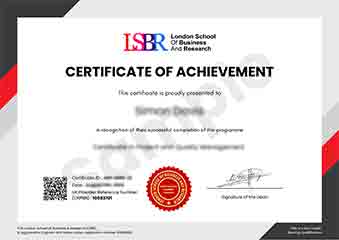
Sample Certificate
Preview the certificate you'll receive upon successful completion of this program.
Get Free Course Info
Enter your details and we'll send you a comprehensive course information pack straight to your inbox.
Employer Sponsored Training
Let your employer invest in your professional development. Request a corporate invoice and get your training funded.
Request Corporate InvoiceWhat People Say About Us
Hear from our students about their experience with the Executive Development Programme in Marine Pollution Mitigation Techniques at LSBRX - Executive Education.
Oliver Davies
United Kingdom"The course content was incredibly thorough and well-researched, providing a solid foundation in marine pollution mitigation techniques. I gained valuable practical skills that I can directly apply to my work, enhancing my ability to address environmental challenges in a more effective manner."
Priya Sharma
India"The Executive Development Programme in Marine Pollution Mitigation Techniques has significantly enhanced my understanding of practical solutions to environmental challenges. This course has not only equipped me with the latest industry-relevant skills but also opened new avenues for career advancement in sustainable marine management."
Greta Fischer
Germany"The course structure is well-organized, providing a clear path from basic principles to advanced mitigation techniques, which significantly enhances my understanding and application of marine pollution control strategies in real-world scenarios. It has been instrumental in broadening my knowledge and preparing me for professional challenges in the field."