
Executive Development Programme in Microprocessor Controlled Prosthetics: Advanced Techniques
This program equips executives with advanced techniques in microprocessor-controlled prosthetics, enhancing clinical outcomes and patient care through innovative technology.
Executive Development Programme in Microprocessor Controlled Prosthetics: Advanced Techniques
Programme Overview
The Executive Development Programme in Microprocessor Controlled Prosthetics: Advanced Techniques is an intensive, cutting-edge curriculum designed for medical professionals, engineers, and researchers who are committed to advancing the field of prosthetics. This program covers the latest advancements in microprocessor-controlled prosthetic technology, including the integration of biosignals, sensor arrays, and advanced materials science to enhance patient functionality and quality of life. Participants will explore the development of custom prosthetics, the integration of artificial intelligence for personalized treatment, and the ethical implications of advanced prosthetic technologies.
Key skills and knowledge learners will develop include an in-depth understanding of microprocessor technology, the design and fabrication of advanced prosthetic devices, and the application of biosignal processing techniques. The program also emphasizes the importance of interdisciplinary collaboration and the ethical considerations involved in the development and deployment of these technologies. Through hands-on workshops and case studies, participants will learn to apply their knowledge to real-world scenarios, fostering innovation and leadership in the field.
This program has a significant impact on career progression, offering participants the opportunity to lead and innovate in the development of next-generation prosthetics. Graduates will be well-prepared to contribute to clinical trials, research, and product development, potentially leading to the creation of more effective, personalized, and user-friendly prosthetic solutions. The program also equips participants with the skills to mentor and guide the next generation of prosthetic engineers and clinicians, driving the continuous improvement and advancement of prosthetic technology.
What You'll Learn
The Executive Development Programme in Microprocessor Controlled Prosthetics: Advanced Techniques is a comprehensive and innovative initiative designed to equip professionals with the latest knowledge and skills in the rapidly evolving field of microprocessor-controlled prosthetics. This program, tailored for executives and professionals in the medical technology sector, offers a deep dive into advanced techniques and technologies that are transforming limb prosthetics.
Key topics include the design and development of microprocessor-controlled prosthetics, the integration of biomechanics and electronics, and the latest advancements in prosthetic limb technology. Participants will gain insights into the ethical considerations and patient-centered approaches in the field. The curriculum also covers the latest research and clinical applications, ensuring that graduates are at the forefront of innovation.
Upon completion, graduates will be well-prepared to lead and innovate in the design, development, and implementation of advanced prosthetic solutions. They will be able to enhance patient outcomes by leveraging the latest technology and improving the quality of life for amputees. The program equips participants with the skills to drive research, clinical practice, and product development in the prosthetics industry.
Career opportunities abound for graduates, including roles in medical device companies, research institutions, and healthcare organizations. Graduates can also pursue leadership positions in hospitals, rehabilitation centers, or startups focused on developing cutting-edge prosthetic technologies. By participating in this program, professionals will not only advance their careers but also contribute to the betterment of prosthetics technology and patient care.
Programme Highlights
Industry-Aligned Curriculum
Developed with industry leaders for job-ready skills valued by employers worldwide.
Globally Recognised Certificate
Recognised by employers across 180+ countries as a mark of professional excellence.
Flexible Online Learning
Study at your own pace with lifetime access to all course materials and updates.
Instant Access
Start learning immediately — no application process or waiting period required.
Constantly Updated Content
Stay ahead with the latest industry trends, best practices, and emerging insights.
Career Advancement
87% of graduates report measurable career progression within 6 months of completion.
Topics Covered
- 1. Introduction to Microprocessor-Controlled Prosthetics: Learners will study the basic principles of microprocessor-controlled prosthetics, including the role of microprocessors in prosthetic devices. They will gain foundational knowledge in prosthetic anatomy and the operation of microprocessors in medical devices.
- 2. Microcontroller Fundamentals: This module covers the basics of microcontrollers, their architecture, and programming languages used in microprocessor-controlled prosthetics. Learners will develop practical skills in configuring and programming microcontrollers.
- 3. Sensor Technology in Prosthetics: Learners will explore various types of sensors used in prosthetics and their applications. They will understand how these sensors interact with microprocessors to enhance the functionality and user experience of prosthetic devices.
- 4. Advanced Microcontroller Programming: This module delves into advanced programming techniques and algorithms used in microprocessor-controlled prosthetics. Learners will gain experience in developing complex control systems for prosthetic devices.
- 5. Signal Processing in Prosthetics: Learners will study the principles of signal processing and their application in enhancing the performance of microprocessor-controlled prosthetics. Practical skills in signal processing will be developed through hands-on exercises.
- 6. Human-Machine Interface Design: This module focuses on the design of intuitive and user-friendly interfaces for microprocessor-controlled prosthetics. Learners will learn to create interfaces that enhance user interaction and device control.
- 7. Control Systems for Prosthetics: Learners will study the design and implementation of control systems in prosthetics. They will gain practical experience in creating and testing control systems that ensure smooth and efficient functioning of prosthetic devices.
- 8. Advanced Prosthetic Applications: This module covers advanced applications of microprocessor-controlled prosthetics in various fields, including sports, rehabilitation, and daily living. Learners will explore real-world case studies and applications of these technologies.
- 9. Ethical and Legal Considerations: Learners will study the ethical and legal implications of microprocessor-controlled prosthetics. They will understand the importance of compliance with regulations and standards in the development and deployment of these technologies.
- 10. Research and Development in Prosthetics: This module provides an overview of current research and development trends in microprocessor-controlled prosthetics. Learners will gain insights into cutting-edge technologies and future directions in the field.
What You Get When You Enroll
Secure checkout • Instant access • Certificate included
Key Facts
Audience: Engineers, clinicians, prosthetists
Prerequisites: Basic electronics, programming knowledge
Outcomes: Design microprocessor-controlled prosthetics, understand advanced techniques
Ready to get started?
Join thousands of professionals who already took the next step. Enroll now and get instant access.
Enroll Now — $199Why This Course
Enhanced Clinical Proficiency: This executive development programme equips professionals with the latest knowledge in microprocessor-controlled prosthetics, enabling them to offer state-of-the-art solutions to patients. Clinical skills are refined to incorporate advanced techniques, improving patient outcomes and satisfaction.
Updated Technological Expertise: The programme focuses on the latest advancements in microprocessor technology, ensuring that professionals are well-versed in the latest prosthetic devices and their applications. This keeps practitioners at the forefront of the field, making them invaluable assets in their organizations and patient care.
Leadership and Management Skills: Beyond technical expertise, the programme also develops leadership and management skills. Professionals learn to lead teams, manage complex projects, and navigate the evolving healthcare landscape, enhancing their career prospects and their ability to drive innovation within their institutions.
Your Path to Certification
Trusted by Professionals Worldwide
Course Brochure
Download our comprehensive course brochure with all details
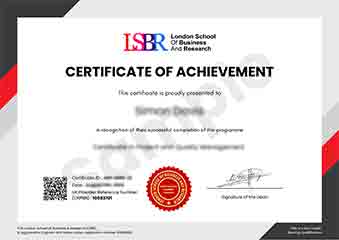
Sample Certificate
Preview the certificate you'll receive upon successful completion of this program.
Get Free Course Info
Enter your details and we'll send you a comprehensive course information pack straight to your inbox.
Employer Sponsored Training
Let your employer invest in your professional development. Request a corporate invoice and get your training funded.
Request Corporate InvoiceWhat People Say About Us
Hear from our students about their experience with the Executive Development Programme in Microprocessor Controlled Prosthetics: Advanced Techniques at LSBRX - Executive Education.
Charlotte Williams
United Kingdom"The course content was incredibly detailed and well-researched, providing a solid foundation in the latest advancements in microprocessor-controlled prosthetics. Gaining hands-on experience with the practical techniques taught significantly enhanced my ability to apply this knowledge in real-world scenarios, which I believe will greatly benefit my career in biomedical engineering."
Oliver Davies
United Kingdom"This course has been incredibly valuable, equipping me with advanced techniques in microprocessor-controlled prosthetics that are directly applicable in my field. It has not only enhanced my technical skills but also opened up new career opportunities in specialized prosthetic engineering."
Klaus Mueller
Germany"The course structure was meticulously organized, providing a seamless transition from theoretical concepts to practical applications in microprocessor-controlled prosthetics, which significantly enhanced my understanding and prepared me for real-world challenges."