
Executive Development Programme in Morally Informed Safety Practices
This programme equips executives with moral frameworks for safety, enhancing ethical decision-making and creating safer, more responsible organizations.
Executive Development Programme in Morally Informed Safety Practices
Programme Overview
The Executive Development Programme in Morally Informed Safety Practices is designed for senior leaders and executives within organizations that prioritize a robust safety culture. This program addresses the intersection of ethical and practical approaches to safety, equipping participants with the knowledge and tools to foster a culture where safety is not just a policy but a core value. Participants will explore the moral and ethical dimensions of safety, learn to integrate these principles into their organizational strategies, and develop a deeper understanding of how to lead with integrity and accountability.
Key skills and knowledge developed through this program include the ability to articulate a moral framework for safety practices, enhance decision-making under ethical dilemmas, and foster a supportive environment that encourages the reporting and addressing of safety concerns. Participants will also learn to assess and improve organizational risk management processes, ensuring that safety is both a priority and a lived reality within their teams. Leadership skills in this context are strengthened to ensure that safety is embedded in every aspect of organizational operations, from policy development to day-to-day practices.
The career impact of this program is significant, as participants emerge equipped to lead transformative changes within their organizations. They will be better positioned to navigate complex ethical challenges, build trust with stakeholders, and demonstrate a commitment to sustainable and inclusive safety practices. This program not only enhances individual leadership capabilities but also contributes to a broader organizational culture of safety and ethical responsibility, making participants invaluable leaders in their respective fields.
What You'll Learn
The Executive Development Programme in Morally Informed Safety Practices is designed for leaders seeking to enhance their ability to create and maintain a safe, ethical work environment. This transformative program integrates advanced safety practices with ethical leadership, equipping executives with the skills to foster a culture of integrity and accountability. Participants will delve into key topics such as risk management, ethical decision-making, crisis communication, and the integration of moral values into safety protocols. Through interactive workshops, case studies, and expert-led discussions, participants will learn to address complex safety challenges from a morally informed perspective.
Upon completion, graduates will be adept at leading initiatives that not only ensure physical safety but also promote psychological well-being and ethical conduct. They will be prepared to implement strategies that align safety practices with organizational values, thereby enhancing organizational resilience and reputation. This program opens doors to leadership roles in corporate safety, compliance, and risk management, as well as opportunities for consulting and policy development in the fields of health and safety, environmental sustainability, and ethical leadership. By integrating moral principles into safety practices, graduates can contribute to creating safer, more ethical workplaces that inspire trust and commitment among employees.
Programme Highlights
Industry-Aligned Curriculum
Developed with industry leaders for job-ready skills valued by employers worldwide.
Globally Recognised Certificate
Recognised by employers across 180+ countries as a mark of professional excellence.
Flexible Online Learning
Study at your own pace with lifetime access to all course materials and updates.
Instant Access
Start learning immediately — no application process or waiting period required.
Constantly Updated Content
Stay ahead with the latest industry trends, best practices, and emerging insights.
Career Advancement
87% of graduates report measurable career progression within 6 months of completion.
Topics Covered
- 1. Introduction to Morally Informed Safety Practices: Learners will explore the foundational concepts of morally informed safety practices, understanding the ethical dimensions of safety and how moral reasoning influences decision-making. They will gain an ability to analyze safety practices from a moral perspective, identifying ethical dilemmas in safety management.
- 2. Legal and Regulatory Frameworks for Safety: This module covers the legal and regulatory requirements for safety in various industries. Learners will study key legislation and regulations, understand how to navigate legal compliance, and develop skills in interpreting legal documents to improve safety practices.
- 3. Risk Assessment and Management: Learners will study methods for assessing risks and managing safety risks effectively. They will apply risk management techniques, including hazard identification, risk evaluation, and control measures, to develop practical skills in proactive safety management.
- 4. Leadership and Moral Responsibility in Safety: This module focuses on the role of leadership in promoting a culture of safety and moral responsibility. Learners will develop leadership skills to foster a safety-conscious environment, understand the importance of moral leadership, and learn how to lead by example in safety practices.
- 5. Moral Foundations of Safety Culture: Learners will delve into the moral foundations that underpin a safety culture, including trust, integrity, and accountability. They will explore how these foundations can be strengthened and maintained within an organization to promote a positive safety culture.
- 6. Communication Skills for Safety: This module covers effective communication techniques for safety, including clear and concise reporting of incidents, open dialogue about safety issues, and the use of storytelling to convey safety messages. Learners will practice these skills in simulated scenarios to enhance their ability to communicate effectively in safety-related contexts.
- 7. Advanced Risk Management Techniques: Building on Module 3, this module explores advanced risk management techniques, including quantitative risk assessment, scenario planning, and risk-based decision-making. Learners will apply these techniques to real-world case studies and develop skills in strategic risk management.
- 8. Ethical Decision-Making in Safety Situations: This module focuses on ethical decision-making in safety-related scenarios. Learners will learn how to apply ethical frameworks to safety decisions, resolve ethical dilemmas, and make informed choices that balance safety with other organizational values.
- 9. Crisis Management and Safety: Learners will study how to manage safety during crises, including emergency response planning, crisis communication, and post-incident analysis. They will develop skills in managing safety in high-stress situations and learning from crisis experiences to improve future safety practices.
- 10. Continuous Improvement in Safety Practices: This module focuses on continuous improvement in safety practices, including the application of root cause analysis, the use of safety management systems, and the implementation of best practices. Learners will develop skills in monitoring, evaluating, and enhancing safety practices over time.
What You Get When You Enroll
Secure checkout • Instant access • Certificate included
Key Facts
Audience: Experienced leaders and safety officers
Prerequisites: Minimum years' relevant experience
Outcomes: Enhanced moral leadership, improved safety culture, increased decision-making skills
Ready to get started?
Join thousands of professionals who already took the next step. Enroll now and get instant access.
Enroll Now — $199Why This Course
Enhanced Ethical Leadership: Participants in the Executive Development Programme in Morally Informed Safety Practices gain a deeper understanding of ethical leadership principles. This not only fosters a safer work environment but also enhances their ability to make informed, ethically sound decisions that align with organizational values and social responsibilities.
Risk Management Skills: The programme equips professionals with advanced risk management techniques that integrate ethical considerations. By learning to anticipate, assess, and mitigate risks, participants can proactively address potential hazards, thereby reducing incidents and improving overall safety standards in their organizations.
Improved Communication and Collaboration: The programme emphasizes the importance of transparent and ethical communication. This skill is crucial for building trust among employees and stakeholders, which is foundational for effective collaboration and the implementation of safety practices. Improved communication can lead to better teamwork and a more cohesive safety culture.
Regulatory Compliance and Best Practices: By adhering to the programme’s curriculum, professionals can stay updated with the latest regulatory requirements and industry best practices. This knowledge ensures that organizations not only meet but exceed safety standards, potentially reducing legal risks and enhancing their reputation as responsible and forward-thinking entities.
Your Path to Certification
Trusted by Professionals Worldwide
Course Brochure
Download our comprehensive course brochure with all details
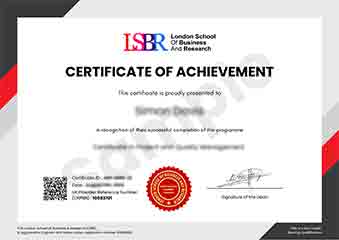
Sample Certificate
Preview the certificate you'll receive upon successful completion of this program.
Get Free Course Info
Enter your details and we'll send you a comprehensive course information pack straight to your inbox.
Employer Sponsored Training
Let your employer invest in your professional development. Request a corporate invoice and get your training funded.
Request Corporate InvoiceWhat People Say About Us
Hear from our students about their experience with the Executive Development Programme in Morally Informed Safety Practices at LSBRX - Executive Education.
James Thompson
United Kingdom"The course provided a deep dive into morally informed safety practices, equipping me with practical tools to implement ethical considerations in safety protocols. Gaining this knowledge has significantly enhanced my ability to lead safer, more responsible teams in my organization."
Kai Wen Ng
Singapore"This course has significantly enhanced my ability to implement morally informed safety practices in the workplace, making my approach more effective and aligned with ethical standards. It has not only deepened my understanding but also provided practical tools that have directly contributed to my career advancement."
Wei Ming Tan
Singapore"The course structure is well-organized, providing a clear path for understanding complex safety practices, which has significantly enhanced my ability to apply these principles in real-world scenarios, leading to substantial professional growth."