
Executive Development Programme in Optimizing Financial Models for Tax Efficiency
Enhance employability with in-demand optimizing financial models for tax efficiency skills. Create opportunities for professional growth.
Executive Development Programme in Optimizing Financial Models for Tax Efficiency
Programme Overview
The Executive Development Programme in Optimizing Financial Models for Tax Efficiency is designed for senior finance professionals, tax managers, and financial analysts who are seeking to enhance their expertise in tax optimization strategies and financial model analysis. This program equips participants with the skills necessary to navigate the complexities of tax laws and regulations, ensuring that financial decisions are aligned with tax efficiency goals. Through a combination of case studies, practical exercises, and expert-led workshops, participants will learn to develop and optimize financial models that not only maximize profitability but also minimize tax liabilities.
Participants will develop a comprehensive understanding of tax-efficient financial modeling techniques, including the use of advanced Excel functions, VBA scripting, and financial software tools. They will learn how to integrate tax considerations into capital structure decisions, manage cash flows, and analyze the tax implications of various business strategies. Additionally, the program covers the latest trends in international tax laws and the impact of regulatory changes on financial models.
The career impact of this program is significant. Graduates will be well-prepared to lead tax optimization initiatives, design more efficient financial models, and contribute to strategic financial planning. This program not only enhances personal career prospects but also positions participants as experts in their organizations, capable of driving cost savings and improving overall corporate performance through enhanced tax efficiency.
What You'll Learn
Dive into the advanced world of tax efficiency with our Executive Development Programme in Optimizing Financial Models for Tax Efficiency. This comprehensive program equips executives and finance professionals with the latest tools and strategies to enhance tax management, reduce financial risks, and maximize profitability. You'll gain in-depth knowledge of tax laws, regulatory environments, and advanced financial modeling techniques, enabling you to design and implement tax-efficient strategies that align with your organization's goals.
Key topics include tax planning, international tax strategies, risk management, and the use of technology in tax compliance. Through real-world case studies and interactive sessions, participants will learn to apply these skills to optimize financial models, streamline processes, and enhance decision-making. The program also emphasizes the importance of collaboration and communication with cross-functional teams to ensure alignment and effectiveness.
Upon completion, graduates will be well-prepared to lead tax optimization initiatives, improve financial reporting, and contribute to strategic decision-making. This program opens doors to advanced roles such as Chief Tax Officer, Director of Tax Planning, and Senior Financial Analyst, as well as opportunities in tax consulting and financial advisory firms. Join this transformative journey and elevate your professional expertise in tax efficiency.
Programme Highlights
Industry-Aligned Curriculum
Developed with industry leaders for job-ready skills valued by employers worldwide.
Globally Recognised Certificate
Recognised by employers across 180+ countries as a mark of professional excellence.
Flexible Online Learning
Study at your own pace with lifetime access to all course materials and updates.
Instant Access
Start learning immediately — no application process or waiting period required.
Constantly Updated Content
Stay ahead with the latest industry trends, best practices, and emerging insights.
Career Advancement
87% of graduates report measurable career progression within 6 months of completion.
Topics Covered
- 1. Introduction to Tax Efficiency and Financial Modeling: Learners will explore the basics of tax efficiency strategies and the role of financial modeling in enhancing tax efficiency. They will gain foundational knowledge in financial modeling techniques and how they impact tax outcomes.
- 2. Tax Laws and Regulations Overview: This module covers key tax laws and regulations relevant to financial models. Learners will understand how different tax jurisdictions apply these laws and how they influence financial modeling decisions.
- 3. Financial Modeling Fundamentals: Learners will delve into the core principles of financial modeling, including cash flow analysis, income statement modeling, and balance sheet analysis. Practical skills in building and maintaining accurate financial models will be developed.
- 4. Advanced Financial Modeling Techniques: This module focuses on advanced modeling techniques such as scenario analysis, sensitivity analysis, and Monte Carlo simulations. Learners will enhance their ability to create robust and dynamic financial models.
- 5. Tax Implications of Financial Decisions: Learners will analyze how various financial decisions impact tax outcomes. They will learn to identify tax-efficient financial strategies and understand the implications of different financial choices on tax liabilities.
- 6. Optimizing Tax Strategies Through Financial Modeling: This module covers how to use financial models to optimize tax strategies. Learners will practice creating tax-efficient financial models and learn to apply these models in real-world scenarios.
- 7. Regulatory Compliance in Financial Modeling: Learners will study the regulatory requirements for financial modeling and learn how to ensure compliance with tax laws and regulations. Practical skills in documenting and reporting financial models will be developed.
- 8. Case Studies in Tax Efficiency and Financial Modeling: Through case studies, learners will apply their knowledge to real-world scenarios. They will analyze complex financial situations and develop tax-efficient financial models to optimize outcomes.
- 9. Advanced Topics in Tax and Financial Modeling: This module explores advanced topics such as transfer pricing, capital structure optimization, and international tax considerations. Learners will gain in-depth knowledge in these specialized areas.
- 10. Evaluation and Reporting of Financial Models: Learners will learn how to evaluate the effectiveness of financial models in achieving tax efficiency goals. They will also develop skills in reporting and presenting financial models to stakeholders.
What You Get When You Enroll
Secure checkout • Instant access • Certificate included
Key Facts
Audience: Financial analysts, tax professionals, managers
Prerequisites: Basic financial modeling, tax law knowledge
Outcomes: Enhanced tax efficiency, improved financial models, practical skills
Ready to get started?
Join thousands of professionals who already took the next step. Enroll now and get instant access.
Enroll Now — $199Why This Course
Enhanced Tax Efficiency: Participating in an Executive Development Programme in Optimizing Financial Models for Tax Efficiency can significantly improve professionals' ability to create and utilize sophisticated tax models. This skill is crucial for optimizing tax payments, reducing liabilities, and ensuring compliance with ever-changing tax regulations. For instance, understanding how to apply advanced tax planning techniques can lead to substantial cost savings for companies, thereby enhancing their financial health and competitiveness.
Advanced Analytical Skills: The programme equips professionals with advanced analytical tools and techniques used in financial modeling. These skills are not only beneficial for tax efficiency but also for broader financial management. For example, professionals can leverage these tools to conduct in-depth financial analyses, forecast trends, and make informed strategic decisions that can drive business growth and profitability.
Strategic Business Insights: By focusing on financial models and tax efficiency, participants gain valuable insights into the strategic implications of financial decisions. This knowledge can help in aligning financial strategies with business objectives, such as maximizing shareholder value or expanding into new markets. For instance, understanding how tax policies impact investment decisions can guide executives in choosing the most favorable locations for new ventures or optimizing existing operations to achieve higher returns.
Your Path to Certification
Trusted by Professionals Worldwide
Course Brochure
Download our comprehensive course brochure with all details
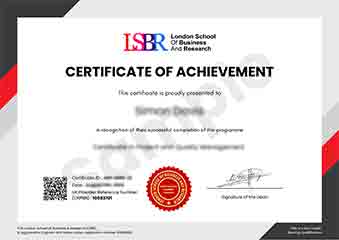
Sample Certificate
Preview the certificate you'll receive upon successful completion of this program.
Get Free Course Info
Enter your details and we'll send you a comprehensive course information pack straight to your inbox.
Employer Sponsored Training
Let your employer invest in your professional development. Request a corporate invoice and get your training funded.
Request Corporate InvoiceWhat People Say About Us
Hear from our students about their experience with the Executive Development Programme in Optimizing Financial Models for Tax Efficiency at LSBRX - Executive Education.
Charlotte Williams
United Kingdom"The course provided in-depth material on tax-efficient financial modeling, equipping me with practical skills to optimize financial strategies. It has significantly enhanced my ability to make informed decisions that can lead to substantial cost savings for my organization."
Tyler Johnson
United States"The Executive Development Programme in Optimizing Financial Models for Tax Efficiency has been incredibly practical, directly applying what I learned to real-world scenarios in my company. This course has significantly enhanced my ability to optimize tax efficiency, leading to more strategic financial decisions and opening up new opportunities for career advancement."
Emma Tremblay
Canada"The course structure was well-organized, providing a clear path from foundational concepts to advanced strategies for optimizing financial models for tax efficiency. The content was highly comprehensive and directly applicable to real-world scenarios, significantly enhancing my professional skills in tax planning and financial modeling."