
Executive Development Programme in Patient Specific Modeling and Simulation
This program equips executives with the knowledge to leverage patient-specific modeling and simulation for improved healthcare outcomes and strategic decision-making.
Executive Development Programme in Patient Specific Modeling and Simulation
Programme Overview
The Executive Development Programme in Patient-Specific Modeling and Simulation is designed for healthcare professionals, including clinicians, researchers, and medical technologists, aiming to enhance their expertise in advanced medical technologies and personalized healthcare solutions. This comprehensive programme integrates cutting-edge methodologies in computational modeling and simulation, providing participants with the necessary tools to tailor treatments and interventions to individual patient needs, thereby improving clinical outcomes and patient care.
Participants will develop a robust set of skills in data analysis, predictive modeling, and clinical application of simulation tools. They will gain proficiency in using state-of-the-art software and platforms for patient-specific modeling, learn to interpret complex medical data, and understand the ethical considerations in personalized treatment planning. Additionally, learners will be equipped with the ability to collaborate across interdisciplinary teams and effectively communicate the benefits of personalized medicine to both medical professionals and patients.
This programme significantly impacts career progression by positioning participants as leaders in the field of personalized healthcare. Graduates will be well-prepared to lead innovative projects, develop new technologies, and contribute to the advancement of medical research and practice. They will also be better equipped to navigate the evolving healthcare landscape, where personalized medicine is increasingly becoming the standard of care.
What You'll Learn
The Executive Development Programme in Patient-Specific Modeling and Simulation is designed to empower healthcare professionals and industry leaders with cutting-edge tools and techniques for personalized medical care. This program bridges the gap between advanced computational modeling and clinical practice, offering participants a comprehensive understanding of patient-specific modeling and its applications in personalized medicine.
Key topics include the principles of computational modeling, simulation techniques, and the integration of big data and artificial intelligence in healthcare. Participants will learn how to apply these methods to develop tailored treatment plans, predict patient outcomes, and optimize clinical decision-making.
Upon completion, graduates will be equipped to lead innovative projects in healthcare technology, contribute to the development of new medical devices and treatments, and enhance patient care through evidence-based practices. The program supports career advancement in roles such as clinical informatics leaders, research scientists, and healthcare technology entrepreneurs.
By combining theoretical knowledge with practical, hands-on experience, this program prepares professionals to navigate the evolving landscape of personalized medicine, ensuring they are at the forefront of advancements in patient care.
Programme Highlights
Industry-Aligned Curriculum
Developed with industry leaders for job-ready skills valued by employers worldwide.
Globally Recognised Certificate
Recognised by employers across 180+ countries as a mark of professional excellence.
Flexible Online Learning
Study at your own pace with lifetime access to all course materials and updates.
Instant Access
Start learning immediately — no application process or waiting period required.
Constantly Updated Content
Stay ahead with the latest industry trends, best practices, and emerging insights.
Career Advancement
87% of graduates report measurable career progression within 6 months of completion.
Topics Covered
- 1. Introduction to Patient-Specific Modeling and Simulation: Learners will understand the basics of patient-specific modeling and simulation, including its importance in personalized medicine. They will gain foundational knowledge on how to create and interpret basic models of patient-specific physiological systems.
- 2. Fundamentals of Computational Biology: This module introduces key concepts in computational biology necessary for modeling and simulation, such as molecular and cellular biology. Learners will acquire skills in using computational tools to analyze biological data.
- 3. Advanced Mathematical Modeling Techniques: Learners will explore advanced mathematical techniques used in modeling patient-specific physiological systems, including differential equations and systems dynamics. They will develop skills in applying these techniques to real-world problems.
- 4. Data Integration and Analysis in Patient Modeling: This module covers methods for integrating diverse data sources into patient-specific models. Learners will learn how to analyze and interpret complex datasets to inform model development.
- 5. Building and Calibrating Patient Models: Learners will learn how to construct and calibrate patient-specific models using clinical and physiological data. They will gain hands-on experience in model building and validation.
- 6. Simulation Techniques for Patient-Specific Models: This module focuses on various simulation techniques used in patient-specific modeling, including Monte Carlo simulations and stochastic modeling. Learners will apply these techniques to predict patient outcomes and evaluate treatment options.
- 7. Advanced Topics in Patient-Specific Modeling: This module delves into cutting-edge topics in patient-specific modeling, such as multi-scale modeling and machine learning approaches. Learners will explore the latest research and applications in the field.
- 8. Clinical Applications of Patient-Specific Modeling: Learners will study how patient-specific models are used in clinical settings to improve patient care and treatment planning. They will gain insights into the practical implications of patient-specific modeling in different medical specialties.
- 9. Regulatory and Ethical Considerations: This module addresses regulatory and ethical issues related to the use of patient-specific models in healthcare. Learners will understand the legal and ethical frameworks governing the use of patient data in modeling.
- 10. Leadership and Communication in Patient-Specific Modeling: Learners will develop leadership and communication skills essential for effectively managing and communicating patient-specific modeling projects within healthcare teams. They will learn how to present complex technical information to non-technical stakeholders.
What You Get When You Enroll
Secure checkout • Instant access • Certificate included
Key Facts
Aimed at healthcare executives
No technical background required
Enhances understanding of patient modeling
Develops skills in simulation techniques
Improves decision-making for personalized treatments
Facilitates strategic planning in healthcare
Ready to get started?
Join thousands of professionals who already took the next step. Enroll now and get instant access.
Enroll Now — $199Why This Course
Enhance Professional Competencies: Participating in an Executive Development Programme in Patient Specific Modeling and Simulation equips professionals with advanced skills in data analysis, modeling, and simulation techniques. These competencies are crucial for addressing personalized healthcare needs, thereby contributing to more effective treatment plans and improved patient outcomes.
Strengthen Leadership Roles: The program offers a platform to develop leadership and strategic thinking skills essential for managing complex healthcare projects. Participants learn to integrate simulation and modeling into organizational strategies, enhancing their ability to lead cross-functional teams and drive innovation in patient care.
Expand Networking Opportunities: Engaging in such a program allows professionals to connect with experts from diverse backgrounds and institutions. These connections can lead to collaborative projects, access to cutting-edge research, and potential career advancements. Networking also facilitates the exchange of best practices and insights into the latest industry trends.
Address Emerging Healthcare Challenges: The programme prepares professionals to tackle contemporary healthcare issues through the application of simulation and modeling. This includes managing healthcare data efficiently, predicting patient needs, and optimizing resource allocation, which are critical for sustainable and efficient healthcare delivery.
Your Path to Certification
Trusted by Professionals Worldwide
Course Brochure
Download our comprehensive course brochure with all details
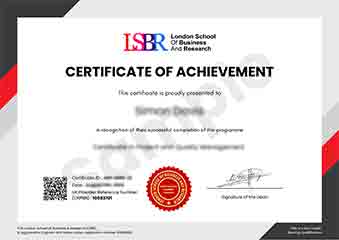
Sample Certificate
Preview the certificate you'll receive upon successful completion of this program.
Get Free Course Info
Enter your details and we'll send you a comprehensive course information pack straight to your inbox.
Employer Sponsored Training
Let your employer invest in your professional development. Request a corporate invoice and get your training funded.
Request Corporate InvoiceWhat People Say About Us
Hear from our students about their experience with the Executive Development Programme in Patient Specific Modeling and Simulation at LSBRX - Executive Education.
Oliver Davies
United Kingdom"The course provided high-quality, cutting-edge content that significantly enhanced my understanding of patient-specific modeling and simulation, equipping me with practical skills that I can directly apply in my work to improve patient care outcomes."
Brandon Wilson
United States"The Executive Development Programme in Patient Specific Modeling and Simulation has significantly enhanced my ability to apply advanced modeling techniques in real-world clinical scenarios, making my work more impactful and aligning closely with industry needs. This program has not only deepened my technical skills but also opened up new career opportunities in specialized areas of healthcare technology."
Kai Wen Ng
Singapore"The course structure was meticulously organized, providing a seamless progression from foundational concepts to advanced topics in patient-specific modeling and simulation, which greatly enhanced my understanding and practical application skills. The comprehensive content not only deepened my knowledge but also opened up new avenues for professional growth in my field."