
Executive Development Programme in Phonetic Processes in Language Technology
This programme enhances leadership skills in phonetic processes, equipping executives with advanced knowledge to drive innovation in language technology.
Executive Development Programme in Phonetic Processes in Language Technology
Programme Overview
The Executive Development Programme in Phonetic Processes in Language Technology is designed for senior executives, managers, and professionals in the technology, linguistics, and education sectors who seek to deepen their understanding of phonetic processes and their application in language technology. This program provides a comprehensive exploration of phonetic and phonological principles, their role in speech recognition, synthesis, and natural language processing, alongside the latest advancements in computational phonetics and speech analytics. Participants will gain insights into how these technologies can be leveraged to enhance user experiences in various applications, from virtual assistants to language learning tools.
Throughout the program, learners will develop a robust set of skills, including the ability to analyze and model phonetic data, understand the acoustic and articulatory aspects of speech, and apply phonetic knowledge to improve the accuracy and naturalness of speech technologies. They will also learn to integrate phonetic processes with other areas of language technology, such as machine learning and natural language processing, to develop innovative solutions. The program equips participants with the knowledge to lead projects involving speech technology and to make informed decisions that drive technological and business innovation.
The career impact of this program is significant, as graduates will be better prepared to lead initiatives that leverage phonetic and phonological processes in their organizations. They will have the expertise to design, develop, and implement advanced speech technologies that enhance user engagement, accessibility, and the overall user experience. Additionally, they will be well-positioned to collaborate with interdisciplinary teams, drive research and development, and contribute to
What You'll Learn
The Executive Development Programme in Phonetic Processes in Language Technology is tailored for professionals aiming to bridge the gap between linguistic theory and cutting-edge technology. This program equips participants with advanced skills in phonetic analysis, speech recognition, and natural language processing, providing a unique blend of theoretical knowledge and practical application. Key topics include phonetic transcription, acoustic phonetics, and the integration of phonetic principles in developing AI-driven language technologies.
Graduates of this program are well-prepared to lead innovation in the tech industry, working on projects that enhance voice-activated interfaces, improve speech-to-text accuracy, and develop more responsive and user-friendly digital assistants. They can also contribute to the development of educational tools, assistive technologies, and multilingual communication platforms.
The career opportunities are vast, from roles in major tech companies to positions in research and development, academia, or startups focused on language technology. Participants will have the opportunity to network with industry leaders, engage in hands-on projects, and contribute to ongoing research, ensuring they are at the forefront of advancements in phonetic processes and language technology.
Programme Highlights
Industry-Aligned Curriculum
Developed with industry leaders for job-ready skills valued by employers worldwide.
Globally Recognised Certificate
Recognised by employers across 180+ countries as a mark of professional excellence.
Flexible Online Learning
Study at your own pace with lifetime access to all course materials and updates.
Instant Access
Start learning immediately — no application process or waiting period required.
Constantly Updated Content
Stay ahead with the latest industry trends, best practices, and emerging insights.
Career Advancement
87% of graduates report measurable career progression within 6 months of completion.
Topics Covered
- 1: Introduction to Phonetic Processes: Learners will explore the foundational concepts of phonetics, including sound production, classification of sounds, and phonetic transcription. They will gain skills in transcribing speech sounds and analyzing phonetic data.
- 2: Acoustic Phonetics: This module delves into the physical properties of speech sounds and their acoustic representation. Learners will understand how sounds are produced and perceived, and they will use software tools to analyze speech recordings.
- 3: Articulatory Phonetics: Learners will study the anatomical and physiological aspects of speech production, focusing on the movement of articulators. Practical skills include using imaging techniques to visualize speech production and conducting articulatory analysis.
- 4: Phonological Theory: This module covers the principles of phonology, including phoneme inventory, allophonic variation, and phonological rules. Learners will develop skills in analyzing phonological patterns and creating phonological descriptions of languages.
- 5: Phonetic Analysis Techniques: Learners will learn various methods for analyzing and representing phonetic data, such as spectrographic analysis and prosodic features. They will apply these techniques to real-world data sets and prepare reports on their findings.
- 6: Speech Perception: This module explores how listeners perceive speech sounds and the cognitive processes involved. Learners will gain insights into the factors that influence speech perception and develop methods for measuring perceptual similarity.
- 7: Applications of Phonetic Knowledge: In this module, learners will apply their knowledge of phonetics to language technology applications, such as speech recognition and synthesis. They will work on projects that involve developing and testing phonetic components for language processing systems.
- 8: Advanced Topics in Phonetic Research: This module focuses on cutting-edge research topics in phonetics, such as phonetic variation, coarticulation, and speech disorders. Learners will engage in discussions and presentations on current research and contribute to a research project.
- 9: Multilingual Phonetic Analysis: Learners will study the phonetic variations across different languages and dialects. They will develop skills in analyzing speech data from multiple languages and understanding the socio-cultural factors that influence phonetic variation.
- 10: Professional Development in Language Technology: This final module prepares learners for careers in language technology by covering professional skills such as project management, communication in interdisciplinary teams, and ethical considerations in language technology development.
What You Get When You Enroll
Secure checkout • Instant access • Certificate included
Key Facts
Audience: Professionals in speech technology, linguists
Prerequisites: Basic knowledge of phonetics, programming experience
Outcomes: Enhanced phonetic analysis skills, improved ASR accuracy
Ready to get started?
Join thousands of professionals who already took the next step. Enroll now and get instant access.
Enroll Now — $199Why This Course
Enhanced Career Opportunities: The 'Executive Development Programme in Phonetic Processes in Language Technology' equips professionals with a deep understanding of phonetic processes, which is crucial for roles in speech recognition, natural language processing, and human-computer interaction. This knowledge can significantly enhance career prospects in tech giants and startups focused on voice assistants, automated transcription, and linguistic analysis.
Innovation and Problem-Solving Skills: This programme not only delves into the technical aspects of phonetic analysis but also fosters innovation and problem-solving. Participants learn to apply advanced phonetic models to solve complex linguistic challenges, which is vital for developing more accurate and efficient language technologies. This skill set is highly sought after in the rapidly evolving field of artificial intelligence and machine learning.
Leadership and Strategic Insight: The programme includes modules that focus on leadership and strategic thinking, essential for professionals aiming to lead cross-disciplinary teams in tech companies. By understanding the intricacies of phonetic processes, leaders can make informed decisions that drive product innovation and improve user experience, positioning their teams at the forefront of technological advancements.
Your Path to Certification
Trusted by Professionals Worldwide
Course Brochure
Download our comprehensive course brochure with all details
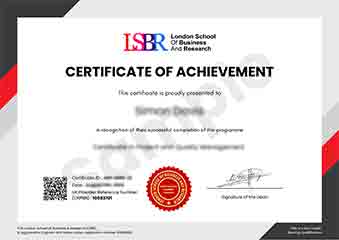
Sample Certificate
Preview the certificate you'll receive upon successful completion of this program.
Get Free Course Info
Enter your details and we'll send you a comprehensive course information pack straight to your inbox.
Employer Sponsored Training
Let your employer invest in your professional development. Request a corporate invoice and get your training funded.
Request Corporate InvoiceWhat People Say About Us
Hear from our students about their experience with the Executive Development Programme in Phonetic Processes in Language Technology at LSBRX - Executive Education.
Sophie Brown
United Kingdom"The course provided an in-depth look at phonetic processes and their application in language technology, which significantly enhanced my understanding of speech processing systems. Gaining hands-on experience with tools and techniques directly applicable to real-world scenarios was incredibly valuable and has already opened up new career opportunities in the field."
Priya Sharma
India"The Executive Development Programme in Phonetic Processes in Language Technology has significantly enhanced my understanding of speech technology, making me more competitive in the job market. This program has equipped me with practical skills that are directly applicable in developing advanced language processing systems, which has opened up new career opportunities for me."
Klaus Mueller
Germany"The course structure was meticulously organized, providing a clear progression from foundational phonetic concepts to advanced applications in language technology, which greatly enhanced my understanding and practical skills. The comprehensive content and real-world examples were particularly beneficial for applying theoretical knowledge to solve complex problems in the field."