
Executive Development Programme in PLC Programming for Industrial Automation
This program enhances executive-level skills in PLC programming, optimizing industrial automation for efficiency and innovation.
Executive Development Programme in PLC Programming for Industrial Automation
Programme Overview
The Executive Development Programme in PLC Programming for Industrial Automation is designed for mid-to-senior level executives and engineers looking to enhance their technical skills in the rapidly evolving field of industrial automation. This program equips participants with a comprehensive understanding of Programmable Logic Controller (PLC) programming, enabling them to manage and optimize complex industrial systems. Participants will gain insights into the latest trends and technologies, including advanced programming techniques, system integration, and data analysis, which are crucial for modern industrial operations.
Learners will develop key skills such as designing and implementing PLC-based control systems, interpreting and writing ladder logic, and managing industrial networks. They will also learn to use simulation tools and software for testing and debugging, ensuring system reliability and safety. Additionally, the program emphasizes practical application through case studies and hands-on workshops, providing participants with the ability to troubleshoot and resolve real-world challenges.
The programme has a significant impact on participants' career trajectories, equipping them with the knowledge and skills necessary to lead and innovate in industrial automation projects. Graduates of this program are well-prepared to drive technological advancements, improve operational efficiency, and lead cross-functional teams in the implementation of automated solutions. This not only enhances their professional capabilities but also positions them as key leaders in the industrial automation sector.
What You'll Learn
Dive into the cutting-edge world of industrial automation with our Executive Development Programme in PLC Programming. Designed for professionals looking to enhance their expertise in Programmable Logic Control (PLC) systems, this comprehensive programme equips you with advanced skills in PLC programming, system integration, and diagnostic techniques. You'll explore key areas such as ladder logic, sequential function charts, and programmable automation controllers, while also gaining hands-on experience with cutting-edge hardware and software tools.
By mastering these skills, you'll be well-prepared to tackle complex industrial challenges and optimize production processes. Graduates of this programme are adept at designing and implementing efficient automation systems, troubleshooting issues, and streamlining operations. This makes you a valuable asset in roles such as industrial automation engineers, PLC technicians, and system integrators.
The programme offers a blend of theoretical knowledge and practical training, ensuring you acquire the skills necessary to excel in a variety of industrial settings. Upon completion, you'll not only have a stronger foundation in PLC programming but also a robust portfolio of projects that demonstrate your ability to innovate and solve real-world problems. Join us to embark on a transformative journey that will propel your career forward in the exciting field of industrial automation.
Programme Highlights
Industry-Aligned Curriculum
Developed with industry leaders for job-ready skills valued by employers worldwide.
Globally Recognised Certificate
Recognised by employers across 180+ countries as a mark of professional excellence.
Flexible Online Learning
Study at your own pace with lifetime access to all course materials and updates.
Instant Access
Start learning immediately — no application process or waiting period required.
Constantly Updated Content
Stay ahead with the latest industry trends, best practices, and emerging insights.
Career Advancement
87% of graduates report measurable career progression within 6 months of completion.
Topics Covered
- 1. Introduction to PLCs: Learners will study the basics of Programmable Logic Controllers (PLCs) and their role in industrial automation. They will gain foundational knowledge on PLC architecture, types, and basic operational principles.
- 2. PLC Programming Fundamentals: This module covers essential programming concepts such as ladder logic, function blocks, and structured text. Learners will develop basic programming skills and learn how to write simple PLC programs.
- 3. Advanced PLC Programming Techniques: Building on the basics, this module focuses on advanced programming techniques including sequential function charts (SFCs), instructions, and program organization. Learners will enhance their ability to write more complex and efficient PLC programs.
- 4. HMI Integration with PLCs: In this module, learners will learn how to integrate Human Machine Interfaces (HMIs) with PLC systems. They will gain practical experience in designing and configuring HMIs to interact effectively with PLCs.
- 5. Network Communication in PLC Systems: This module covers how PLCs communicate with other devices and systems in an industrial network. Learners will study communication protocols and configurations, including Ethernet and other industrial networks.
- 6. Advanced Networking and Security: Building on the basics of network communication, this module delves into advanced networking concepts and security measures for PLC systems. Learners will learn to configure secure networks and implement security protocols to protect industrial systems.
- 7. Fault Diagnosis and Troubleshooting: This module focuses on methods for diagnosing and troubleshooting issues in PLC systems. Learners will learn how to use diagnostic tools, interpret error messages, and resolve common faults in industrial automation systems.
- 8. Real-Time Control Systems: In this module, learners will explore real-time control systems and their applications in industrial automation. They will learn about real-time operating systems and how to implement responsive control strategies in PLCs.
- 9. Case Studies and Project Work: This module provides learners with opportunities to apply their knowledge to real-world scenarios through case studies and project work. They will work on developing, implementing, and testing PLC-based control systems in simulated or real industrial environments.
- 10. Emerging Trends in Industrial Automation: The final module covers emerging trends and technologies in industrial automation, including the Internet of Things (IoT), Industry 4.0, and other advancements. Learners will gain insights into future developments and their implications for PLC programming.
What You Get When You Enroll
Secure checkout • Instant access • Certificate included
Key Facts
Audience: Engineers, technicians, managers
Prerequisites: Basic electronics knowledge
Outcomes: Proficient in PLC programming
Outcomes: Understand industrial automation systems
Outcomes: Develop problem-solving skills
Ready to get started?
Join thousands of professionals who already took the next step. Enroll now and get instant access.
Enroll Now — $199Why This Course
Enhance Technical Expertise: An executive development program in PLC (Programmable Logic Controller) programming equips professionals with advanced technical skills in automation, enabling them to handle complex industrial systems. This deepens their understanding of PLC programming, control systems, and industrial automation principles, which are crucial for optimizing industrial processes and ensuring system reliability.
Career Advancement: By mastering PLC programming, professionals can take on more advanced roles such as senior engineers, automation specialists, or system integrators. This skill set is highly valued in the industry, leading to better career advancement opportunities and potentially higher salaries. The program also provides insights into managerial and leadership aspects of industrial automation, preparing them for higher-level positions.
Industry Relevance: The program focuses on the latest trends and technologies in industrial automation, ensuring participants are up-to-date with the most recent advancements. This knowledge is essential for staying competitive in the job market, as industries increasingly rely on advanced automation technologies to enhance efficiency and productivity. The hands-on training and real-world case studies help professionals apply theoretical knowledge to practical scenarios, making them more effective in their roles.
Your Path to Certification
Trusted by Professionals Worldwide
Course Brochure
Download our comprehensive course brochure with all details
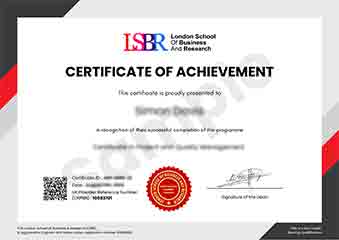
Sample Certificate
Preview the certificate you'll receive upon successful completion of this program.
Get Free Course Info
Enter your details and we'll send you a comprehensive course information pack straight to your inbox.
Employer Sponsored Training
Let your employer invest in your professional development. Request a corporate invoice and get your training funded.
Request Corporate InvoiceWhat People Say About Us
Hear from our students about their experience with the Executive Development Programme in PLC Programming for Industrial Automation at LSBRX - Executive Education.
Oliver Davies
United Kingdom"The course content was incredibly detailed and well-structured, providing a solid foundation in PLC programming that directly translates to practical applications in industrial automation. Gaining hands-on experience through the labs and projects significantly enhanced my ability to troubleshoot and implement automation solutions, which is a huge boost for my career prospects in this field."
Kai Wen Ng
Singapore"The Executive Development Programme in PLC Programming for Industrial Automation has significantly enhanced my ability to design and implement efficient automation systems, making my skills highly relevant in the industry. This course not only deepened my technical knowledge but also provided practical insights that have propelled my career forward."
Isabella Dubois
Canada"The course structure was well-organized, providing a clear path from basic PLC programming concepts to advanced industrial automation techniques, which significantly enhanced my understanding and practical skills. The comprehensive content and real-world applications made the learning process engaging and directly applicable to my professional growth in the field."