
Executive Development Programme in Pollinator Habitat Creation Guide
This programme equips executives with strategies to create and manage pollinator habitats, enhancing biodiversity and corporate sustainability.
Executive Development Programme in Pollinator Habitat Creation Guide
Programme Overview
The Executive Development Programme in Pollinator Habitat Creation Guide is tailored for senior-level professionals in environmental conservation, urban planning, agriculture, and policy-making who are dedicated to enhancing biodiversity through habitat restoration. The programme focuses on the comprehensive science and practical applications of creating and managing pollinator habitats, integrating the latest research and industry practices to address ecological challenges.
Participants will develop a deep understanding of the ecological needs of various pollinator species, including bees, butterflies, and birds, and learn to design, implement, and evaluate effective pollinator habitats. Skills in stakeholder engagement, project management, and policy advocacy will be enhanced, enabling participants to lead initiatives that not only improve biodiversity but also align with sustainable development goals. The programme also emphasizes the economic benefits of pollinator health, such as increased agricultural productivity and ecological tourism.
The career impact of this programme is significant, as participants will be equipped with the knowledge and skills to drive impactful change in their professional spheres. They will be better positioned to influence policy, secure funding, and collaborate across sectors to create more resilient ecosystems and support sustainable development initiatives. Graduates of this programme are expected to lead transformative projects that enhance ecological health and contribute to global biodiversity conservation efforts.
What You'll Learn
The Executive Development Programme in Pollinator Habitat Creation Guide is a comprehensive initiative designed to equip professionals with the knowledge and skills necessary to enhance and maintain pollinator habitats. This program is invaluable for organizations and individuals committed to sustainable development, environmental conservation, and biodiversity enhancement.
Key topics include the biology of pollinators, the impact of human activities on pollinator populations, best practices in habitat creation, and the economic and ecological benefits of pollinator-friendly environments. Participants will engage in hands-on workshops, site visits to successful pollinator projects, and interactive case studies that offer real-world applications of the concepts learned.
Upon completion, graduates are well-prepared to implement pollinator conservation strategies in their workplaces, contributing to local ecosystems and fostering sustainable business practices. This program opens doors to a variety of career opportunities, including habitat restoration coordinator, environmental consultant, biodiversity manager, and sustainability officer. Graduates can also pursue further education or certifications in environmental science, ecology, or conservation biology, expanding their professional horizons.
Programme Highlights
Industry-Aligned Curriculum
Developed with industry leaders for job-ready skills valued by employers worldwide.
Globally Recognised Certificate
Recognised by employers across 180+ countries as a mark of professional excellence.
Flexible Online Learning
Study at your own pace with lifetime access to all course materials and updates.
Instant Access
Start learning immediately — no application process or waiting period required.
Constantly Updated Content
Stay ahead with the latest industry trends, best practices, and emerging insights.
Career Advancement
87% of graduates report measurable career progression within 6 months of completion.
Topics Covered
- 1. Introduction to Pollinator Biology: Learners will study the basics of pollinator biology, including the roles of different pollinator species. They will gain foundational knowledge about pollinator behaviors, habitats, and the importance of pollinators in ecosystems.
- 2. Habitat Creation Fundamentals: This module covers the essentials of creating pollinator-friendly habitats, including site selection, soil preparation, and plant selection. Learners will learn how to design and establish habitats that support a variety of pollinator species.
- 3. Pollinator-Specific Habitat Requirements: Learners will explore the specific habitat needs of various pollinator species, such as bees, butterflies, and moths. They will understand the role of different plant species in supporting these pollinators and how to create diverse plant communities.
- 4. Advanced Pollinator Habitat Design: This advanced module focuses on designing complex pollinator habitats that not only support a wide range of species but also integrate with existing landscapes. Learners will develop skills in integrating pollinator-friendly elements into urban and agricultural settings.
- 5. Pollinator Conservation Strategies: This module introduces learners to various conservation strategies and management practices that protect and enhance pollinator habitats. Learners will learn about the importance of habitat connectivity and the role of land management in supporting pollinator health.
- 6. Integrated Pest Management for Pollinator Health: Learners will study integrated pest management (IPM) techniques specifically tailored to protect pollinators. They will understand how to manage pests without harming pollinators and learn about the use of pesticides and other chemicals in pollinator habitats.
- 7. Monitoring and Evaluation of Pollinator Habitats: This module covers the methods and tools used to monitor and evaluate the success of pollinator habitats. Learners will learn how to assess the health and diversity of pollinator populations and track changes over time.
- 8. Communication and Outreach for Pollinator Conservation: In this module, learners will learn effective communication strategies to engage and educate the public about pollinator conservation. They will develop skills in creating outreach materials and organizing community events to promote pollinator habitat creation.
- 9. Policy and Advocacy for Pollinator Protection: This module focuses on the role of policy and advocacy in protecting pollinators. Learners will understand the importance of policy at various levels of government and how to advocate for policies that support pollinator habitat creation and protection.
- 10. Case Studies in Pollinator Habitat Creation: Learners will analyze real-world case studies of successful pollinator habitat creation projects. They will learn from the experiences of experts and practitioners and gain insights into best practices and challenges in implementing pollinator habitat initiatives.
What You Get When You Enroll
Secure checkout • Instant access • Certificate included
Key Facts
Audience: Conservationists, land managers, policymakers
Prerequisites: Basic knowledge of ecology
Outcomes: Enhanced habitat knowledge, practical skills, network established
Ready to get started?
Join thousands of professionals who already took the next step. Enroll now and get instant access.
Enroll Now — $199Why This Course
Enhance Strategic Thinking: Participating in an Executive Development Programme in Pollinator Habitat Creation can significantly boost strategic thinking skills. This program equips professionals with a deep understanding of ecological principles and sustainable practices, enabling them to develop innovative strategies for environmental stewardship and corporate sustainability. For instance, learning how to create and manage pollinator habitats can translate into innovative business practices that enhance brand reputation and attract environmentally conscious customers.
Develop Leadership Competencies: The programme focuses on leadership and team management, providing insights into fostering a collaborative and inclusive work environment. Through practical workshops and case studies, participants learn to inspire and direct teams towards shared goals, enhancing their ability to lead cross-functional projects and initiatives. This can lead to improved team performance and a more positive workplace culture.
Build Cross-Disciplinary Skills: The programme bridges the gap between ecological science and corporate strategy, offering professionals a unique opportunity to develop interdisciplinary skills. Participants gain knowledge in areas such as biodiversity conservation, ecosystem services, and sustainable business practices. These skills are invaluable in a modern business landscape where companies increasingly seek to integrate environmental sustainability into their core operations, thereby opening up new career opportunities and enhancing job security.
Your Path to Certification
Trusted by Professionals Worldwide
Course Brochure
Download our comprehensive course brochure with all details
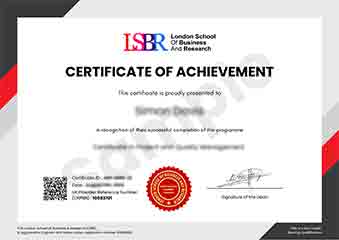
Sample Certificate
Preview the certificate you'll receive upon successful completion of this program.
Get Free Course Info
Enter your details and we'll send you a comprehensive course information pack straight to your inbox.
Employer Sponsored Training
Let your employer invest in your professional development. Request a corporate invoice and get your training funded.
Request Corporate InvoiceWhat People Say About Us
Hear from our students about their experience with the Executive Development Programme in Pollinator Habitat Creation Guide at LSBRX - Executive Education.
Oliver Davies
United Kingdom"The course content was incredibly thorough and well-researched, providing a solid foundation in pollinator habitat creation. I gained practical skills that I can directly apply to enhance biodiversity in urban and rural settings, which I believe will be invaluable for my career in environmental management."
Anna Schmidt
Germany"This course has been incredibly valuable in enhancing my understanding of pollinator habitat creation, which is directly applicable to my role in environmental consulting. It has not only broadened my technical skills but also opened up new career opportunities in sustainable development projects."
Kavya Reddy
India"The course structure was well-organized, providing a clear pathway for understanding the complexities of pollinator habitat creation, which has significantly enhanced my knowledge and practical skills in this field. The comprehensive content and real-world applications have been invaluable for my professional growth."