
Executive Development Programme in Power System Stability: Analysis and Control
This program enhances leaders' skills in analyzing and controlling power system stability, ensuring robust and reliable energy systems.
Executive Development Programme in Power System Stability: Analysis and Control
Programme Overview
The Executive Development Programme in Power System Stability: Analysis and Control is designed to equip industry leaders and engineers with the advanced knowledge and strategic insights needed to enhance the stability and reliability of power systems. This program is ideal for executives, engineers, and technical managers involved in power system operations, planning, and maintenance. It addresses critical issues such as voltage stability, transient oscillations, and the integration of renewable energy sources, providing a comprehensive understanding of the latest technologies and methodologies in power system analysis and control.
Participants will develop a deep understanding of advanced analytical tools and control strategies, including real-time monitoring, predictive analytics, and adaptive control systems. The program emphasizes the application of these tools in practical scenarios, enhancing participants' ability to design and implement robust power system solutions. Additionally, learners will gain expertise in risk assessment, resilience planning, and cybersecurity, which are essential for managing the complexities of modern power systems.
The career impact of this program is significant, as graduates will be well-prepared to lead initiatives that improve power system stability, optimize operations, and ensure compliance with regulatory standards. These skills are particularly valuable in the rapidly evolving power sector, where adaptability and innovation are crucial. Graduates can expect to advance their careers in roles such as power system analyst, senior engineer, or project manager, contributing to the development of more sustainable and reliable energy infrastructure.
What You'll Learn
The Executive Development Programme in Power System Stability: Analysis and Control is designed to equip professionals with advanced skills in understanding, analyzing, and controlling power system stability. This program is a valuable asset for engineers, researchers, and executives aiming to enhance their expertise in the dynamic field of power systems. By delving into core areas such as power system dynamics, stability analysis techniques, and control strategies, participants gain a comprehensive understanding of the complexities involved in maintaining grid stability.
Key topics include the latest advancements in renewable energy integration, smart grid technologies, and cybersecurity measures. Through hands-on workshops, real-world case studies, and interactive discussions, learners apply theoretical knowledge to practical scenarios, fostering a deeper understanding of how to implement effective control strategies in the face of emerging challenges.
Graduates of this program are well-prepared to lead projects that ensure grid resilience, optimize energy distribution, and integrate renewable resources efficiently. They can excel in roles such as senior control engineers, project managers, and research scientists, contributing to the development of more sustainable and reliable power systems. The program not only enhances professional competencies but also builds a network of industry leaders, facilitating collaboration and innovation in the sector.
Programme Highlights
Industry-Aligned Curriculum
Developed with industry leaders for job-ready skills valued by employers worldwide.
Globally Recognised Certificate
Recognised by employers across 180+ countries as a mark of professional excellence.
Flexible Online Learning
Study at your own pace with lifetime access to all course materials and updates.
Instant Access
Start learning immediately — no application process or waiting period required.
Constantly Updated Content
Stay ahead with the latest industry trends, best practices, and emerging insights.
Career Advancement
87% of graduates report measurable career progression within 6 months of completion.
Topics Covered
- 1. Introduction to Power Systems: Learners will study the basic principles of power systems, including generation, transmission, and distribution. They will gain foundational knowledge on system components and operations, preparing them for more advanced topics in stability analysis and control.
- 2. Fundamentals of Power System Stability: This module covers the essential concepts of static and dynamic stability, including swing curves, critical clearances, and load-frequency control. Learners will understand the basics of stability margins and how to assess system stability under various operating conditions.
- 3. Modeling Techniques for Power Systems: Learners will explore various modeling techniques used in power system analysis, including lumped parameter models and state-space representations. Practical skills in model development and simulation using industry-standard tools will be developed.
- 4. Stability Analysis Methods: This module focuses on advanced stability analysis techniques, such as modal analysis, time-domain simulations, and frequency-domain analysis. Learners will apply these methods to analyze system behavior and identify potential stability issues.
- 5. Power System Control Basics: Learners will learn about the principles of control systems in power systems, including feedback control, feedforward control, and adaptive control strategies. Practical skills in designing and implementing control systems will be developed.
- 6. Advanced Control Techniques: This module delves into advanced control techniques, such as model predictive control, optimal control, and robust control. Learners will apply these techniques to improve system performance and stability under various operating conditions.
- 7. Power System Protection: Learners will study the fundamentals of power system protection, including relay protection devices and their coordination. They will learn how to design and implement protection schemes to ensure system reliability and stability.
- 8. Power System Security Assessment: This module covers methodologies for assessing the security of power systems, including contingency analysis, security constrained optimization, and security margin studies. Learners will gain practical skills in conducting security assessments and developing strategies to enhance system security.
- 9. Power System Operation and Management: Learners will learn about the operational challenges and management practices in power systems, including load management, generation scheduling, and real-time operations. Practical skills in operational decision-making and system management will be developed.
- 10. Emerging Trends in Power System Stability: This module explores the latest trends and developments in power system stability, including renewable integration, smart grids, and emerging control technologies. Learners will gain insights into future challenges and opportunities in the field of power system stability.
What You Get When You Enroll
Secure checkout • Instant access • Certificate included
Key Facts
Audience: Power system engineers, stability analysts
Prerequisites: Basic knowledge of power systems
Outcomes: Enhanced stability analysis, control techniques proficiency
Ready to get started?
Join thousands of professionals who already took the next step. Enroll now and get instant access.
Enroll Now — $199Why This Course
Enhance Technical Expertise: Participating in the 'Executive Development Programme in Power System Stability: Analysis and Control' enables professionals to deepen their understanding of advanced analytical and control techniques essential for modern power systems. This program covers cutting-edge methodologies, equipping participants with the knowledge to design and implement robust stability solutions.
Career Advancement: The program is designed to help professionals advance in their careers by providing them with a competitive edge. Graduates can take on more complex roles such as stability engineers or project managers, where they can lead initiatives to improve system reliability and efficiency. The program’s focus on practical applications ensures that participants can apply their skills immediately in the workplace.
Network Expansion: The program facilitates connections with industry leaders and peers through interactive sessions and workshops. These networks can be invaluable for professional growth, as they provide opportunities for mentorship and collaboration. Engaging with a diverse group of professionals can lead to new job opportunities and enhanced industry insights.
Your Path to Certification
Trusted by Professionals Worldwide
Course Brochure
Download our comprehensive course brochure with all details
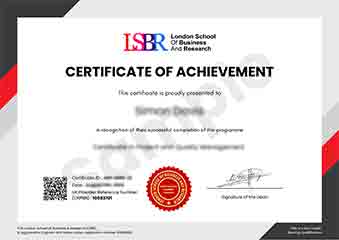
Sample Certificate
Preview the certificate you'll receive upon successful completion of this program.
Get Free Course Info
Enter your details and we'll send you a comprehensive course information pack straight to your inbox.
Employer Sponsored Training
Let your employer invest in your professional development. Request a corporate invoice and get your training funded.
Request Corporate InvoiceWhat People Say About Us
Hear from our students about their experience with the Executive Development Programme in Power System Stability: Analysis and Control at LSBRX - Executive Education.
Oliver Davies
United Kingdom"The course provided in-depth material on power system stability, which significantly enhanced my analytical skills and understanding of control mechanisms. Gaining practical insights into real-world scenarios has been invaluable for my career in electrical engineering."
Klaus Mueller
Germany"This course has significantly enhanced my ability to apply theoretical knowledge to real-world power system stability challenges, making me more competitive in the job market and opening up new opportunities for career advancement in the energy sector."
Mei Ling Wong
Singapore"The course is well-structured, offering a comprehensive overview of power system stability that seamlessly bridges theoretical concepts with practical applications, significantly enhancing my understanding and professional capabilities in the field."