
Executive Development Programme in Practical Computer Vision for Industrial Robotics
Innovate with confidence using modern practical computer vision for industrial robotics methodologies. Create solutions for tomorrow's challenges.
Executive Development Programme in Practical Computer Vision for Industrial Robotics
Programme Overview
The Executive Development Programme in Practical Computer Vision for Industrial Robotics is designed for mid-to-senior level professionals in manufacturing, engineering, and robotics who seek to enhance their understanding and application of computer vision technology in industrial automation contexts. This program equips participants with the necessary skills to develop and implement advanced computer vision solutions that improve production efficiency, accuracy, and safety in various industries, including automotive, electronics, and healthcare.
Participants will develop a comprehensive set of skills including image processing, machine learning, and deep learning techniques specifically tailored for industrial robotics applications. They will learn to design, implement, and optimize computer vision systems to perform tasks such as object recognition, tracking, and manipulation, thereby enabling robots to perform complex operations with precision. Practical modules will focus on real-world case studies and hands-on training, ensuring that learners can apply their knowledge effectively in practical scenarios.
This program significantly impacts career progression by opening new avenues for innovation and leadership in the field of industrial automation. Graduates will be well-prepared to lead or contribute to projects that integrate advanced computer vision technologies, driving businesses towards greater operational efficiency and competitive advantage. The program also fosters a deeper understanding of the technical and business aspects of integrating AI and robotics, positioning participants as key decision-makers in their organizations.
What You'll Learn
The Executive Development Programme in Practical Computer Vision for Industrial Robotics is designed to equip professionals with the latest skills and knowledge in computer vision technology, specifically tailored for the industrial robotics sector. This comprehensive programme offers an immersive learning experience, blending theoretical knowledge with practical application, ensuring participants can seamlessly integrate computer vision solutions into industrial automation processes.
Key topics include machine learning, image processing, sensor integration, and real-world problem-solving techniques. Participants engage in hands-on projects, such as developing vision systems for robotic assembly lines and quality inspection processes, which prepares them to address complex challenges in their industrial settings.
Graduates of this programme are well-prepared to enhance operational efficiency, improve product quality, and drive innovation in their organizations. They can take on leadership roles in robotics and automation, designing and implementing advanced computer vision systems that optimize production processes. Career opportunities extend to roles such as Computer Vision Engineer, Robotics System Developer, and Automation Project Manager, with a significant demand in industries like manufacturing, automotive, and logistics.
Programme Highlights
Industry-Aligned Curriculum
Developed with industry leaders for job-ready skills valued by employers worldwide.
Globally Recognised Certificate
Recognised by employers across 180+ countries as a mark of professional excellence.
Flexible Online Learning
Study at your own pace with lifetime access to all course materials and updates.
Instant Access
Start learning immediately — no application process or waiting period required.
Constantly Updated Content
Stay ahead with the latest industry trends, best practices, and emerging insights.
Career Advancement
87% of graduates report measurable career progression within 6 months of completion.
Topics Covered
- 1. Introduction to Computer Vision: Learners will study the basic principles of computer vision and its applications in industrial robotics, including image acquisition and processing techniques. They will gain foundational knowledge in computer vision and learn how to apply it in industrial settings.
- 2. Image Preprocessing and Feature Extraction: This module focuses on image preprocessing techniques and feature extraction methods essential for computer vision tasks. Learners will develop skills in preparing images for analysis and identifying key features that are crucial for robot vision systems.
- 3. Object Detection and Recognition: Learners will study object detection and recognition methodologies, including popular algorithms and techniques. They will gain practical skills in implementing these techniques to enable industrial robots to identify and classify objects accurately.
- 4. Machine Learning for Computer Vision: This module introduces machine learning concepts and their application in computer vision tasks. Learners will explore various machine learning models and algorithms, enhancing their ability to develop intelligent vision systems for robotics.
- 5. Advanced Image Segmentation Techniques: Focusing on advanced segmentation methods, learners will learn how to segment complex images into meaningful parts. They will acquire the skills to implement these techniques to improve the accuracy and efficiency of robotic systems.
- 6. Camera Calibration and Multi-Camera Systems: This module covers the principles of camera calibration and the integration of multiple cameras in robotic systems. Learners will understand how to set up and calibrate cameras to achieve precise and reliable vision systems.
- 7. Real-Time Vision Processing: Learners will study techniques for real-time image processing and analysis, enabling robots to respond quickly to dynamic environments. They will develop skills in real-time computer vision algorithms and systems.
- 8. Robotic Vision Applications: This module explores various applications of robotic vision in industrial settings, such as quality inspection, navigation, and object manipulation. Learners will gain insights into how vision systems can be integrated into industrial robots to enhance their functionality.
- 9. Simulation and Virtual Prototyping: Focusing on virtual environments, learners will learn how to simulate robotic vision systems and test them before deployment. They will develop skills in using simulation tools to design and validate vision systems.
- 10. Advanced Topics in Computer Vision for Robotics: This module delves into cutting-edge topics in computer vision for robotics, including deep learning, 3D vision, and real-world challenges. Learners will explore the latest research and advancements in the field and learn how to address complex industrial vision challenges.
What You Get When You Enroll
Secure checkout • Instant access • Certificate included
Key Facts
Audience: Mid-level to senior executives
Prerequisites: Basic understanding of AI and robotics
Outcomes: Enhanced knowledge of computer vision applications
Outcomes: Strategic insights for integrating robotics
Ready to get started?
Join thousands of professionals who already took the next step. Enroll now and get instant access.
Enroll Now — $199Why This Course
Enhance Technical Expertise: The programme equips professionals with advanced knowledge in computer vision and its application in industrial robotics. This includes understanding machine learning algorithms, image processing techniques, and sensor integration. For instance, learners gain hands-on experience with OpenCV and TensorFlow, which are essential tools for developing vision systems in industrial settings.
Drive Innovation: By mastering practical computer vision skills, professionals can innovate and automate manufacturing processes. For example, they can develop intelligent systems that improve quality control, reduce human error, and optimize workflows, leading to significant cost savings and increased efficiency.
Future-Proof Career: As automation and robotics continue to evolve, the demand for professionals skilled in computer vision is on the rise. Participating in this programme ensures that individuals remain competitive in the job market. Specifically, graduates can pursue roles such as robotics engineers, AI specialists, or machine learning engineers, with a strong foundation in computer vision.
Network and Collaboration: The programme offers opportunities to network with industry experts, academics, and peers. This collaborative environment fosters knowledge sharing and opens doors to potential partnerships or job opportunities. For instance, participants might collaborate on research projects or join industry consortiums focused on advancing robotics and automation technologies.
Your Path to Certification
Trusted by Professionals Worldwide
Course Brochure
Download our comprehensive course brochure with all details
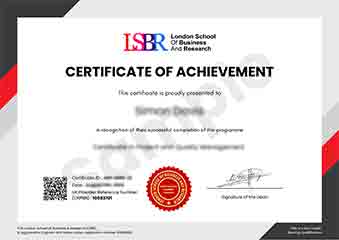
Sample Certificate
Preview the certificate you'll receive upon successful completion of this program.
Get Free Course Info
Enter your details and we'll send you a comprehensive course information pack straight to your inbox.
Employer Sponsored Training
Let your employer invest in your professional development. Request a corporate invoice and get your training funded.
Request Corporate InvoiceWhat People Say About Us
Hear from our students about their experience with the Executive Development Programme in Practical Computer Vision for Industrial Robotics at LSBRX - Executive Education.
Charlotte Williams
United Kingdom"The course content was incredibly thorough, covering advanced topics in computer vision that directly translate into practical applications in industrial robotics. Gaining hands-on experience with real-world problems has significantly enhanced my problem-solving skills and opened up new career opportunities in the tech industry."
Klaus Mueller
Germany"This course has been instrumental in bridging the gap between theoretical knowledge and practical application in computer vision for robotics. It has not only enhanced my technical skills but also provided me with valuable insights into how these technologies can be leveraged to solve real-world industrial challenges, significantly boosting my career prospects in the field."
Jia Li Lim
Singapore"The course structure was meticulously organized, seamlessly blending theoretical concepts with practical applications, which greatly enhanced my understanding and prepared me for real-world challenges in industrial robotics. It provided a comprehensive overview that significantly contributed to my professional growth in computer vision."