
Executive Development Programme in Practical Electrostatic Methods for Molecular Dynamics Simulations
This programme equips executives with practical skills in electrostatic methods for enhancing molecular dynamics simulations, driving innovation and efficiency.
Executive Development Programme in Practical Electrostatic Methods for Molecular Dynamics Simulations
Programme Overview
The Executive Development Programme in Practical Electrostatic Methods for Molecular Dynamics Simulations is meticulously designed to provide advanced training in the application of electrostatic methods to molecular dynamics simulations. Tailored for professionals in the fields of chemistry, physics, materials science, and biophysics, this programme equips participants with the latest computational techniques and methodologies. It covers a broad spectrum of topics, including the theoretical foundations of electrostatic interactions, the implementation of electrostatic solvers, and the integration of electrostatic methods in molecular dynamics software. Participants will also learn to apply these methods in real-world scenarios, enhancing their ability to model and analyze complex molecular systems.
Through hands-on workshops and case studies, learners will develop a deep understanding of how to accurately simulate electrostatic effects in molecular dynamics, leading to improved predictive capabilities for materials and biological systems. Key competencies include proficiency in using advanced computational tools, the ability to interpret and analyze simulation results, and the skills to innovate in the field of molecular dynamics. These skills are essential for advancing research and development projects in academia and industry.
The programme significantly impacts career trajectories by providing participants with a competitive edge in their respective fields. Graduates will be well-prepared to lead research projects, develop new computational methodologies, and contribute to cutting-edge scientific discoveries. This enhanced expertise can also open up opportunities in advanced roles such as research directors, chief scientists, and senior computational scientists, driving innovation and contributing to the advancement of molecular simulation technologies.
What You'll Learn
The Executive Development Programme in Practical Electrostatic Methods for Molecular Dynamics Simulations is designed for mid-career professionals and emerging leaders in the fields of biophysics, materials science, and computational chemistry. This immersive program equips participants with advanced knowledge and practical skills in applying electrostatic methods to molecular dynamics simulations, a critical tool for understanding and predicting the behavior of complex systems at the molecular level.
Key topics include the theoretical foundations of electrostatics, advanced simulation techniques, and hands-on experience with state-of-the-art software. Participants will learn to model and analyze the interactions between charged molecules, optimize simulation parameters, and interpret simulation data with precision.
Upon completion, graduates will be well-prepared to enhance their research and development capabilities, contribute to cutting-edge projects, and lead teams in innovation. They will be adept at applying electrostatic methods to solve real-world problems in drug discovery, materials engineering, and bioinformatics.
Career opportunities abound for program graduates, including roles in academic research, pharmaceutical companies, and technology firms. Graduates can also take on leadership positions in industry, driving innovation and contributing to the advancement of molecular dynamics simulation techniques. This program not only advances individual careers but also fosters a network of professionals committed to pushing the boundaries of molecular simulation technology.
Programme Highlights
Industry-Aligned Curriculum
Developed with industry leaders for job-ready skills valued by employers worldwide.
Globally Recognised Certificate
Recognised by employers across 180+ countries as a mark of professional excellence.
Flexible Online Learning
Study at your own pace with lifetime access to all course materials and updates.
Instant Access
Start learning immediately — no application process or waiting period required.
Constantly Updated Content
Stay ahead with the latest industry trends, best practices, and emerging insights.
Career Advancement
87% of graduates report measurable career progression within 6 months of completion.
Topics Covered
- 1. Electrostatic Fundamentals: Learners will study the basics of electrostatics, including Coulomb's law, dielectric constants, and charge distribution. They will gain foundational knowledge to understand the principles underlying molecular electrostatics.
- 2. Molecular Electrostatic Potentials: This module covers the calculation and application of molecular electrostatic potentials, focusing on methods such as the Poisson-Boltzmann equation. Learners will learn to use software tools to compute and visualize electrostatic potentials.
- 3. Advanced Charge Models: Learners will explore advanced models for representing charges in molecules, such as the atomic charge model, the conductor-like screening model (COSMO), and the polarizable continuum model (PCM). Practical skills include implementing and applying these models in simulations.
- 4. Electrostatic Solvation Free Energies: This module delves into the calculation of solvation free energies using electrostatic methods. Learners will learn to predict how molecules interact with solvents using computational techniques.
- 5. Practical Applications in Drug Design: Focusing on real-world applications, learners will apply electrostatic methods to drug design scenarios. They will use computational tools to design and optimize small molecule drugs based on electrostatic interactions.
- 6. Electrostatic Interactions in Biomolecular Systems: This module examines electrostatic interactions in complex biomolecular systems, such as proteins and nucleic acids. Learners will learn to analyze and predict these interactions using molecular dynamics simulations.
- 7. Advanced Simulation Techniques: Advanced simulation techniques, including polarizable force fields and implicit solvent models, are covered. Learners will gain practical experience in implementing these techniques to simulate complex electrostatic phenomena.
- 8. Data Analysis and Interpretation: This module teaches learners how to analyze and interpret data from molecular dynamics simulations involving electrostatics. Skills include using statistical methods and visualization tools to draw meaningful conclusions.
- 9. Case Studies and Project Work: Through case studies and project work, learners will apply their knowledge to solve practical problems in the field of molecular dynamics. They will work on projects that involve designing experiments, analyzing results, and presenting findings.
- 10. Advanced Topics and Research Trends: The final module covers advanced topics and current research trends in electrostatic methods for molecular dynamics simulations. Learners will gain insights into the latest developments and future directions in the field.
What You Get When You Enroll
Secure checkout • Instant access • Certificate included
Key Facts
Audience: Scientists, researchers, engineers
Prerequisites: Basic knowledge of electrostatics, molecular dynamics
Outcomes: Proficient in practical electrostatic methods
Ready to get started?
Join thousands of professionals who already took the next step. Enroll now and get instant access.
Enroll Now — $199Why This Course
Enhance Expertise: The Executive Development Programme in Practical Electrostatic Methods for Molecular Dynamics Simulations offers in-depth training on advanced electrostatic methods, equipping professionals with the latest techniques and algorithms crucial for cutting-edge research and development in molecular dynamics. This specialized knowledge can significantly enhance one's career prospects, particularly in fields like biophysics, drug discovery, and materials science.
Practical Application: The programme emphasizes hands-on training and real-world application, providing participants with practical experience in using computational tools and software relevant to electrostatic methods. This practical exposure not only deepens theoretical understanding but also prepares professionals to tackle complex problems in their work environments effectively.
Networking Opportunities: By joining the programme, professionals can connect with industry experts, academics, and peers who share similar interests. These networks can lead to collaborative research projects, mentorship opportunities, and broader professional growth, potentially opening new career paths or partnerships.
Career Advancement: Mastery of electrostatic methods in molecular dynamics simulations can be a key differentiator in the job market, particularly for roles that require deep technical expertise. The programme's focus on current methodologies and tools ensures that professionals are well-prepared to adapt to evolving technological landscapes and advance their careers in demanding, high-tech industries.
Your Path to Certification
Trusted by Professionals Worldwide
Course Brochure
Download our comprehensive course brochure with all details
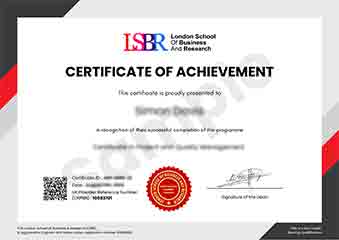
Sample Certificate
Preview the certificate you'll receive upon successful completion of this program.
Get Free Course Info
Enter your details and we'll send you a comprehensive course information pack straight to your inbox.
Employer Sponsored Training
Let your employer invest in your professional development. Request a corporate invoice and get your training funded.
Request Corporate InvoiceWhat People Say About Us
Hear from our students about their experience with the Executive Development Programme in Practical Electrostatic Methods for Molecular Dynamics Simulations at LSBRX - Executive Education.
Oliver Davies
United Kingdom"The course provided a deep dive into practical electrostatic methods for molecular dynamics simulations, equipping me with invaluable skills that have significantly enhanced my ability to model complex systems. Gaining hands-on experience with advanced simulation techniques has opened up new career opportunities in the field of computational chemistry."
Muhammad Hassan
Malaysia"This course has significantly enhanced my ability to apply electrostatic methods in molecular dynamics simulations, making my work more relevant to industry standards. It has opened up new opportunities for me in advanced research and development roles."
Ashley Rodriguez
United States"The course structure was well-organized, providing a clear path from foundational concepts to advanced practical applications in electrostatic methods for molecular dynamics simulations, which significantly enhanced my understanding and practical skills in the field."