
Executive Development Programme in Practical Robotics: Building and Programming Robotic Arms
This programme equips executives with hands-on skills in building and programming robotic arms, enhancing technological literacy and innovation capabilities.
Executive Development Programme in Practical Robotics: Building and Programming Robotic Arms
Programme Overview
The Executive Development Programme in Practical Robotics: Building and Programming Robotic Arms is designed for professionals in engineering, manufacturing, and robotics who seek to enhance their practical skills in robotic arm design and programming. Participants will learn to build and program robotic arms using state-of-the-art technologies, gaining hands-on experience with a range of applications from precision manufacturing to medical robotics.
Key skills and knowledge developed through this program include the ability to design and construct robotic arms, understand the principles of motion control and sensor integration, and program robotic arms for automated tasks. Participants will also gain proficiency in using CAD software for design, and programming languages such as Python and ROS (Robot Operating System). The curriculum is structured to provide a comprehensive understanding of robotic arm mechanics, electronics, and software, ensuring that learners can apply their knowledge to real-world projects.
The career impact of this programme is substantial, with participants gaining the expertise needed to advance in roles such as robotic system engineers, automation specialists, and robotics project managers. This program equips professionals with the skills to innovate and lead in the rapidly evolving field of robotics, enabling them to contribute to the development of advanced robotic systems that can revolutionize industries ranging from healthcare to aerospace.
What You'll Learn
Embark on an innovative journey at the intersection of technology and innovation with our Executive Development Programme in Practical Robotics: Building and Programming Robotic Arms. This cutting-edge programme equips you with the skills to design, build, and program robotic arms, offering a comprehensive curriculum that blends theoretical knowledge with hands-on experience. You’ll delve into essential topics such as mechanical engineering, electronics, programming, and machine learning, all tailored to the dynamic world of robotics.
Through this programme, you will not only master the art of building robotic arms but also learn to integrate them into various industrial and commercial applications, enhancing efficiency and productivity. Graduates will gain the expertise to develop custom robotic solutions, making them invaluable assets in manufacturing, healthcare, and research sectors.
Upon completion, you will be well-prepared to pursue roles such as robotics engineer, automation specialist, or machine learning engineer. The programme also provides access to cutting-edge facilities and industry partnerships, ensuring you are at the forefront of technological advancements. By the end of the programme, you will have the confidence and skills to lead projects and drive innovation in your chosen field, setting the stage for a fulfilling and impactful career in robotics.
Programme Highlights
Industry-Aligned Curriculum
Developed with industry leaders for job-ready skills valued by employers worldwide.
Globally Recognised Certificate
Recognised by employers across 180+ countries as a mark of professional excellence.
Flexible Online Learning
Study at your own pace with lifetime access to all course materials and updates.
Instant Access
Start learning immediately — no application process or waiting period required.
Constantly Updated Content
Stay ahead with the latest industry trends, best practices, and emerging insights.
Career Advancement
87% of graduates report measurable career progression within 6 months of completion.
Topics Covered
- 1. Introduction to Robotics: Learners will explore the history, types, and applications of robotics. They will gain an understanding of the basics of robotic systems and their components, including sensors, actuators, and control systems.
- 2. Mechanical Design Basics: This module will cover the principles of mechanical design for robotic arms, including kinematics, statics, and dynamics. Students will learn to design and build basic robotic arm structures using CAD software.
- 3. Electrical and Electronic Fundamentals: Learners will study the fundamentals of electrical and electronic circuits, including power supply, signal processing, and motor control. They will build simple circuits and control systems to understand how they interact with robotic components.
- 4. Programming Fundamentals for Robotics: This module introduces programming concepts, such as variables, loops, and conditional statements, tailored for robotic applications. Students will write simple programs to control motors and sensors, laying the groundwork for more complex tasks.
- 5. Advanced Programming Techniques: Building on the basics, students will explore more advanced programming techniques such as PID control, path planning, and sensor fusion. They will develop programs that enable their robotic arms to perform more sophisticated tasks.
- 6. Robotic Arm Kinematics and Dynamics: This module focuses on the mathematical models used to describe the motion of robotic arms. Students will learn about forward and inverse kinematics, and how to apply these to design and control robotic arms for specific tasks.
- 7. Sensor Integration and Data Processing: Learners will study various types of sensors used in robotics, including force sensors, vision sensors, and tactile sensors. They will develop data processing algorithms to interpret sensor inputs and use them to enhance robotic arm performance.
- 8. Advanced Robotic Arm Control Strategies: This module covers advanced control strategies such as adaptive control, model predictive control, and reinforcement learning. Students will implement these strategies to improve the precision, efficiency, and adaptability of their robotic arms.
- 9. Human-Robot Interaction Design: Students will learn about the principles of human-robot interaction and design interfaces that enable effective communication and collaboration between humans and robotic arms. They will build and test interactive systems that enhance usability and safety.
- 10. Capstone Project: In this final module, learners will apply their knowledge and skills to design, build, and program a complete robotic arm system for a specific application. They will present their project and demonstrate its functionality in a real-world scenario.
What You Get When You Enroll
Secure checkout • Instant access • Certificate included
Key Facts
Audience: Executives, engineering managers
Prerequisites: Basic computer literacy
Outcomes: Understand robotics fundamentals, program robotic arms
Ready to get started?
Join thousands of professionals who already took the next step. Enroll now and get instant access.
Enroll Now — $199Why This Course
Enhanced Technical Skills: This program equips professionals with advanced knowledge in robotics, specifically focusing on building and programming robotic arms. By gaining hands-on experience, participants can develop critical technical skills that are in high demand across various industries, including manufacturing, healthcare, and research. These skills can significantly enhance an individual's value in the job market, making them more competitive for advanced roles.
Innovation and Problem-Solving: The Executive Development Programme in Practical Robotics emphasizes practical applications and problem-solving skills. Participants learn to design, build, and program complex robotic systems, which fosters innovation and prepares them to tackle real-world challenges. This capability is crucial for professionals aiming to lead or innovate within their organizations, as it enables them to contribute to the development of cutting-edge solutions.
Interdisciplinary Knowledge: The program integrates knowledge from multiple disciplines, including mechanical engineering, electrical engineering, computer science, and software programming. This interdisciplinary approach broadens professionals' perspectives and skill sets, enhancing their ability to work across departments and collaborate effectively with multidisciplinary teams. Such versatility is increasingly valued in today’s diverse and fast-paced work environments.
Your Path to Certification
Trusted by Professionals Worldwide
Course Brochure
Download our comprehensive course brochure with all details
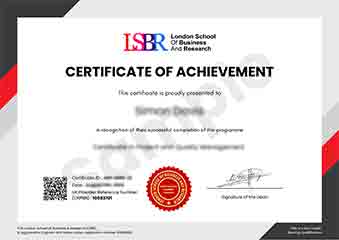
Sample Certificate
Preview the certificate you'll receive upon successful completion of this program.
Get Free Course Info
Enter your details and we'll send you a comprehensive course information pack straight to your inbox.
Employer Sponsored Training
Let your employer invest in your professional development. Request a corporate invoice and get your training funded.
Request Corporate InvoiceWhat People Say About Us
Hear from our students about their experience with the Executive Development Programme in Practical Robotics: Building and Programming Robotic Arms at LSBRX - Executive Education.
James Thompson
United Kingdom"The course content was incredibly detailed and well-structured, providing a solid foundation in both the theoretical and practical aspects of robotics. I gained significant hands-on experience building and programming robotic arms, which has been invaluable for my career in automation and robotics."
Rahul Singh
India"This course has been incredibly valuable in bridging the gap between theoretical knowledge and practical application in robotics. It has not only enhanced my technical skills but also provided me with a competitive edge in the job market, opening up new opportunities in the field of automation and robotics."
Madison Davis
United States"The course structure was meticulously organized, providing a seamless progression from fundamental concepts to advanced applications in robotics, which significantly enhanced my understanding and practical skills. The comprehensive content, coupled with real-world examples, has been invaluable for my professional growth in the field of robotics."