
Executive Development Programme in Quality Improvement: Error Prevention Techniques
This programme equips executives with error prevention strategies to enhance quality, drive efficiency, and boost organizational performance.
Executive Development Programme in Quality Improvement: Error Prevention Techniques
Programme Overview
The Executive Development Programme in Quality Improvement: Error Prevention Techniques is designed for senior leaders and managers in various industries looking to enhance their organization's quality control mechanisms. This comprehensive programme equips participants with advanced methodologies and strategies for identifying, preventing, and mitigating errors in processes, products, and services. Participants will explore the latest in quality management systems, statistical process control, root cause analysis, and continuous improvement techniques, tailored to align with international standards such as ISO and Six Sigma.
Throughout the programme, learners will develop essential skills in data analysis, risk management, and team leadership, enabling them to drive quality improvements and reduce error rates. They will also gain proficiency in using error prevention tools and techniques, such as checklists, standard operating procedures, and visual management, to enhance operational efficiency and customer satisfaction. Practical case studies and real-world examples will be used to illustrate how these techniques can be applied in diverse settings, from manufacturing to healthcare and service industries.
The programme has a significant impact on career advancement, as participants will be better prepared to lead quality initiatives, implement best practices, and streamline processes to achieve higher productivity and profitability. By actively engaging in collaborative workshops and expert-led discussions, participants will not only deepen their theoretical knowledge but also build a network of professionals committed to continuous improvement. This programme is instrumental in preparing executives to navigate the complexities of quality management in an increasingly competitive global marketplace.
What You'll Learn
The Executive Development Programme in Quality Improvement: Error Prevention Techniques is a transformative initiative designed for executives and leaders committed to enhancing organizational efficiency and safety. This program equips participants with advanced strategies for error prevention, rooted in cutting-edge methodologies and real-world applications. Key topics include root cause analysis, statistical process control, Lean Six Sigma principles, and digital transformation tools, all of which are crucial for identifying and mitigating systemic errors.
Participants learn to implement these techniques effectively, leading to reduced downtime, improved product quality, and enhanced customer satisfaction. The program emphasizes practical application through case studies and hands-on workshops, ensuring that executives can immediately apply their knowledge to real business challenges. Graduates emerge as leaders in error prevention, driving innovation and excellence across their organizations.
This program opens pathways to various career advancements, including Quality Manager, Vice President of Operations, and Chief Quality Officer. Graduates are well-prepared to lead quality improvement initiatives, drive strategic decision-making, and foster a culture of continuous improvement. By attending this program, participants will not only enhance their professional capabilities but also contribute to the sustainable growth and success of their organizations.
Programme Highlights
Industry-Aligned Curriculum
Developed with industry leaders for job-ready skills valued by employers worldwide.
Globally Recognised Certificate
Recognised by employers across 180+ countries as a mark of professional excellence.
Flexible Online Learning
Study at your own pace with lifetime access to all course materials and updates.
Instant Access
Start learning immediately — no application process or waiting period required.
Constantly Updated Content
Stay ahead with the latest industry trends, best practices, and emerging insights.
Career Advancement
87% of graduates report measurable career progression within 6 months of completion.
Topics Covered
- 1. Introduction to Quality Improvement: Learners will explore the fundamental principles of quality improvement and understand the importance of error prevention in various organizational settings. They will gain foundational knowledge on quality management systems and identify key areas for improvement.
- 2. Root Cause Analysis Techniques: This module teaches learners to use various root cause analysis techniques to identify and address underlying issues that lead to errors. Practical skills include conducting thorough investigations and implementing effective corrective actions.
- 3. Statistical Process Control (SPC): Learners will study statistical methods used to monitor and control process performance. They will learn how to use SPC tools to reduce variability and improve product quality, gaining hands-on experience with data analysis and process control charts.
- 4. Lean Six Sigma Fundamentals: This module introduces Lean and Six Sigma methodologies, focusing on reducing waste and process defects. Learners will understand the DMAIC (Define, Measure, Analyze, Improve, Control) framework and apply it in real-world scenarios.
- 5. Error-Proofing Techniques: Learners will discover how to design systems that prevent errors before they occur. They will study poka-yoke (mistake-proofing) techniques and learn to integrate these into existing processes.
- 6. Human Factors in Error Prevention: This module examines how human factors influence error occurrence and prevention. Learners will gain insights into cognitive biases, ergonomics, and the role of human behavior in process improvement.
- 7. Advanced Statistical Tools for Quality Improvement: Building on Module 3, this module delves deeper into advanced statistical methods, including regression analysis and ANOVA, to analyze complex data sets and make informed decisions.
- 8. Continuous Improvement Strategies: Learners will explore continuous improvement tools and techniques, such as Kaizen and change management, to sustain process improvements and drive organizational change.
- 9. Leadership in Quality Improvement: This module focuses on developing leadership skills necessary for driving quality improvement initiatives. Learners will learn how to inspire teams, overcome resistance to change, and lead successful quality improvement projects.
- 10. Quality Improvement Case Studies: In this module, learners will analyze real-world case studies of quality improvement initiatives. They will apply the concepts and techniques learned throughout the programme to solve practical problems and develop innovative solutions.
What You Get When You Enroll
Secure checkout • Instant access • Certificate included
Key Facts
Audience: Quality managers, supervisors
Prerequisites: Basic quality improvement knowledge
Outcomes: Enhanced error prevention skills, improved quality metrics
Ready to get started?
Join thousands of professionals who already took the next step. Enroll now and get instant access.
Enroll Now — $199Why This Course
Enhance Efficiency and Productivity: Participating in the Executive Development Programme in Quality Improvement: Error Prevention Techniques equips professionals with advanced methodologies to identify and mitigate errors, thereby significantly improving operational efficiency and productivity. For instance, learning statistical process control (SPC) and root cause analysis (RCA) techniques can help in reducing waste and streamlining processes, leading to enhanced output with minimal defects.
Boost Career Prospects: This program is designed to elevate the skill set of participants, making them more competitive in the job market. Employers value candidates who can implement quality improvement strategies, as these skills enhance the overall performance of teams and organizations. Graduates of this program often receive higher job offers or promotions due to their demonstrated ability to drive quality improvements, which can lead to leadership roles in quality management.
Foster a Culture of Continuous Improvement: The programme emphasizes the importance of continuous learning and improvement, encouraging a culture of excellence across teams. By adopting a proactive approach to error prevention, professionals can contribute to a more resilient and adaptive organizational environment. This not only benefits the individual but also helps in building a robust work culture that prioritizes quality and innovation.
Your Path to Certification
Trusted by Professionals Worldwide
Course Brochure
Download our comprehensive course brochure with all details
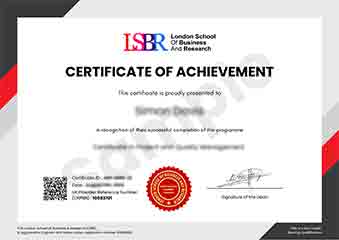
Sample Certificate
Preview the certificate you'll receive upon successful completion of this program.
Get Free Course Info
Enter your details and we'll send you a comprehensive course information pack straight to your inbox.
Employer Sponsored Training
Let your employer invest in your professional development. Request a corporate invoice and get your training funded.
Request Corporate InvoiceWhat People Say About Us
Hear from our students about their experience with the Executive Development Programme in Quality Improvement: Error Prevention Techniques at LSBRX - Executive Education.
Sophie Brown
United Kingdom"The course provided comprehensive and well-researched material on error prevention techniques, which significantly enhanced my ability to implement quality improvements in real-world settings. Gaining these practical skills has already proven invaluable in my current role, allowing me to tackle complex issues more effectively."
Greta Fischer
Germany"This course has been incredibly valuable, equipping me with practical error prevention techniques that are directly applicable in my role. It has not only enhanced my problem-solving skills but also opened up new opportunities for career advancement in my organization."
Oliver Davies
United Kingdom"The course structure was meticulously organized, making it easy to follow and integrating practical examples that significantly enhanced my understanding of error prevention techniques, which I can now apply effectively in my professional role."