
Executive Development Programme in Quantum Computing for Data Science: Techniques and Tools
Harness the power of quantum computing for data science: techniques and tools for competitive advantage. Learn to implement transformative solutions.
Executive Development Programme in Quantum Computing for Data Science: Techniques and Tools
Programme Overview
The Executive Development Programme in Quantum Computing for Data Science: Techniques and Tools is designed for senior-level professionals and executives who are looking to enhance their expertise in quantum computing, particularly in the context of data science. This program is ideal for data scientists, IT leaders, and business executives aiming to stay ahead in a rapidly evolving technological landscape. Participants will gain a deep understanding of quantum computing principles, including quantum algorithms, error correction techniques, and quantum machine learning methodologies.
Key skills and knowledge learners will develop include the ability to design and implement quantum algorithms tailored for data science applications, proficiency in using quantum computing frameworks and tools such as Qiskit and TensorFlow Quantum, and a comprehensive understanding of the computational advantages and limitations of quantum processors. By the end of the program, participants will be equipped to integrate quantum computing into their existing data science workflows, driving innovation and competitive advantage in their organizations.
This program will significantly impact participants' careers by positioning them as leaders in the adoption of quantum technologies. Graduates will be able to lead strategic initiatives, solve complex data problems, and develop new applications that leverage quantum computing to enhance decision-making processes. The program also equips participants with the knowledge to predict and address potential challenges in the integration of quantum computing, thereby fostering a culture of innovation and continuous learning within their organizations.
What You'll Learn
Embark on a transformative journey with the 'Executive Development Programme in Quantum Computing for Data Science: Techniques and Tools.' This cutting-edge program equips seasoned professionals with the knowledge and skills to harness the power of quantum computing in data science, positioning them at the forefront of innovation. By delving into advanced quantum algorithms, quantum machine learning, and quantum data analysis, participants will gain a deep understanding of quantum computing's potential to revolutionize data science.
The curriculum is designed to bridge the gap between theory and practice, with hands-on workshops and case studies that illustrate real-world applications. Participants will learn to use leading quantum computing frameworks and tools, enabling them to tackle complex data problems with unprecedented efficiency. Upon completion, graduates will be well-prepared to lead or advise on quantum-enhanced data science initiatives, driving innovation in industries ranging from healthcare and finance to climate science and artificial intelligence.
This program opens doors to a wide array of career opportunities, including quantum data scientist, quantum machine learning architect, and quantum computing consultant. Graduates will be uniquely positioned to shape the future of data science, leveraging quantum computing to solve some of the world's most pressing challenges. Join us in this exciting evolution of data science, where the possibilities are quantumly vast.
Programme Highlights
Industry-Aligned Curriculum
Developed with industry leaders for job-ready skills valued by employers worldwide.
Globally Recognised Certificate
Recognised by employers across 180+ countries as a mark of professional excellence.
Flexible Online Learning
Study at your own pace with lifetime access to all course materials and updates.
Instant Access
Start learning immediately — no application process or waiting period required.
Constantly Updated Content
Stay ahead with the latest industry trends, best practices, and emerging insights.
Career Advancement
87% of graduates report measurable career progression within 6 months of completion.
Topics Covered
- 1. Introduction to Quantum Computing: Learners will be introduced to the basic principles of quantum mechanics and how they apply to computing. They will gain foundational knowledge on qubits, quantum gates, and simple quantum algorithms, preparing them to understand more complex concepts.
- 2. Quantum Algorithms: This module delves into various quantum algorithms and their applications in data science, including Shor’s algorithm for factorization and Grover’s search algorithm. Learners will understand the theoretical underpinnings and practical implementations of these algorithms.
- 3. Quantum Error Correction: Learners will study the critical issue of quantum error correction and various techniques used to mitigate errors in quantum computations. They will learn about stabilizer codes, surface codes, and fault-tolerant quantum computing.
- 4. Quantum Machine Learning: This module focuses on the intersection of quantum computing and machine learning, covering quantum versions of classical machine learning algorithms and their potential advantages. Learners will explore algorithms like Quantum Principal Component Analysis (PCA) and quantum support vector machines (SVMs).
- 5. Quantum Circuit Design: Learners will learn the basics of designing quantum circuits, including the use of quantum programming languages and simulators. They will gain hands-on experience in creating and optimizing quantum circuits for specific data science tasks.
- 6. Quantum Computing Hardware: This module covers the current state of quantum computing hardware, including different qubit technologies (e.g., superconducting, ion traps) and the challenges and advancements in building scalable quantum computers. Learners will understand the practical implications of hardware choices on algorithm performance.
- 7. Quantum Cryptography: Learners will explore the basics of quantum key distribution and other quantum cryptographic protocols. They will understand the security benefits of quantum cryptography and how it can be applied in data science and information security.
- 8. Quantum Computing in Python: This module teaches learners how to implement quantum algorithms and circuits using Python, a popular programming language for data science. They will use libraries like Qiskit and Cirq to write and run quantum programs.
- 9. Quantum Computing for Optimization Problems: Learners will study how quantum computing can be applied to solve optimization problems in data science. They will learn about quantum annealing and how it can be used to find optimal solutions to complex problems more efficiently than classical methods.
- 10. Quantum Computing Ethics and Future Trends: This final module discusses the ethical considerations and future trends in the field of quantum computing. Learners will explore the potential impacts of quantum computing on society and discuss the emerging trends and research directions in quantum data science.
What You Get When You Enroll
Secure checkout • Instant access • Certificate included
Key Facts
Target audience: Data scientists, tech leaders
Prerequisites: Basic quantum computing knowledge
Outcomes: Master quantum algorithms, enhance data science skills
Ready to get started?
Join thousands of professionals who already took the next step. Enroll now and get instant access.
Enroll Now — $199Why This Course
Enhanced Career Prospects: Quantum computing is becoming integral to various sectors, including data science. Participating in an Executive Development Programme in Quantum Computing for Data Science can significantly enhance one's career prospects. Graduates of such programs often gain a competitive edge, as they are equipped with the knowledge to apply quantum algorithms and tools in complex data analysis, a skill set that is in high demand.
Advanced Skill Set: The program covers a range of techniques and tools specific to quantum computing, which are not typically covered in traditional data science curricula. This includes quantum machine learning, quantum optimization, and quantum simulation. By mastering these advanced techniques, professionals can develop innovative solutions to problems that are currently unsolvable with classical computing methods, thereby contributing to cutting-edge research and development.
Networking Opportunities: Engaging in such a program offers professionals the opportunity to connect with industry leaders and peers who are at the forefront of quantum computing research and application. These networks can be invaluable for career advancement, as they provide access to mentorship, collaboration opportunities, and potential job referrals in a growing field.
Your Path to Certification
Trusted by Professionals Worldwide
Course Brochure
Download our comprehensive course brochure with all details
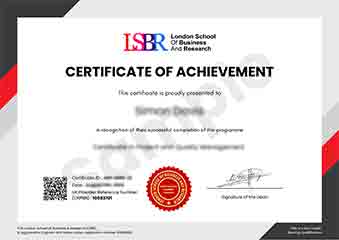
Sample Certificate
Preview the certificate you'll receive upon successful completion of this program.
Get Free Course Info
Enter your details and we'll send you a comprehensive course information pack straight to your inbox.
Employer Sponsored Training
Let your employer invest in your professional development. Request a corporate invoice and get your training funded.
Request Corporate InvoiceWhat People Say About Us
Hear from our students about their experience with the Executive Development Programme in Quantum Computing for Data Science: Techniques and Tools at LSBRX - Executive Education.
Charlotte Williams
United Kingdom"The course provided an in-depth look at quantum computing techniques and tools, which significantly enhanced my ability to apply these concepts in real-world data science problems. Gaining hands-on experience with quantum algorithms and tools has opened up new avenues for my career in data science."
Siti Abdullah
Malaysia"This course has significantly enhanced my understanding of quantum computing and its applications in data science, making me more competitive in the tech industry. It provided practical tools and techniques that I've already started implementing in my projects, leading to noticeable improvements in efficiency and accuracy."
Charlotte Williams
United Kingdom"The course structure was meticulously organized, providing a seamless progression from foundational concepts to advanced techniques in quantum computing, which greatly enhanced my understanding and practical skills in data science. The comprehensive content and real-world applications have been instrumental in my professional growth, equipping me with valuable tools to tackle complex data challenges."