
Executive Development Programme in Reliability Engineering for Scalable Systems
This program enhances leadership in reliability engineering, equipping executives with strategies to ensure scalable systems' resilience and continuous improvement.
Executive Development Programme in Reliability Engineering for Scalable Systems
Programme Overview
The Executive Development Programme in Reliability Engineering for Scalable Systems is designed for senior executives and technical leaders in the technology sector who are responsible for ensuring the robustness and reliability of complex, scalable systems. This programme equips participants with the latest methodologies and tools to enhance system resilience, manage risk, and drive innovation in the face of increasing complexity. Participants will explore the intersection of reliability engineering with system architecture, cloud computing, and big data analytics, enabling them to make informed decisions that balance performance, cost, and reliability.
The programme is structured to develop key skills such as quantitative analysis of system failure modes, risk management strategies, and the application of statistical process control. Learners will also gain expertise in predictive maintenance techniques, continuous monitoring, and the deployment of artificial intelligence and machine learning to predict and mitigate failures. By the end of the programme, participants will be adept at integrating these skills into their organizations, leading to more reliable and resilient systems that meet the demands of modern, dynamic environments.
This executive development programme will significantly enhance participants' career prospects, particularly in roles requiring strategic leadership in reliability and system engineering. Graduates will be well-prepared to lead initiatives that improve system reliability, optimize operational efficiency, and ensure compliance with regulatory standards. The programme also provides a platform for networking with industry leaders and peers, fostering collaboration and innovation in the field of reliability engineering.
What You'll Learn
The Executive Development Programme in Reliability Engineering for Scalable Systems is a cutting-edge initiative designed to equip leaders with the advanced knowledge and practical skills necessary to ensure the robustness and reliability of complex, scalable systems. Tailored for executives and senior engineers, this program delves into the latest methodologies and technologies in reliability engineering, focusing on predictive analytics, failure analysis, and system resilience.
Key topics include fault tolerance, continuous monitoring, and proactive maintenance strategies, all delivered through a blend of interactive workshops, real-world case studies, and expert-led seminars. Participants will gain hands-on experience with modern tools and platforms, enhancing their ability to manage and optimize large-scale systems.
Upon completion, graduates will be well-prepared to lead initiatives that ensure system reliability and availability, driving innovation and reducing downtime. This program opens doors to diverse career paths, including leadership roles in tech firms, consulting companies, and research institutions. Graduates will be adept at navigating the challenges of maintaining reliability in rapidly evolving technological landscapes, positioning them as valuable assets in the industry.
Programme Highlights
Industry-Aligned Curriculum
Developed with industry leaders for job-ready skills valued by employers worldwide.
Globally Recognised Certificate
Recognised by employers across 180+ countries as a mark of professional excellence.
Flexible Online Learning
Study at your own pace with lifetime access to all course materials and updates.
Instant Access
Start learning immediately — no application process or waiting period required.
Constantly Updated Content
Stay ahead with the latest industry trends, best practices, and emerging insights.
Career Advancement
87% of graduates report measurable career progression within 6 months of completion.
Topics Covered
- 1. Fundamentals of Reliability Engineering: Learners will study basic principles of reliability engineering and how to apply them to ensure system reliability. They will gain skills in identifying system components and their failure modes, and in using probabilistic models to assess reliability.
- 2. Reliability Metrics and Analysis: This module covers various reliability metrics, their calculation methods, and how to interpret them. Learners will gain proficiency in using statistical tools to analyze system performance and predict future reliability.
- 3. Scalable System Architecture: Learners will explore design principles for building highly reliable and scalable systems. They will learn how to optimize system architecture for reliability and performance, including redundancy, load balancing, and fault tolerance strategies.
- 4. Reliability Testing and Validation: This module focuses on methods for testing and validating system reliability. Learners will study different testing approaches, including accelerated life testing and stress testing, and learn how to design and execute comprehensive reliability test plans.
- 5. Reliability Centered Maintenance (RCM): In this module, learners will learn about RCM techniques and how to implement them to enhance system reliability. They will gain skills in risk assessment, maintenance planning, and predictive maintenance strategies.
- 6. Failure Data Analysis and Prognostics: This module covers advanced techniques for analyzing failure data and developing prognostic models. Learners will learn how to use machine learning algorithms to predict system failures and develop maintenance schedules to prevent them.
- 7. Reliability in Cloud Computing: Learners will study the unique challenges and solutions for maintaining reliability in cloud environments. They will gain knowledge on cloud-specific reliability strategies, such as multi-region deployment and elastic scaling.
- 8. Reliability in Internet of Things (IoT) Systems: This module explores reliability issues in IoT systems and provides strategies for ensuring high reliability in IoT environments. Learners will learn about sensor reliability, network reliability, and edge computing reliability.
- 9. Reliability in Edge Computing: In this module, learners will focus on the specific reliability considerations for edge computing systems. They will learn about edge node reliability, communication channel reliability, and the impact of edge computing on overall system reliability.
- 10. Advanced Reliability Management Practices: This final module covers advanced practices in reliability management, including reliability-driven design, reliability growth, and reliability-centered decision-making. Learners will gain skills in integrating reliability into the broader software development lifecycle.
What You Get When You Enroll
Secure checkout • Instant access • Certificate included
Key Facts
Audience: Engineering professionals, managers
Prerequisites: Basic engineering knowledge, reliability concepts
Outcomes: Enhanced reliability skills, improved system scalability, better decision-making
Ready to get started?
Join thousands of professionals who already took the next step. Enroll now and get instant access.
Enroll Now — $199Why This Course
Enhanced Problem-Solving Skills: The Executive Development Programme in Reliability Engineering for Scalable Systems equips professionals with advanced techniques to identify and mitigate risks in complex systems. This skillset not only enhances individual performance but also contributes to team efficiency and project success.
Leadership in Reliability Engineering: This program focuses on developing strategic leadership skills tailored for reliability engineering. Participants learn to lead cross-functional teams, aligning project goals with organizational objectives to ensure sustained reliability and system performance.
Advanced Knowledge in Scalable Systems: The curriculum covers cutting-edge methodologies and technologies specific to scalable systems, including predictive maintenance and automated fault detection. Gaining this knowledge allows professionals to innovate and drive their organizations towards more resilient and efficient operations.
Career Growth Opportunities: By acquiring specialized skills in reliability engineering, professionals become valuable assets in industries ranging from technology to finance. The program’s emphasis on practical applications and real-world case studies prepares participants for leadership roles and advanced career trajectories in reliability engineering.
Your Path to Certification
Trusted by Professionals Worldwide
Course Brochure
Download our comprehensive course brochure with all details
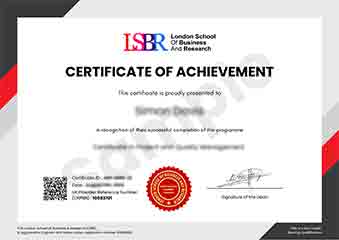
Sample Certificate
Preview the certificate you'll receive upon successful completion of this program.
Get Free Course Info
Enter your details and we'll send you a comprehensive course information pack straight to your inbox.
Employer Sponsored Training
Let your employer invest in your professional development. Request a corporate invoice and get your training funded.
Request Corporate InvoiceWhat People Say About Us
Hear from our students about their experience with the Executive Development Programme in Reliability Engineering for Scalable Systems at LSBRX - Executive Education.
Charlotte Williams
United Kingdom"The course provided deep insights into reliability engineering, equipping me with practical skills to enhance the scalability of complex systems. It has significantly boosted my career prospects by adding a valuable skill set that I can apply directly in my role."
Kai Wen Ng
Singapore"The Executive Development Programme in Reliability Engineering for Scalable Systems has significantly enhanced my understanding of reliability engineering principles and their practical applications in real-world scenarios. This knowledge has been invaluable in my role, leading to more robust system designs and improved project outcomes, positioning me for greater responsibilities within my organization."
Wei Ming Tan
Singapore"The course structure was meticulously organized, providing a seamless transition from theoretical concepts to practical applications, which significantly enhanced my understanding and prepared me for real-world challenges in reliability engineering. It offered a wealth of knowledge that has been invaluable for my professional growth."