
Executive Development Programme in Robot Vision and Sensor Integration
This program enhances leadership skills in advanced robot vision and sensor integration, driving innovation and strategic decision-making.
Executive Development Programme in Robot Vision and Sensor Integration
Programme Overview
The Executive Development Programme in Robot Vision and Sensor Integration is designed for senior executives, engineering managers, and business leaders who wish to enhance their understanding of advanced robotics, computer vision, and sensor technologies. This program offers a comprehensive curriculum that integrates theoretical knowledge with practical applications, equipping participants with the skills needed to lead and innovate in the rapidly evolving field of robotics.
Throughout the program, learners will develop a robust set of skills, including advanced robotics and computer vision algorithms, sensor fusion techniques, and real-time data processing. They will gain expertise in integrating sensors and cameras into robotic systems, and learn to apply these technologies in various industries such as manufacturing, healthcare, and autonomous vehicles. The curriculum also emphasizes the importance of ethical considerations and the integration of AI in robotic systems, preparing participants to lead with a forward-thinking approach.
The career impact of this program is significant, as participants will be better positioned to drive innovation and strategic decisions in their organizations. They will gain the confidence and knowledge to lead projects, develop new products, and navigate the complexities of integrating advanced technologies. The program's focus on real-world applications ensures that participants can immediately apply their learnings to enhance their organization's competitiveness and drive technological advancements.
What You'll Learn
Embark on a transformative journey with our Executive Development Programme in Robot Vision and Sensor Integration, designed to equip you with cutting-edge skills in AI-driven vision systems and sensor technologies. This comprehensive programme offers a blend of theoretical knowledge and practical, hands-on experience, making it a valuable asset for professionals aiming to lead in the rapidly evolving field of robotics.
Key topics include advanced image processing techniques, machine learning algorithms, and the integration of sensors for real-world applications. You will learn to develop intelligent systems that can perceive, interpret, and respond to their environment, enabling you to solve complex problems in manufacturing, healthcare, and transportation sectors.
Upon completion, participants will be well-prepared to lead innovation, manage projects, and drive technological advancements. Graduates will have the skills to design, implement, and manage robot vision and sensor integration systems, ensuring that they can contribute effectively to the development of next-generation robotic solutions.
The programme opens doors to a wide array of career opportunities, including roles as robotics engineers, sensor integration specialists, and AI project managers. Graduates will be ideally positioned to lead research and development teams, innovate new products, and shape the future of technology-driven industries. Join us to become a pivotal force in the global advancement of robotics and automation.
Programme Highlights
Industry-Aligned Curriculum
Developed with industry leaders for job-ready skills valued by employers worldwide.
Globally Recognised Certificate
Recognised by employers across 180+ countries as a mark of professional excellence.
Flexible Online Learning
Study at your own pace with lifetime access to all course materials and updates.
Instant Access
Start learning immediately — no application process or waiting period required.
Constantly Updated Content
Stay ahead with the latest industry trends, best practices, and emerging insights.
Career Advancement
87% of graduates report measurable career progression within 6 months of completion.
Topics Covered
- 1. Fundamentals of Robot Vision: Learners will study the basic principles of image processing and computer vision, gaining an understanding of how robots perceive and interpret visual information. Practical skills include implementing basic image processing algorithms and using vision systems for object recognition.
- 2. Sensor Technologies and Integration: This module covers various sensor types and their integration into robotic systems. Learners will explore different sensors and their applications, learning how to integrate multiple sensors for enhanced perception and decision-making capabilities.
- 3. Advanced Image Processing Techniques: Focusing on sophisticated image processing techniques, learners will delve into topics such as feature extraction, pattern recognition, and image segmentation. Practical skills include using software tools for advanced image analysis and developing algorithms for specific vision tasks.
- 4. Robot Navigation and Mapping: This module teaches learners about robot navigation strategies and mapping technologies, including SLAM (Simultaneous Localization and Mapping) techniques. Practical skills include designing and implementing navigation systems for robots in various environments.
- 5. Machine Learning for Robot Vision: Learners will study machine learning algorithms and their application in robot vision. Practical skills include training neural networks for object detection, classification, and behavior recognition.
- 6. Sensor Fusion and Data Integration: This module covers the integration of data from multiple sensors to improve the accuracy and reliability of robot perception. Practical skills include developing sensor fusion algorithms and integrating sensor data to create robust robotic systems.
- 7. Advanced Robot Vision Systems: Focusing on complex vision systems, learners will explore advanced topics such as 3D vision, multi-modal perception, and real-time processing. Practical skills include designing and implementing high-performance robot vision systems.
- 8. Ethical and Legal Considerations in Robot Vision: This module addresses the ethical and legal implications of robot vision technology. Learners will gain an understanding of the ethical guidelines and legal frameworks governing the development and deployment of robot vision systems.
- 9. Case Studies in Robot Vision and Sensor Integration: Through case studies, learners will analyze real-world applications of robot vision and sensor integration. Practical skills include evaluating the effectiveness of different technologies and strategies in specific scenarios.
- 10. Project Development and Presentation: Learners will develop a project integrating multiple aspects of robot vision and sensor technologies. This module focuses on project management, technical execution, and presenting findings in a professional manner.
What You Get When You Enroll
Secure checkout • Instant access • Certificate included
Key Facts
Audience: Industry professionals, engineers, managers
Prerequisites: Basic knowledge of robotics, sensors
Outcomes: Advanced skills in robot vision, sensor integration
Ready to get started?
Join thousands of professionals who already took the next step. Enroll now and get instant access.
Enroll Now — $199Why This Course
Expanding Technological Expertise: The Executive Development Programme in Robot Vision and Sensor Integration equips professionals with advanced knowledge in AI, machine learning, and computer vision. This skill set is crucial as industries increasingly rely on automation and robotics for efficiency and innovation. For instance, understanding how to integrate sensors and vision systems can significantly enhance decision-making in manufacturing plants, leading to better quality control and operational efficiency.
Career Advancement Opportunities: By specializing in robot vision and sensor integration, professionals can position themselves as leaders in their field. The program offers insights into the latest technological advancements and market trends, which can be leveraged to drive strategic business decisions. Graduates are well-prepared to take on roles such as robotics engineers, AI specialists, or technology managers, with a clear pathway to higher-level positions.
Enhanced Problem-Solving Abilities: The programme fosters a deep understanding of complex systems and teaches practical problem-solving skills. Participants learn to design, implement, and optimize sensor-based systems for real-world applications. This capability is invaluable in addressing challenges in various sectors, from healthcare to transportation, where innovative solutions can improve service delivery and outcomes. For example, professionals can develop smart solutions for patient monitoring in hospitals or improve traffic management systems in urban areas.
Your Path to Certification
Trusted by Professionals Worldwide
Course Brochure
Download our comprehensive course brochure with all details
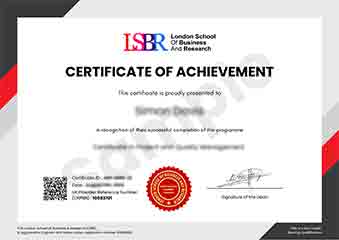
Sample Certificate
Preview the certificate you'll receive upon successful completion of this program.
Get Free Course Info
Enter your details and we'll send you a comprehensive course information pack straight to your inbox.
Employer Sponsored Training
Let your employer invest in your professional development. Request a corporate invoice and get your training funded.
Request Corporate InvoiceWhat People Say About Us
Hear from our students about their experience with the Executive Development Programme in Robot Vision and Sensor Integration at LSBRX - Executive Education.
James Thompson
United Kingdom"The course content was incredibly thorough, covering advanced topics in robot vision and sensor integration that directly translated into practical skills I can apply in my work. Gaining insights into real-world applications has significantly boosted my career prospects in the robotics industry."
Ruby McKenzie
Australia"The Executive Development Programme in Robot Vision and Sensor Integration has significantly enhanced my understanding of cutting-edge technologies and their practical applications in the industry. This program has not only broadened my skill set but also provided me with the confidence to tackle complex challenges, leading to a noticeable career advancement in my role."
Kai Wen Ng
Singapore"The course structure was well-organized, providing a comprehensive overview of robot vision and sensor integration that seamlessly bridged theoretical knowledge with practical applications, significantly enhancing my understanding and professional growth in the field."