
Executive Development Programme in Seal Behaviour Observation Techniques
This programme equips executives with advanced seal behavior observation techniques, enhancing leadership skills and decision-making through animal behavior insights.
Executive Development Programme in Seal Behaviour Observation Techniques
Programme Overview
The Executive Development Programme in Seal Behaviour Observation Techniques is a comprehensive initiative designed for professionals in marine biology, wildlife conservation, and related fields who seek to enhance their expertise in seal behaviour observation. This programme offers an in-depth exploration of seal anatomy, physiology, and natural habitats, alongside advanced techniques for observing and analyzing seal behaviour in both wild and captive environments. It is particularly tailored for researchers, conservationists, and professionals aiming to contribute to the preservation and understanding of marine ecosystems.
Participants will develop key skills in data collection and analysis, behavioural ecology, and the application of advanced observational tools and methodologies. They will learn to interpret complex behavioural patterns, understand the impact of environmental changes on seal populations, and apply this knowledge to develop effective conservation strategies. The programme also focuses on refining communication and collaboration skills, essential for interdisciplinary projects and stakeholder engagement.
This programme significantly impacts careers by equipping participants with the knowledge and skills necessary to lead impactful research projects, implement effective conservation programmes, and contribute to policy-making. Graduates can expect to advance their roles in marine conservation, research, and management, and to play a pivotal role in the sustainable management of marine ecosystems.
What You'll Learn
Discover the intricacies of seal behavior and enhance your leadership skills through our Executive Development Programme in Seal Behavior Observation Techniques. This unique program bridges the gap between marine biology and executive leadership, equipping participants with advanced observational skills and a deeper understanding of marine ecosystems. Key topics include seal communication, social structures, and environmental adaptations, all explored through a rigorous curriculum that combines theoretical knowledge with practical application.
Participants learn to interpret complex behaviors and apply these insights to real-world challenges, fostering innovative solutions and strategic thinking. The program emphasizes hands-on experience, with participants shadowing marine biologists and engaging in field observations. Graduates will be well-prepared to lead teams, make informed decisions, and contribute to sustainable practices in marine conservation and beyond.
This program opens doors to a variety of career opportunities, including marine conservation leadership, wildlife management, and research. Graduates can also pursue executive roles in corporate settings, leveraging their enhanced observational and analytical skills to drive success in diverse industries. Join us for an unparalleled learning experience that combines the natural world with executive development.
Programme Highlights
Industry-Aligned Curriculum
Developed with industry leaders for job-ready skills valued by employers worldwide.
Globally Recognised Certificate
Recognised by employers across 180+ countries as a mark of professional excellence.
Flexible Online Learning
Study at your own pace with lifetime access to all course materials and updates.
Instant Access
Start learning immediately — no application process or waiting period required.
Constantly Updated Content
Stay ahead with the latest industry trends, best practices, and emerging insights.
Career Advancement
87% of graduates report measurable career progression within 6 months of completion.
Topics Covered
- 1. Introduction to Seal Behaviour Observation: Learners will study the basic aspects of seal biology and behavior, understanding the importance of observation techniques. They will gain skills in identifying different seal species and recognizing common behaviors.
- 2. Fundamentals of Ethology: Exploring the science of animal behavior, learners will learn key concepts in ethology relevant to seals. Practical skills include designing observation protocols and understanding the ecological context of seal behavior.
- 3. Advanced Behavioural Analysis Techniques: This module covers detailed analysis methods for seal behavior, including statistical tools and behavioral coding systems. Learners will practice analyzing video footage and field observations.
- 4. Environmental Factors Influencing Seal Behavior: Understanding how environmental changes impact seal behavior, learners will study the effects of climate change, pollution, and human activities. Practical skills include assessing the environmental impact on seal populations.
- 5. Interactions and Social Behaviors: Focusing on seal social structures, learners will learn about mating, parenting, and group dynamics. Practical activities include observing and recording social interactions in both captive and wild settings.
- 6. Communication and Cognition in Seals: Examining the ways seals communicate and their cognitive abilities, learners will explore vocalizations, body language, and problem-solving behaviors. Practical exercises include interpreting seals' communication signals.
- 7. Field Observations and Data Collection: Practical training in conducting field observations, learners will learn how to use specialized equipment and techniques for data collection. Skills include maintaining observation logs and ensuring ethical practices.
- 8. Advanced Techniques in Seal Observation: Advanced methods for observing and analyzing seal behavior in various environments, including underwater and aerial observations. Learners will practice using high-tech equipment and integrating multiple data sources.
- 9. Conservation and Management Implications: Connecting behavioral studies to conservation efforts, learners will learn about management strategies and the role of behavioral data in conservation planning. Practical skills include developing management plans based on behavioral insights.
- 10. Professional Development and Career Pathways: This final module aims to prepare learners for professional roles in seal behavior observation. Topics include networking, career opportunities, and further education pathways. Learners will create personal development plans and explore potential job roles.
What You Get When You Enroll
Secure checkout • Instant access • Certificate included
Key Facts
Audience: Zoologists, wildlife conservationists, research assistants
Prerequisites: Basic understanding of marine mammals
Outcomes: Proficient in seal behavior observation, data analysis skills
Ready to get started?
Join thousands of professionals who already took the next step. Enroll now and get instant access.
Enroll Now — $199Why This Course
Enhance Leadership Skills: Participating in an Executive Development Programme in Seal Behaviour Observation Techniques can significantly enhance leadership skills, particularly in observing and understanding complex social dynamics. This program teaches professionals to interpret seal behaviors, which can be analogous to human interactions in professional settings. By learning to read and respond to non-verbal cues, leaders can improve their communication and decision-making abilities, leading to more effective team management.
Cultivate Emotional Intelligence: The program focuses on emotional intelligence, a critical skill for leaders. By understanding seal behaviors, participants can develop a deeper understanding of their own emotions and those of others. This heightened emotional awareness can foster better interpersonal relationships, empathy, and conflict resolution skills, which are essential for effective leadership in any professional environment.
Strategic Decision Making: The programme equips professionals with a unique perspective on strategic decision making by drawing parallels between seal behavior and organizational dynamics. Participants learn to analyze complex situations, anticipate outcomes, and make informed decisions, a skill that is invaluable in high-stakes professional settings. This approach encourages a holistic view of organizational challenges and opportunities, enabling leaders to make more strategic and impactful decisions.
Your Path to Certification
Trusted by Professionals Worldwide
Course Brochure
Download our comprehensive course brochure with all details
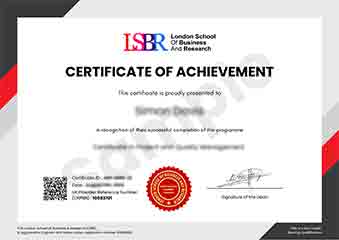
Sample Certificate
Preview the certificate you'll receive upon successful completion of this program.
Get Free Course Info
Enter your details and we'll send you a comprehensive course information pack straight to your inbox.
Employer Sponsored Training
Let your employer invest in your professional development. Request a corporate invoice and get your training funded.
Request Corporate InvoiceWhat People Say About Us
Hear from our students about their experience with the Executive Development Programme in Seal Behaviour Observation Techniques at LSBRX - Executive Education.
Charlotte Williams
United Kingdom"The course provided an in-depth look at seal behavior, enhancing my observational skills and knowledge of marine biology. Gaining the ability to interpret seal behaviors has been incredibly valuable for my career in wildlife conservation."
Kavya Reddy
India"The Executive Development Programme in Seal Behaviour Observation Techniques has significantly enhanced my ability to apply scientific observation methods in real-world scenarios, making me more competitive in the marine biology industry. This course has not only deepened my understanding of seal behavior but also opened up new career opportunities in research and conservation projects."
Emma Tremblay
Canada"The course structure was meticulously organized, making it easy to follow and ensuring a smooth learning curve. The content was not only comprehensive but also highly relevant, providing numerous real-world applications that significantly enhanced my understanding and practical skills in seal behavior observation techniques."