
Executive Development Programme in Security Threats in Cloud Computing
This programme equips executives with critical insights and strategies to mitigate security threats in cloud computing, enhancing organizational resilience and data protection.
Executive Development Programme in Security Threats in Cloud Computing
Programme Overview
The Executive Development Programme in Security Threats in Cloud Computing is designed for senior leaders and decision-makers within the technology, finance, and healthcare sectors who are responsible for mitigating risks and ensuring the security of cloud-based systems. This program delves into the latest security threats, vulnerabilities, and countermeasures specific to cloud environments, including data breaches, identity theft, and compliance issues. It also covers emerging technologies such as quantum computing and artificial intelligence that present new security challenges.
Participants will develop a deep understanding of advanced security protocols, encryption methods, and risk management strategies tailored to cloud infrastructure. They will learn to assess and mitigate threats, implement robust security frameworks, and stay compliant with industry standards and regulations. The program equips learners with the technical knowledge and strategic insights necessary to protect sensitive data, manage cloud security operations, and ensure business continuity in an increasingly digital and interconnected world.
The programme has a transformative impact on careers, enabling participants to lead more secure cloud environments, make informed strategic decisions, and mitigate potential risks that could affect their organizations. Graduates of this programme are well-prepared to assume leadership roles in cloud security, drive innovation, and protect their organizations from evolving cyber threats.
What You'll Learn
The Executive Development Programme in Security Threats in Cloud Computing is designed for senior executives and leaders seeking to enhance their strategic understanding of cybersecurity within the cloud environment. This program equips participants with cutting-edge knowledge and practical skills to navigate the complex landscape of cloud security threats, including advanced data protection, compliance challenges, and emerging risks.
Key topics include the evolution of cloud security threats, best practices for securing cloud applications and data, threat detection and response strategies, and the integration of security into cloud architecture. Participants learn from industry experts and have the opportunity to engage in real-world case studies, simulations, and collaborative projects.
Upon completion, graduates will be well-prepared to implement robust security measures, lead cybersecurity initiatives, and guide their organizations through the digital transformation process with confidence. The program fosters a network of like-minded professionals and provides tools for continuous learning and adaptation to the rapidly evolving cybersecurity landscape.
Graduates of this program are well-positioned for leadership roles that demand a deep understanding of cloud security, such as Chief Information Security Officer, Head of Cloud Security, and Cybersecurity Strategy Director. The program’s value lies in its ability to bridge the gap between technical expertise and executive decision-making, ensuring that security strategies support business objectives effectively.
Programme Highlights
Industry-Aligned Curriculum
Developed with industry leaders for job-ready skills valued by employers worldwide.
Globally Recognised Certificate
Recognised by employers across 180+ countries as a mark of professional excellence.
Flexible Online Learning
Study at your own pace with lifetime access to all course materials and updates.
Instant Access
Start learning immediately — no application process or waiting period required.
Constantly Updated Content
Stay ahead with the latest industry trends, best practices, and emerging insights.
Career Advancement
87% of graduates report measurable career progression within 6 months of completion.
Topics Covered
- 1. Introduction to Cloud Computing Security: Learners will study the basics of cloud computing and the security challenges it presents, including foundational concepts like virtualization, multi-tenancy, and cloud service models. They will gain the skills to identify and mitigate common security threats in cloud environments.
- 2. Understanding Cloud Security Models and Policies: This module covers various cloud security models and policies, including Security as a Service (SECaaS), Platform as a Service (PaaS) security, and Infrastructure as a Service (IaaS) security. Learners will develop the ability to design and implement security policies that align with these models.
- 3. Network Security in Cloud Environments: Focusing on network security, learners will explore firewalls, virtual private networks (VPNs), and network segmentation. They will acquire the skills to secure cloud networks and protect data in transit.
- 4. Data Security in the Cloud: This module delves into data encryption, access control, and data protection strategies in cloud environments. Learners will learn how to implement strong data security measures to protect sensitive information.
- 5. Identity and Access Management (IAM): Learners will study IAM principles and best practices, including identity federation, authentication, and authorization. They will gain the skills to manage access effectively and ensure compliance with security policies.
- 6. Cloud Security Tools and Technologies: This module introduces various security tools and technologies used in cloud environments, such as security information and event management (SIEM) systems, intrusion detection and prevention systems (IDPS), and security automation and orchestration tools. Learners will learn how to use these tools to enhance cloud security.
- 7. Advanced Threat Detection and Mitigation: Covering advanced topics like threat intelligence, advanced persistent threats (APTs), and zero-day vulnerabilities, this module equips learners with the skills to detect and mitigate sophisticated security threats in cloud environments.
- 8. Cloud Security Incident Response: Focusing on incident response, learners will learn how to plan for and respond to security incidents in cloud environments. They will gain the skills to perform incident analysis, containment, eradication, and recovery.
- 9. Compliance and Legal Issues in Cloud Security: This module explores legal and regulatory compliance issues in cloud computing, including data protection regulations like GDPR and HIPAA. Learners will understand the legal implications of cloud security and learn how to ensure compliance.
- 10. Future Trends in Cloud Security: Concluding the programme, this module examines emerging trends and technologies in cloud security, such as quantum computing, AI, and blockchain. Learners will gain insights into the future of cloud security and how to prepare for these advancements.
What You Get When You Enroll
Secure checkout • Instant access • Certificate included
Key Facts
Audience: IT professionals, security managers
Prerequisites: Basic IT knowledge, cloud computing experience
Outcomes: Enhanced threat awareness, cloud security strategies, incident response skills
Ready to get started?
Join thousands of professionals who already took the next step. Enroll now and get instant access.
Enroll Now — $199Why This Course
Enhance Security Expertise: An Executive Development Programme in Security Threats in Cloud Computing equips professionals with in-depth knowledge of the latest security threats and countermeasures specific to cloud environments. This includes understanding vulnerabilities such as data breaches, DDoS attacks, and insider threats, which are crucial for maintaining robust security protocols.
Align with Industry Trends: The programme keeps professionals updated with the latest trends and technologies in cloud security, such as encryption, multi-factor authentication, and compliance standards like GDPR and HIPAA. This alignment ensures that professionals can stay ahead in a rapidly evolving field, making them more valuable to employers and clients.
Develop Strategic Skills: The programme focuses on developing strategic thinking and decision-making skills necessary for managing cloud security at an executive level. Participants learn to evaluate risks, implement security policies, and integrate security into overall business strategy. These skills are essential for making informed decisions that protect an organization’s digital assets and enhance its cybersecurity posture.
Your Path to Certification
Trusted by Professionals Worldwide
Course Brochure
Download our comprehensive course brochure with all details
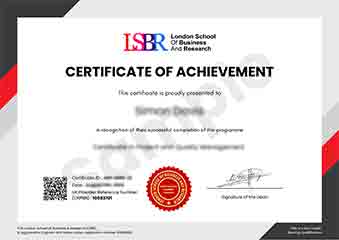
Sample Certificate
Preview the certificate you'll receive upon successful completion of this program.
Get Free Course Info
Enter your details and we'll send you a comprehensive course information pack straight to your inbox.
Employer Sponsored Training
Let your employer invest in your professional development. Request a corporate invoice and get your training funded.
Request Corporate InvoiceWhat People Say About Us
Hear from our students about their experience with the Executive Development Programme in Security Threats in Cloud Computing at LSBRX - Executive Education.
James Thompson
United Kingdom"The course content was incredibly comprehensive, covering a wide range of security threats in cloud computing with real-world examples that helped me understand the practical implications. Gaining insights into various mitigation strategies has significantly enhanced my ability to address security challenges in my current role."
Siti Abdullah
Malaysia"The Executive Development Programme in Security Threats in Cloud Computing has significantly enhanced my understanding of cloud security, making me more adept at identifying and mitigating risks. This knowledge has been invaluable in my role, leading to new opportunities and a clearer path for career advancement in the tech industry."
Ashley Rodriguez
United States"The course structure was well-organized, providing a comprehensive overview of security threats in cloud computing that directly translated into practical knowledge and enhanced my ability to address real-world security challenges effectively."