
Executive Development Programme in Smart Grid Technology and Management
This programme enhances leadership skills in smart grid technology and management, equipping executives with strategic insights and practical knowledge for innovation and efficiency.
Executive Development Programme in Smart Grid Technology and Management
Programme Overview
The Executive Development Programme in Smart Grid Technology and Management is designed for senior executives, technology leaders, and business managers seeking to enhance their strategic leadership and technical expertise in smart grid technologies. This comprehensive programme equips participants with a deep understanding of the latest advancements in smart grid solutions, including renewable energy integration, demand response management, and advanced metering infrastructure, alongside the managerial skills necessary to implement these technologies effectively.
Participants will develop key skills in technology evaluation, strategic planning, risk management, and sustainability leadership, enabling them to make informed decisions and innovate within their organizations. The programme emphasizes hands-on learning through case studies, interactive workshops, and expert-led discussions, ensuring that learners acquire practical insights and actionable solutions for real-world challenges.
The programme has a profound career impact, as participants will be well-prepared to lead transformative initiatives, drive sustainability goals, and foster innovation in the energy sector. Graduates will be positioned to lead or advise on strategic initiatives, enhance their organizational impact, and contribute to the broader goals of sustainability and technological advancement in energy management.
What You'll Learn
The Executive Development Programme in Smart Grid Technology and Management is a transformative educational initiative designed for senior-level executives and leaders in the energy sector. This program equips participants with cutting-edge knowledge in smart grid technologies, strategic management, and innovative business practices, preparing them to drive industry transformation and sustainability. Key topics include grid modernization, renewable energy integration, digitalization, cybersecurity, and regulatory compliance, all underpinned by hands-on learning and case studies from leading global energy companies.
Participants will learn to leverage smart grid technologies to enhance grid reliability, efficiency, and customer satisfaction, while fostering a sustainable future. The program also emphasizes the integration of technology with traditional energy systems, enabling participants to navigate complex regulatory landscapes and develop strategic partnerships. Upon completion, graduates will be adept at implementing smart grid solutions and leading transformative change within their organizations.
This program opens doors to a wide array of career opportunities, including roles in grid modernization, renewable energy project management, digital transformation, and strategic planning in both public and private sectors. Graduates are well-positioned to lead the next wave of innovation in the energy industry, contributing to a smarter, more efficient, and sustainable global energy infrastructure.
Programme Highlights
Industry-Aligned Curriculum
Developed with industry leaders for job-ready skills valued by employers worldwide.
Globally Recognised Certificate
Recognised by employers across 180+ countries as a mark of professional excellence.
Flexible Online Learning
Study at your own pace with lifetime access to all course materials and updates.
Instant Access
Start learning immediately — no application process or waiting period required.
Constantly Updated Content
Stay ahead with the latest industry trends, best practices, and emerging insights.
Career Advancement
87% of graduates report measurable career progression within 6 months of completion.
Topics Covered
- 1. Smart Grid Fundamentals: Learners will study the basic principles of smart grids, including their architecture, key components, and operational principles. They will gain foundational knowledge to understand how smart grids integrate renewable energy sources and enhance grid reliability and efficiency.
- 2. Grid Technologies and Innovations: This module explores advanced grid technologies and innovations, such as distributed energy resources, energy storage systems, and smart meters. Learners will understand how these technologies contribute to a more sustainable and resilient grid.
- 3. Smart Grid Data Analytics: Learners will delve into data analytics techniques and tools used in smart grids, including big data, machine learning, and predictive analytics. They will gain skills to analyze and interpret large-scale grid data to improve operational efficiency and decision-making.
- 4. Cybersecurity in Smart Grids: This module focuses on the cybersecurity challenges faced by smart grids and the measures to protect them. Learners will learn about security protocols, risk assessment, and incident response strategies to safeguard grid operations from cyber threats.
- 5. Renewable Energy Integration: Learners will study the integration of renewable energy sources into smart grids, including solar, wind, and hydroelectric power. They will understand the technical and regulatory challenges and the strategies to ensure the grid's stability and reliability.
- 6. Demand Response and Load Management: This module covers demand response programs and load management strategies. Learners will learn how to manage electricity demand effectively to balance supply and demand, reduce peak loads, and enhance grid stability.
- 7. Smart Grid Policy and Regulation: Learners will explore the regulatory frameworks and policies that govern smart grid development and deployment. They will understand the role of government and industry in shaping smart grid policies and the impact of regulations on grid operations.
- 8. Smart Grid Case Studies: This module presents real-world case studies of successful smart grid implementations. Learners will analyze these case studies to gain insights into best practices, challenges, and the benefits of smart grid technologies.
- 9. Leadership and Management in Smart Grids: Learners will develop leadership and management skills specific to the smart grid industry. They will learn how to lead cross-functional teams, manage projects, and drive innovation in smart grid initiatives.
- 10. Future Trends in Smart Grid Technology: This module examines emerging trends and future developments in smart grid technology, including smart cities, IoT integration, and AI-driven grid management. Learners will gain foresight into the evolving landscape of smart grid technologies and their implications for the industry.
What You Get When You Enroll
Secure checkout • Instant access • Certificate included
Key Facts
Audience: Mid-to-senior level executives
Prerequisites: Basic understanding of electricity systems
Outcomes: Enhanced strategic thinking on smart grids, improved leadership skills
Ready to get started?
Join thousands of professionals who already took the next step. Enroll now and get instant access.
Enroll Now — $199Why This Course
Enhanced Technical Expertise: Participating in an Executive Development Programme in Smart Grid Technology and Management equips professionals with advanced technical knowledge in areas such as grid modernization, renewable energy integration, and smart grid operations. This skill set is highly valued in the evolving energy sector, enabling professionals to lead innovative projects and drive sustainable energy solutions.
Strategic Leadership: The programme focuses on developing strategic management skills, including project management, risk assessment, and business acumen. These competencies are crucial for formulating effective strategies and managing complex projects in the dynamic energy landscape, thereby enhancing leadership capabilities and decision-making abilities.
Networking Opportunities: The programme offers a platform to connect with industry leaders, peers from diverse organizations, and experts in smart grid technology. These relationships can lead to collaborative opportunities, mentorship, and access to cutting-edge technologies and practices, fostering a network that supports career growth and innovation.
Career Advancement: By acquiring specialized knowledge and skills in smart grid technology and management, professionals can position themselves for advanced roles within utilities, energy companies, and government agencies. This programme enhances employability and opens doors to leadership positions, contributing to a more sustainable and technologically advanced energy future.
Your Path to Certification
Trusted by Professionals Worldwide
Course Brochure
Download our comprehensive course brochure with all details
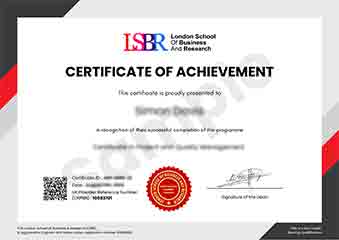
Sample Certificate
Preview the certificate you'll receive upon successful completion of this program.
Get Free Course Info
Enter your details and we'll send you a comprehensive course information pack straight to your inbox.
Employer Sponsored Training
Let your employer invest in your professional development. Request a corporate invoice and get your training funded.
Request Corporate InvoiceWhat People Say About Us
Hear from our students about their experience with the Executive Development Programme in Smart Grid Technology and Management at LSBRX - Executive Education.
Charlotte Williams
United Kingdom"The course content was incredibly comprehensive, covering the latest advancements in smart grid technology with real-world case studies that helped me understand practical applications. Gaining insights into grid management and technology integration has significantly enhanced my career prospects and provided valuable skills for future projects."
Hans Weber
Germany"The Executive Development Programme in Smart Grid Technology and Management has significantly enhanced my understanding of the latest industry trends and technologies. This program has not only equipped me with practical skills but also opened up new career opportunities in a rapidly evolving field."
Ahmad Rahman
Malaysia"The course structure was meticulously organized, providing a seamless transition from theoretical concepts to practical applications in smart grid technology, which significantly enhanced my understanding and prepared me for real-world challenges."