
Executive Development Programme in Stability Analysis for Dynamic Systems
This programme equips executives with advanced tools and insights for stability analysis, enhancing decision-making in dynamic systems.
Executive Development Programme in Stability Analysis for Dynamic Systems
Programme Overview
The Executive Development Programme in Stability Analysis for Dynamic Systems is designed for senior executives, technical leaders, and managers in engineering, technology, and related fields who seek to enhance their analytical capabilities and strategic insights into complex dynamic systems. This program focuses on advanced methodologies and tools for stability analysis, fostering a deeper understanding of system behaviors under various conditions, including nonlinear dynamics, chaos, and control systems. Participants will explore real-world applications, case studies, and cutting-edge research to gain a comprehensive perspective on stability analysis.
Through this program, learners will develop critical skills in stability theory, including Lyapunov stability, bifurcation analysis, and robust control strategies. They will also master the use of computational tools such as MATLAB, Simulink, and Python for modeling and simulation, and learn to apply these techniques to optimize system performance and ensure stability. Additionally, the program emphasizes the integration of theoretical knowledge with practical problem-solving, enabling participants to address complex challenges in their organizations more effectively.
The career impact of this program is significant, as participants will be better equipped to lead high-stakes projects, make informed decisions, and innovate in their fields. They will be well-prepared to tackle the complexities of modern dynamic systems, ensuring the stability and resilience of their organizations in an increasingly dynamic and competitive environment.
What You'll Learn
The Executive Development Programme in Stability Analysis for Dynamic Systems is designed to equip professionals with advanced analytical skills essential for navigating the complexities of dynamic systems. This program is invaluable for leaders seeking to enhance their strategic decision-making capabilities and ensure the robust stability of their systems, whether in engineering, finance, or technology sectors.
Key topics include stability analysis techniques, nonlinear dynamics, control theory, and real-time system monitoring. Participants learn to apply these concepts through case studies and practical projects, ensuring they can effectively analyze and manage real-world systems. Graduates are prepared to lead teams in developing robust, stable, and efficient systems that can withstand unexpected changes and disruptions.
Upon completion, participants are well-equipped to pursue advanced roles in research and development, system engineering, or leadership positions in industries requiring high-level stability analysis. The program also prepares graduates for certifications in stability analysis, enhancing their professional credentials and career prospects. With a focus on hands-on learning and application, this program stands out as a pivotal step in advancing one's expertise in dynamic systems stability.
Programme Highlights
Industry-Aligned Curriculum
Developed with industry leaders for job-ready skills valued by employers worldwide.
Globally Recognised Certificate
Recognised by employers across 180+ countries as a mark of professional excellence.
Flexible Online Learning
Study at your own pace with lifetime access to all course materials and updates.
Instant Access
Start learning immediately — no application process or waiting period required.
Constantly Updated Content
Stay ahead with the latest industry trends, best practices, and emerging insights.
Career Advancement
87% of graduates report measurable career progression within 6 months of completion.
Topics Covered
- 1. Fundamentals of Stability Analysis: Learners will study basic principles of stability in dynamic systems, including equilibrium points and Lyapunov stability theory. They will gain foundational skills in analyzing system stability using mathematical tools.
- 2. Linear Systems Stability: This module focuses on stability analysis of linear time-invariant (LTI) systems using matrix methods and the Routh-Hurwitz criterion. Learners will develop skills in determining system stability through characteristic equations and eigenvalue analysis.
- 3. Nonlinear Systems Analysis: Learners will explore stability analysis techniques for nonlinear systems, including phase portraits and Lyapunov functions. Practical skills in identifying local and global stability will be developed.
- 4. Time-Delay Systems: This module covers stability analysis of systems with time delays, a critical aspect in many real-world applications. Learners will learn to analyze and design delay-differential equations for stability.
- 5. Robust Stability: Focusing on robustness against uncertainties and disturbances, this module introduces methods for ensuring stability in the presence of model inaccuracies. Learners will gain skills in designing robust control systems.
- 6. Adaptive Control for Stability: Learners will study adaptive control strategies to achieve stability in dynamic systems with unknown parameters. Practical skills in implementing adaptive control algorithms will be developed.
- 7. Advanced Lyapunov Methods: This module delves into advanced Lyapunov techniques, such as the use of multiple Lyapunov functions and non-quadratic Lyapunov functions. Learners will deepen their understanding of stability analysis through these sophisticated methods.
- 8. Stability in Distributed Systems: This module examines stability analysis in distributed and networked systems, including consensus and synchronization problems. Practical skills in analyzing and ensuring stability in interconnected systems will be developed.
- 9. Stochastic Stability: Learners will study stability analysis in the presence of stochastic disturbances, including random inputs and uncertain parameters. Practical skills in analyzing and designing stochastic systems will be developed.
- 10. Case Studies in Stability Analysis: This final module presents real-world case studies in stability analysis, allowing learners to apply their knowledge to complex systems. Practical skills in solving stability problems in engineering and scientific contexts will be honed.
What You Get When You Enroll
Secure checkout • Instant access • Certificate included
Key Facts
Audience: Mid-to-senior level executives
Prerequisites: Basic understanding of systems dynamics
Outcomes: Enhanced ability in stability analysis techniques
Ready to get started?
Join thousands of professionals who already took the next step. Enroll now and get instant access.
Enroll Now — $199Why This Course
Enhance Decision-Making Skills: Professionals who undertake an Executive Development Programme in Stability Analysis for Dynamic Systems can significantly improve their ability to make informed decisions. This program equips participants with advanced analytical tools and methodologies, enabling them to assess complex systems and predict outcomes more accurately. This skill is crucial for leadership roles where strategic decisions can impact the overall performance and stability of organizations.
Boost Technical Expertise: The program focuses on deepening technical knowledge in areas such as stability analysis, control systems, and dynamical systems theory. Participants learn to apply these concepts to real-world scenarios, which enhances their technical acumen and makes them more valuable in their roles. This expertise can lead to innovative solutions and better problem-solving capabilities, distinguishing them in competitive job markets.
Foster Leadership and Interpersonal Skills: Beyond technical knowledge, the program also emphasizes the development of leadership and interpersonal skills. Participants learn to communicate complex technical information effectively, collaborate with multidisciplinary teams, and lead change initiatives. These soft skills are essential for effective management and are highly valued in executive positions, contributing to stronger team dynamics and organizational success.
Your Path to Certification
Trusted by Professionals Worldwide
Course Brochure
Download our comprehensive course brochure with all details
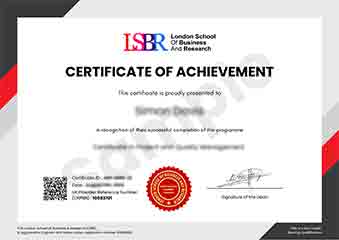
Sample Certificate
Preview the certificate you'll receive upon successful completion of this program.
Get Free Course Info
Enter your details and we'll send you a comprehensive course information pack straight to your inbox.
Employer Sponsored Training
Let your employer invest in your professional development. Request a corporate invoice and get your training funded.
Request Corporate InvoiceWhat People Say About Us
Hear from our students about their experience with the Executive Development Programme in Stability Analysis for Dynamic Systems at LSBRX - Executive Education.
James Thompson
United Kingdom"The course content was incredibly thorough, providing deep insights into stability analysis for dynamic systems that have directly enhanced my analytical skills. Gaining these practical tools has been invaluable for my career, allowing me to approach complex problems with a more structured and effective mindset."
Liam O'Connor
Australia"The Executive Development Programme in Stability Analysis for Dynamic Systems has significantly enhanced my ability to analyze complex systems in real-world scenarios, making my approach to problem-solving more robust and effective. This skill set has been invaluable in my recent role transition, where I've been able to contribute more strategically to our team's projects."
Fatimah Ibrahim
Malaysia"The course structure was meticulously organized, providing a clear path from foundational concepts to advanced topics in stability analysis, which greatly enhanced my understanding of dynamic systems. The comprehensive content and real-world applications have significantly broadened my perspective and prepared me for more complex challenges in my professional field."