
Executive Development Programme in Stair Design for Universal Accessibility
This programme enhances executives' skills in designing stairs for universal accessibility, ensuring safety and inclusivity, and improving building compliance.
Executive Development Programme in Stair Design for Universal Accessibility
Programme Overview
The Executive Development Programme in Stair Design for Universal Accessibility is a comprehensive initiative designed for architects, engineers, urban planners, and product designers who seek to enhance their expertise in creating accessible and inclusive stair systems for various environments, including public buildings, residential complexes, and commercial spaces. This program equips participants with the knowledge and skills necessary to design stairs that cater to people of all ages and abilities, ensuring safety, comfort, and compliance with international accessibility standards.
Throughout the program, learners will develop a deep understanding of universal design principles, ergonomic considerations, and regulatory requirements related to stair design. Key areas of focus include assessing existing stair systems, integrating adaptive features such as handrails, ramps, and tactile indicators, and utilizing advanced materials and construction techniques to enhance accessibility. Practical workshops and case studies will provide hands-on experience in designing accessible stair systems that meet the diverse needs of users.
This programme will significantly impact participants' careers by enabling them to lead projects that prioritize inclusivity and compliance with accessibility standards. Graduates will be well-prepared to innovate in the field, contributing to the design of more inclusive public and private spaces, and fostering a culture of universal design that benefits all members of society.
What You'll Learn
The Executive Development Programme in Stair Design for Universal Accessibility is a transformative initiative designed for architects, engineers, and urban planners aiming to enhance their expertise in creating inclusive spaces. This program focuses on the latest trends, technologies, and best practices in designing stairs that cater to people of all abilities, ensuring seamless mobility and safety.
Key topics include the principles of universal design, accessibility standards, innovative stair design techniques, and the integration of assistive technologies. Participants will learn to assess site-specific requirements, conduct user-centered design research, and develop sustainable stair solutions that comply with local and international regulations.
Upon completion, graduates will be equipped to lead projects that prioritize accessibility, fostering inclusive communities. They can apply their skills in designing residential, commercial, and public spaces, ensuring that stairs not only meet legal requirements but also enhance the user experience. Career opportunities abound in architecture firms, construction companies, urban planning departments, and accessibility consulting firms, where professionals can make a significant impact on the built environment.
This program is invaluable for professionals seeking to advance their expertise in creating barrier-free environments, contributing to a more inclusive society.
Programme Highlights
Industry-Aligned Curriculum
Developed with industry leaders for job-ready skills valued by employers worldwide.
Globally Recognised Certificate
Recognised by employers across 180+ countries as a mark of professional excellence.
Flexible Online Learning
Study at your own pace with lifetime access to all course materials and updates.
Instant Access
Start learning immediately — no application process or waiting period required.
Constantly Updated Content
Stay ahead with the latest industry trends, best practices, and emerging insights.
Career Advancement
87% of graduates report measurable career progression within 6 months of completion.
Topics Covered
- 1. Introduction to Stair Design for Universal Accessibility: Learners will study the importance of universal accessibility in stair design and the legal requirements. They will gain an understanding of the key principles and terminology used in accessible stair design.
- 2. Accessibility Standards and Regulations: This module covers the major accessibility standards and regulations relevant to stair design, including the Americans with Disabilities Act (ADA) and International Building Code (IBC). Learners will understand how to apply these standards in practice.
- 3. Designing for Universal Accessibility: In this module, learners will explore how to design stairs that are accessible to people with a range of mobility impairments. They will learn about the design elements and features that promote universal accessibility.
- 4. Ramp Design for Alternatives to Stairs: Learners will study the design principles of ramps as an alternative to stairs for universal accessibility. They will understand the benefits and limitations of ramps and how to design them effectively.
- 5. Materials and Construction Methods: This module focuses on the selection of materials and construction methods that facilitate universal accessibility in stair design. Learners will learn about the properties of different materials and how they can be used to enhance accessibility.
- 6. Accessibility in Public Buildings: Learners will examine the specific accessibility requirements for public buildings, including government and commercial structures. They will learn how to integrate accessible stair design into public building projects.
- 7. Advanced Techniques in Stair Design: This module covers advanced techniques and innovations in stair design for universal accessibility. Learners will explore cutting-edge solutions and technologies that can be used to improve accessibility.
- 8. Cost Considerations and Budgeting: In this module, learners will learn how to balance accessibility requirements with budget constraints. They will understand the financial implications of accessible stair design and how to manage costs effectively.
- 9. Accessibility Audits and Evaluations: This module focuses on conducting accessibility audits and evaluations of existing stair designs. Learners will learn how to identify areas for improvement and make recommendations for enhancing accessibility.
- 10. Professional Development and Continuing Education: The final module covers professional development opportunities and continuing education for those in the field of accessible stair design. Learners will learn about certification programs and how to stay current with the latest developments in the field.
What You Get When You Enroll
Secure checkout • Instant access • Certificate included
Key Facts
Audience: Architects, interior designers, urban planners
Prerequisites: Basic knowledge of design principles
Outcomes: Enhanced skills in accessible design, compliance with standards
Ready to get started?
Join thousands of professionals who already took the next step. Enroll now and get instant access.
Enroll Now — $199Why This Course
Enhanced Career Versatility: Professionals who participate in the Executive Development Programme in Stair Design for Universal Accessibility gain a deeper understanding of accessibility standards and code regulations. This knowledge is increasingly valuable in diverse industries, from architecture and construction to interior design, ensuring they can adapt to and lead projects that meet global health and safety standards.
Skill Diversification: The program equips participants with advanced skills in designing stairs that are accessible and user-friendly for individuals with disabilities. These skills include the ability to integrate innovative materials and technologies, such as tactile strips and sloping edges, enhancing both functionality and aesthetics. Such expertise can significantly differentiate professionals in the job market.
Leadership and Innovation: The curriculum fosters a mindset for innovation and leadership in creating inclusive spaces. Participants learn to lead interdisciplinary teams, ensuring that all stakeholders, including architects, engineers, and accessibility experts, work collaboratively to design staircases that meet the needs of all users. This capability is crucial for advancing careers in leadership roles within design and construction firms.
Your Path to Certification
Trusted by Professionals Worldwide
Course Brochure
Download our comprehensive course brochure with all details
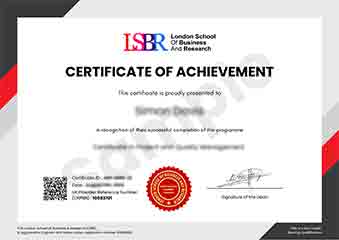
Sample Certificate
Preview the certificate you'll receive upon successful completion of this program.
Get Free Course Info
Enter your details and we'll send you a comprehensive course information pack straight to your inbox.
Employer Sponsored Training
Let your employer invest in your professional development. Request a corporate invoice and get your training funded.
Request Corporate InvoiceWhat People Say About Us
Hear from our students about their experience with the Executive Development Programme in Stair Design for Universal Accessibility at LSBRX - Executive Education.
Oliver Davies
United Kingdom"The course content was incredibly detailed and well-structured, providing a comprehensive understanding of universal accessibility in stair design. I gained valuable practical skills that I can directly apply to real-world projects, enhancing my ability to create inclusive spaces."
Jack Thompson
Australia"This course has significantly enhanced my understanding of universal accessibility in stair design, making my designs more inclusive and practical. It has opened new opportunities in my career, allowing me to take on more complex projects and collaborate with diverse teams."
Oliver Davies
United Kingdom"The course structure was meticulously organized, providing a clear pathway to understanding complex stair design principles, which significantly enhanced my knowledge and prepared me for real-world accessibility challenges. It offered a wealth of practical applications that have already improved my approach to designing inclusive spaces."