
Executive Development Programme in Statistical Modeling for Data Scientists
This program equips data scientists with advanced statistical modeling techniques, enhancing analytical skills and driving data-informed decision-making.
Executive Development Programme in Statistical Modeling for Data Scientists
Programme Overview
The Executive Development Programme in Statistical Modeling for Data Scientists is a comprehensive initiative designed for mid-to-senior level professionals in data science, analytics, and related fields who aspire to enhance their expertise in statistical modeling. This program is tailored for those who seek to deepen their understanding of advanced statistical techniques and methodologies, and to apply these in real-world business scenarios, thereby driving data-driven decision-making and innovation across their organizations.
Participants in this program will develop a robust set of skills in statistical modeling, including proficiency in regression analysis, time series forecasting, and machine learning algorithms. They will also gain a deep understanding of data preprocessing, model validation, and the ethical considerations in data analysis. The program emphasizes practical application through hands-on projects and case studies, ensuring that learners can confidently apply statistical models to solve complex business problems and optimize operational efficiency.
By completing this program, participants will be better equipped to lead data science initiatives, contribute to strategic planning, and drive business growth through data-driven insights. The skills and knowledge acquired will prepare them to take on more senior roles in data science, such as data science lead, chief data officer, or senior analytics manager, and to lead cross-functional teams in applying advanced statistical modeling techniques to achieve business objectives.
What You'll Learn
The Executive Development Programme in Statistical Modeling for Data Scientists is designed to empower professionals with the advanced skills necessary to harness the power of data in decision-making processes. This intensive, seven-month course equips participants with a robust understanding of statistical modeling techniques, including regression analysis, time series forecasting, and machine learning algorithms. Participants will learn to apply these techniques using real-world datasets, enhancing their ability to predict trends, optimize business strategies, and drive innovation.
By the end of the programme, graduates will be proficient in using Python and R for statistical analysis and machine learning, and will have a strong foundation in data visualization and communication of complex data insights. The programme includes hands-on projects that simulate real-world challenges, enabling participants to apply their knowledge in practical scenarios. Graduates are well-prepared to lead data-driven initiatives, improve predictive analytics, and inform strategic business decisions.
Upon completion, participants will be equipped to pursue roles such as data scientists, quantitative analysts, or data-driven business leaders. The programme's industry partnerships and networking opportunities provide valuable connections and insights, facilitating career advancement and positioning graduates as key contributors in data science and analytics.
Programme Highlights
Industry-Aligned Curriculum
Developed with industry leaders for job-ready skills valued by employers worldwide.
Globally Recognised Certificate
Recognised by employers across 180+ countries as a mark of professional excellence.
Flexible Online Learning
Study at your own pace with lifetime access to all course materials and updates.
Instant Access
Start learning immediately — no application process or waiting period required.
Constantly Updated Content
Stay ahead with the latest industry trends, best practices, and emerging insights.
Career Advancement
87% of graduates report measurable career progression within 6 months of completion.
Topics Covered
- 1. Introduction to Statistical Modeling: Learners will study fundamental concepts of statistical modeling, including types of data, basic statistical measures, and common distributions. They will gain foundational skills in understanding and applying basic statistical techniques.
- 2. Exploratory Data Analysis (EDA): Learners will delve into techniques for exploring and summarizing data, identifying patterns, and detecting outliers. Practical skills include using EDA tools and visualizations to make informed data-driven decisions.
- 3. Probability Theory: Learners will explore key concepts in probability theory, including probability distributions, random variables, and probability density functions. Practical skills include calculating probabilities and understanding their implications in data science.
- 4. Statistical Inference: Learners will learn about statistical inference methods, including hypothesis testing, confidence intervals, and p-values. Practical skills include performing hypothesis tests and constructing confidence intervals for various statistical measures.
- 5. Regression Analysis: Learners will study regression models, including linear, multiple, and logistic regressions. Practical skills include building, interpreting, and validating regression models for predictive analytics.
- 6. Advanced Regression Techniques: Learners will explore advanced regression techniques such as ridge regression, lasso regression, and elastic net. Practical skills include applying these techniques to handle multicollinearity and overfitting.
- 7. Machine Learning Foundations: Learners will be introduced to machine learning concepts and algorithms, including supervised and unsupervised learning. Practical skills include implementing basic machine learning models and understanding their applications.
- 8. Model Evaluation and Validation: Learners will learn how to evaluate and validate statistical models using various metrics and techniques. Practical skills include using cross-validation and other methods to assess model performance.
- 9. Time Series Analysis: Learners will study time series data and the models used to analyze it, including ARIMA, exponential smoothing, and state-space models. Practical skills include forecasting future values and detecting seasonality and trends in time series data.
- 10. Big Data and Scalability: Learners will explore challenges and solutions for statistical modeling with big data, including distributed computing and scalable algorithms. Practical skills include implementing and optimizing models for large datasets.
What You Get When You Enroll
Secure checkout • Instant access • Certificate included
Key Facts
Audience: Experienced data scientists, analysts
Prerequisites: Basic statistics, programming skills
Outcomes: Advanced modeling techniques, predictive analytics expertise
Ready to get started?
Join thousands of professionals who already took the next step. Enroll now and get instant access.
Enroll Now — $199Why This Course
Enhances Analytical Skills: The Executive Development Programme in Statistical Modeling for Data Scientists equips professionals with advanced analytical tools and techniques, enabling them to derive deeper insights from complex data. This not only improves their ability to make informed decisions but also prepares them to lead more data-driven projects.
Builds Specialized Expertise: The programme focuses on specialized areas such as predictive analytics, machine learning, and big data analysis, which are critical for modern business strategies. By mastering these areas, professionals can significantly enhance their value in the job market, making them indispensable for organizations looking to leverage data for strategic advantage.
Facilitates Leadership Development: Beyond technical skills, the programme includes modules that develop leadership and communication skills. This dual focus ensures that professionals are not only adept at their technical roles but also capable of managing and mentoring teams, leading to more effective and innovative projects.
Increases Marketability: With a certificate from such a programme, professionals become more attractive to employers who seek to stay ahead in the data-driven economy. The programme’s recognition of industry standards and its alignment with current trends in data science can open up new career opportunities and higher job prospects.
Your Path to Certification
Trusted by Professionals Worldwide
Course Brochure
Download our comprehensive course brochure with all details
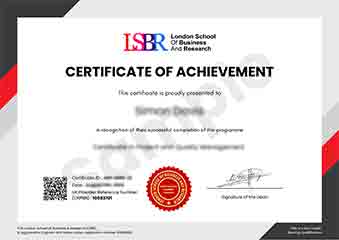
Sample Certificate
Preview the certificate you'll receive upon successful completion of this program.
Get Free Course Info
Enter your details and we'll send you a comprehensive course information pack straight to your inbox.
Employer Sponsored Training
Let your employer invest in your professional development. Request a corporate invoice and get your training funded.
Request Corporate InvoiceWhat People Say About Us
Hear from our students about their experience with the Executive Development Programme in Statistical Modeling for Data Scientists at LSBRX - Executive Education.
Sophie Brown
United Kingdom"The course provided high-quality, in-depth material that significantly enhanced my understanding of statistical modeling techniques, which are now directly applicable to real-world data science challenges. Gaining these practical skills has been invaluable for advancing my career in data analysis."
Oliver Davies
United Kingdom"The Executive Development Programme in Statistical Modeling for Data Scientists has significantly enhanced my ability to apply advanced statistical techniques in real-world scenarios, making my work more impactful and aligning closely with industry standards. This program has not only deepened my technical skills but also opened up new career opportunities in data-driven roles."
Mei Ling Wong
Singapore"The course structure is meticulously organized, making complex statistical concepts accessible and easy to follow, which significantly enhances my understanding and application of statistical modeling in real-world scenarios, fostering my professional growth as a data scientist."