
Executive Development Programme in Sustainable Material Selection and Implementation
This program equips executives with the knowledge and skills to select and implement sustainable materials, driving environmental impact reduction and innovation.
Executive Development Programme in Sustainable Material Selection and Implementation
Programme Overview
The Executive Development Programme in Sustainable Material Selection and Implementation is tailored for senior-level executives and sustainability leaders in the manufacturing, construction, and consumer goods industries. This program equips participants with the latest knowledge and tools for integrating sustainable materials into their business strategies. Through a comprehensive curriculum, participants will delve into the environmental, social, and economic impacts of material choices and learn how to drive organizational change towards more sustainable practices.
Key skills and knowledge gained through this program include advanced material selection techniques, understanding lifecycle assessments, and evaluating the environmental and social impacts of materials. Participants will also learn to develop and implement sustainable procurement policies, manage supply chain risks related to sustainability, and build a business case for sustainable materials. The program emphasizes practical application and offers insights into emerging trends and technologies in sustainable materials, ensuring that participants are well-prepared to lead their organizations in adopting greener practices.
This program will significantly enhance participants' ability to drive sustainable business practices, leading to improved environmental performance, reduced operational costs, and enhanced brand reputation. By fostering a deep understanding of sustainable materials and their implementation, participants will be better positioned to navigate regulatory changes, satisfy stakeholder expectations, and contribute to global sustainability goals.
What You'll Learn
Embark on a transformative journey with the Executive Development Programme in Sustainable Material Selection and Implementation, designed to empower future leaders in the manufacturing, construction, and consumer goods sectors. This program equips participants with the knowledge and skills to lead sustainable material initiatives, driving innovation and sustainability in their organizations. Key topics include sustainable sourcing strategies, lifecycle assessment, circular economy principles, and regulatory compliance. Participants will learn to integrate environmental, social, and governance (ESG) metrics into business strategies, fostering a culture of sustainability. By the end of the program, graduates will be adept at selecting and implementing materials that meet both business needs and environmental standards, enhancing corporate reputation and reducing operational risks.
Upon completion, graduates will be well-positioned for roles such as sustainability managers, supply chain directors, and corporate responsibility officers. The program's real-world applications are underscored by hands-on projects and case studies, ensuring that participants can immediately apply their new skills. Networking opportunities with industry leaders and alumni provide valuable connections for career advancement. Whether aiming to lead a green transition in your current organization or establishing a career in sustainable business leadership, this program offers the strategic insights and practical tools needed to succeed in the evolving landscape of sustainable materials.
Programme Highlights
Industry-Aligned Curriculum
Developed with industry leaders for job-ready skills valued by employers worldwide.
Globally Recognised Certificate
Recognised by employers across 180+ countries as a mark of professional excellence.
Flexible Online Learning
Study at your own pace with lifetime access to all course materials and updates.
Instant Access
Start learning immediately — no application process or waiting period required.
Constantly Updated Content
Stay ahead with the latest industry trends, best practices, and emerging insights.
Career Advancement
87% of graduates report measurable career progression within 6 months of completion.
Topics Covered
- 1. Introduction to Sustainable Materials: Learners will explore the principles of sustainability in material selection and the importance of eco-friendly materials. They will gain an understanding of the lifecycle of materials and how to assess their environmental impact.
- 2. Environmental Impact Assessment: This module teaches learners how to conduct a comprehensive environmental impact assessment of materials, covering energy consumption, carbon footprint, and waste generation. Practical skills include using assessment tools and software.
- 3. Sustainable Materials Selection Criteria: Learners will study criteria for selecting sustainable materials based on their lifecycle, including raw material sourcing, manufacturing processes, and end-of-life disposal. They will learn to apply these criteria in real-world scenarios.
- 4. Material Supply Chain Management: This module focuses on managing the supply chain for sustainable materials, including procurement, logistics, and waste management. Learners will learn how to optimize supply chain operations to reduce environmental impact.
- 5. Innovation in Sustainable Materials: Learners will explore recent innovations in sustainable materials and technologies, including biodegradable plastics, recycled materials, and advanced composite materials. They will also learn about patenting and commercializing new sustainable materials.
- 6. Regulatory Frameworks and Standards: This module covers the regulatory landscape for sustainable materials, including international and national standards, certifications, and compliance requirements. Learners will gain the skills to navigate and adhere to these standards.
- 7. Sustainable Design Strategies: Learners will study design strategies that integrate sustainability into product development, focusing on principles such as cradle-to-cradle design and the circular economy. They will apply these strategies in a design project.
- 8. Life Cycle Cost Analysis: This module teaches learners how to perform life cycle cost analysis (LCCA) for materials, considering both economic and environmental factors. Practical skills include using LCCA tools to make informed material selection decisions.
- 9. Implementation and Management of Sustainable Materials: Learners will learn how to implement sustainable materials in existing projects and manage their use throughout the project lifecycle. They will develop skills in project management, stakeholder engagement, and risk assessment.
- 10. Leadership in Sustainable Material Selection: This module focuses on developing leadership skills for advocating and implementing sustainable materials in organizations. Learners will explore communication strategies, change management, and leadership in sustainability.
What You Get When You Enroll
Secure checkout • Instant access • Certificate included
Key Facts
For senior managers and sustainability leaders
No prerequisites required
Enhances expertise in sustainable materials
Improves decision-making for implementation
Promotes sustainable business practices
Builds networks with industry peers
Ready to get started?
Join thousands of professionals who already took the next step. Enroll now and get instant access.
Enroll Now — $199Why This Course
Enhanced Expertise in Sustainable Practices: Participating in the Executive Development Programme in Sustainable Material Selection and Implementation equips professionals with in-depth knowledge on sustainable material options and their applications. This expertise can significantly boost one's career by making them a valuable asset in companies committed to eco-friendly practices, thus opening up opportunities for leadership roles in sustainability.
Skill Development in Material Analysis: The programme focuses on training in material analysis, including assessing environmental impact, lifecycle assessment, and cost-benefit analysis. These skills are crucial for strategic decision-making, enabling professionals to evaluate and implement sustainable materials effectively, thereby improving operational efficiency and reducing environmental footprints.
Networking Opportunities with Industry Leaders: Engaging in this programme provides a platform to network with industry experts, decision-makers, and peers. Such connections can lead to collaborative projects, partnerships, and mentorship opportunities, which are invaluable for career advancement and staying abreast of the latest trends in sustainable materials.
Your Path to Certification
Trusted by Professionals Worldwide
Course Brochure
Download our comprehensive course brochure with all details
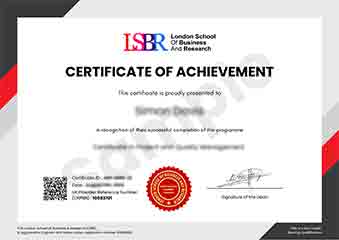
Sample Certificate
Preview the certificate you'll receive upon successful completion of this program.
Get Free Course Info
Enter your details and we'll send you a comprehensive course information pack straight to your inbox.
Employer Sponsored Training
Let your employer invest in your professional development. Request a corporate invoice and get your training funded.
Request Corporate InvoiceWhat People Say About Us
Hear from our students about their experience with the Executive Development Programme in Sustainable Material Selection and Implementation at LSBRX - Executive Education.
Charlotte Williams
United Kingdom"The course provided an in-depth look at sustainable material selection, equipping me with practical skills to implement eco-friendly solutions in my projects. It significantly enhanced my ability to contribute to sustainable practices in my field, opening up new career opportunities."
Kavya Reddy
India"The Executive Development Programme in Sustainable Material Selection and Implementation has significantly enhanced my ability to make informed decisions that align with both environmental sustainability and business objectives. This course has not only broadened my professional skill set but also opened up new career opportunities in the green technology sector."
Greta Fischer
Germany"The course structure was well-organized, providing a clear path from understanding sustainable material basics to implementing them in real-world scenarios, which significantly enhanced my knowledge and professional growth."