
Executive Development Programme in Testing Robotic Systems for Deep Space
This programme equips executives with the knowledge to develop and test robotic systems for deep space missions, enhancing mission success and operational efficiency.
Executive Development Programme in Testing Robotic Systems for Deep Space
Programme Overview
The Executive Development Programme in Testing Robotic Systems for Deep Space is designed for senior leaders and technical managers in the aerospace and robotics industries, as well as individuals with a background in engineering, computer science, or related fields who are seeking to advance their expertise in deep space robotic systems. The programme focuses on the comprehensive testing and validation of robotic systems that are critical for space exploration, integrating the latest advancements in robotics, artificial intelligence, and space technology.
Participants will develop key skills in system integration, testing methodologies, and robotic autonomy, with a particular emphasis on the challenges of deep space environments. They will learn about advanced testing frameworks, failure analysis, and real-world application scenarios, enhancing their ability to ensure the reliability and performance of robotic systems over extended missions. The curriculum includes hands-on workshops, case studies, and guest lectures from industry experts, providing a robust foundation in both theoretical and practical aspects of deep space robotic testing.
The programme has a profound impact on career trajectories by equipping participants with the knowledge and skills necessary to lead innovation in deep space exploration. Graduates will be well-prepared to tackle complex challenges in robotic systems development, contribute to cutting-edge research, and drive technological advancements that can lead to significant career growth and leadership opportunities in the aerospace sector.
What You'll Learn
The Executive Development Programme in Testing Robotic Systems for Deep Space is a transformative initiative designed for professionals seeking to advance their careers in the aerospace and robotics sectors. This program equips participants with the latest knowledge and practical skills in testing and validating robotic systems for deep space missions. Key topics include spacecraft robotics, autonomous navigation, environmental simulation, and advanced testing methodologies.
Graduates of this program are well-prepared to lead and innovate in the design and testing phases of deep space robotic missions. They will be adept at developing and implementing rigorous testing protocols, ensuring reliability and functionality in extreme environments. The program also fosters an understanding of the integration of artificial intelligence and machine learning in robotic systems, preparing participants to address complex challenges in space exploration.
Career opportunities are extensive, ranging from roles in spacecraft design and testing to mission planning and operations. Graduates can pursue positions at major aerospace companies, space agencies, and research institutions. This program not only enhances technical expertise but also builds leadership and strategic thinking skills, positioning graduates as key contributors to the future of space exploration.
Programme Highlights
Industry-Aligned Curriculum
Developed with industry leaders for job-ready skills valued by employers worldwide.
Globally Recognised Certificate
Recognised by employers across 180+ countries as a mark of professional excellence.
Flexible Online Learning
Study at your own pace with lifetime access to all course materials and updates.
Instant Access
Start learning immediately — no application process or waiting period required.
Constantly Updated Content
Stay ahead with the latest industry trends, best practices, and emerging insights.
Career Advancement
87% of graduates report measurable career progression within 6 months of completion.
Topics Covered
- 1. Introduction to Robotic Systems for Deep Space: Learners will study fundamental concepts of robotic systems designed for deep space missions, including spacecraft design, navigation, and communication protocols. They will gain an understanding of the unique challenges and requirements of space robotics.
- 2. Testing Fundamentals for Space Robotics: This module introduces the principles and methodologies of testing robotic systems, focusing on reliability, robustness, and safety in space environments. Learners will develop the skills to design and conduct comprehensive test plans for space robotics.
- 3. Testing Automation and Software Tools: Learners will explore automated testing tools and methodologies specific to space robotics, including simulation software and hardware-in-the-loop systems. They will gain proficiency in using these tools to automate testing processes and improve testing efficiency.
- 4. Testing Robotics in Extreme Environments: This module covers the testing of robotic systems in extreme space conditions, such as vacuum, radiation, and temperature fluctuations. Learners will study specialized testing techniques and equipment to ensure robustness in harsh environments.
- 5. Testing Human-Robot Interaction in Space: Focusing on the integration of human and robotic systems, learners will study the testing of human-robot interaction (HRI) in deep space. They will learn how to design and conduct tests to ensure effective and safe collaboration between humans and robots.
- 6. Advanced Testing Techniques for Space Robotics: This module delves into advanced testing techniques, including fault injection, model-based testing, and test case generation. Learners will develop skills in applying these advanced methods to enhance the testing of complex robotic systems.
- 7. Testing for Long-Term Space Missions: Learners will study the unique challenges and testing requirements for long-duration space missions, including life support systems, power management, and maintenance procedures. They will learn how to design robust testing strategies for missions that can last for years.
- 8. Testing for Robotic Exploration Missions: This module focuses on the testing of robotic systems designed for specific exploration missions, such as Mars rovers or asteroid sampling. Learners will understand the specific testing needs and challenges associated with these missions.
- 9. Legal and Ethical Considerations in Testing Space Robotics: Focusing on the legal and ethical aspects of testing space robotics, learners will study regulations, standards, and ethical guidelines that govern testing in space. They will gain the knowledge to ensure compliance and responsible testing practices.
- 10. Project-Based Learning: Developing a Robotic System Test Plan: In this capstone module, learners will apply all the knowledge and skills acquired throughout the programme to develop a comprehensive test plan for a simulated robotic system for a deep space mission. They will work in teams to design and execute a test plan, culminating in a detailed project report.
What You Get When You Enroll
Secure checkout • Instant access • Certificate included
Key Facts
Audience: Engineers, scientists, testing specialists
Prerequisites: Basic knowledge of robotics, space exploration
Outcomes: Enhanced testing skills, deep space mission readiness
Ready to get started?
Join thousands of professionals who already took the next step. Enroll now and get instant access.
Enroll Now — $199Why This Course
Enhance Expertise: The Executive Development Programme in Testing Robotic Systems for Deep Space provides professionals with advanced knowledge in the latest testing methodologies and technologies specific to deep space robotics. This deepens their expertise and equips them with the skills needed to test complex systems under extreme conditions, a critical skill for careers in aerospace and robotics.
Career Advancement: By participating in this program, professionals can position themselves as leaders in their field. The program’s focus on innovation and problem-solving in space robotics can open doors to senior roles and leadership positions within space agencies, defense organizations, and private aerospace companies.
Networking Opportunities: The program offers a platform to connect with industry experts, fellow professionals, and potential mentors. These connections can lead to collaborative projects, joint research, and access to cutting-edge research and development projects, providing a competitive edge in the job market.
Adaptability and Future-Proofing: The rapidly evolving landscape of space exploration requires professionals to stay updated with the latest technologies and methodologies. This program helps individuals develop a broad skill set and a flexible mindset, ensuring they remain relevant and adaptable in their careers as the field continues to advance.
Your Path to Certification
Trusted by Professionals Worldwide
Course Brochure
Download our comprehensive course brochure with all details
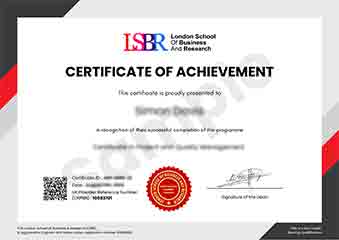
Sample Certificate
Preview the certificate you'll receive upon successful completion of this program.
Get Free Course Info
Enter your details and we'll send you a comprehensive course information pack straight to your inbox.
Employer Sponsored Training
Let your employer invest in your professional development. Request a corporate invoice and get your training funded.
Request Corporate InvoiceWhat People Say About Us
Hear from our students about their experience with the Executive Development Programme in Testing Robotic Systems for Deep Space at LSBRX - Executive Education.
Oliver Davies
United Kingdom"The course content was incredibly thorough, covering every aspect of testing robotic systems for deep space missions. I gained substantial practical skills that will undoubtedly enhance my career in aerospace engineering, particularly in ensuring the reliability of space missions."
Zoe Williams
Australia"This course has been instrumental in bridging the gap between theoretical knowledge and practical application in testing robotic systems for deep space missions. It has not only enhanced my technical skills but also provided me with a competitive edge in the job market, opening up new opportunities in aerospace engineering."
Brandon Wilson
United States"The course structure was meticulously organized, providing a seamless transition from theoretical concepts to practical applications in testing robotic systems for deep space missions. The comprehensive content not only expanded my knowledge but also equipped me with valuable insights into real-world challenges and solutions in the field."