
Executive Development Programme in Threat Prediction using Machine Learning
This program equips executives with machine learning tools and strategies for predicting and mitigating threats, enhancing decision-making and organizational resilience.
Executive Development Programme in Threat Prediction using Machine Learning
Programme Overview
The Executive Development Programme in Threat Prediction using Machine Learning is tailored for senior executives and professionals in cybersecurity, technology, and related fields who seek to understand and leverage advanced machine learning techniques to predict and mitigate threats. This program is designed to provide a comprehensive understanding of the latest machine learning methodologies and their applications in threat detection and prevention, equipping participants with the knowledge to drive strategic decisions and enhance organizational security.
Key skills and knowledge developed through this program include proficiency in machine learning algorithms, data analysis, and predictive modeling for cybersecurity. Participants will learn to utilize Python and popular machine learning frameworks, understand the intricacies of anomaly detection, and apply feature engineering to improve threat prediction accuracy. The program also focuses on ethical considerations in data usage and the legal aspects of cybersecurity.
This programme will significantly impact the career trajectories of participants by enabling them to lead more informed and proactive cybersecurity strategies. Graduates will be better equipped to identify potential security vulnerabilities, predict emerging threats, and implement effective mitigation strategies. They will also be prepared to drive innovation within their organizations, ensuring they remain at the forefront of cybersecurity practices and contribute to a safer digital environment.
What You'll Learn
The Executive Development Programme in Threat Prediction using Machine Learning is designed for executives seeking to harness the power of machine learning to forecast and mitigate cybersecurity threats. This program equips participants with advanced predictive analytics skills, enabling them to stay ahead of potential risks in a digital world. Key topics include data preprocessing, machine learning algorithms, anomaly detection, and threat intelligence analysis. Participants will learn to develop and deploy predictive models using cutting-edge tools and technologies, such as TensorFlow and Python.
Upon completion, graduates can apply these skills to enhance organizational security strategies, protect sensitive data, and respond to cyber threats more effectively. They will be well-prepared to lead projects that integrate machine learning into existing security frameworks, fostering a culture of proactive threat management. This program opens doors to diverse career opportunities, including roles as Chief Information Security Officers, Data Science Managers, and Cybersecurity Analysts. Graduates are also positioned to pursue further specialization in emerging fields like AI ethics and cybersecurity policy.
Programme Highlights
Industry-Aligned Curriculum
Developed with industry leaders for job-ready skills valued by employers worldwide.
Globally Recognised Certificate
Recognised by employers across 180+ countries as a mark of professional excellence.
Flexible Online Learning
Study at your own pace with lifetime access to all course materials and updates.
Instant Access
Start learning immediately — no application process or waiting period required.
Constantly Updated Content
Stay ahead with the latest industry trends, best practices, and emerging insights.
Career Advancement
87% of graduates report measurable career progression within 6 months of completion.
Topics Covered
- 1. Introduction to Machine Learning: Learners will understand the fundamentals of machine learning, including types of learning (supervised, unsupervised, reinforcement), basic algorithms, and the importance of data in predictive models. They will gain skills in evaluating different learning algorithms and choosing the right one for a given task.
- 2. Data Preprocessing and Feature Engineering: This module covers the critical steps of cleaning and preparing data for machine learning models, including handling missing values, feature scaling, and creating meaningful features. Learners will develop skills in using Python libraries like pandas and scikit-learn for data manipulation and feature engineering.
- 3. Supervised Learning Techniques: Learners will explore various supervised learning techniques, including regression and classification models, and understand how to apply them for predicting known outcomes. Practical skills include building models using libraries like scikit-learn and evaluating their performance using metrics such as accuracy, precision, recall, and F1 score.
- 4. Unsupervised Learning Techniques: This module introduces unsupervised learning methods, focusing on clustering and dimensionality reduction. Learners will apply techniques such as K-means clustering and principal component analysis (PCA) to uncover hidden patterns in data. They will gain skills in interpreting results and selecting appropriate algorithms based on the problem context.
- 5. Time Series Analysis: Learners will learn how to analyze and predict time-series data, essential for threat prediction. They will study concepts like stationarity, autocorrelation, and seasonality, and apply models such as ARIMA and state-space models using Python’s statsmodels and Prophet libraries.
- 6. Natural Language Processing (NLP) for Threat Detection: This module covers the basics of NLP, including text preprocessing, sentiment analysis, and topic modeling. Learners will develop skills in using NLP techniques to process and analyze unstructured data, such as emails, social media posts, and news articles, for threat prediction.
- 7. Advanced Machine Learning Techniques: Here, learners will delve into more complex machine learning methods, such as ensemble learning, deep learning, and neural networks. They will apply these techniques to build more robust and accurate predictive models and gain experience with frameworks like TensorFlow and PyTorch.
- 8. Model Deployment and Real-Time Prediction: This module focuses on deploying machine learning models in real-world applications, including setting up APIs, integrating models into existing systems, and ensuring model performance over time. Learners will develop skills in model management, monitoring, and continuous improvement.
- 9. Threat Intelligence and Cybersecurity Integration: Learners will explore how machine learning models can be integrated into threat intelligence platforms and cybersecurity systems. They will understand the role of machine learning in enhancing threat detection and response capabilities, and apply their knowledge to create effective threat prediction solutions.
- 10. Case Studies and Final Project: In this module, learners will work on real-world case studies and a final project, applying all the skills and knowledge acquired throughout the programme. They will gain experience in project management, teamwork, and presenting findings to stakeholders.
What You Get When You Enroll
Secure checkout • Instant access • Certificate included
Key Facts
Audience: Experienced executives, managers
Prerequisites: Basic understanding of ML
Outcomes: Enhanced predictive skills, ML adoption knowledge
Ready to get started?
Join thousands of professionals who already took the next step. Enroll now and get instant access.
Enroll Now — $199Why This Course
Enhanced Predictive Analytics Skills: Participants in the Executive Development Programme in Threat Prediction using Machine Learning gain advanced skills in predictive analytics, enabling them to anticipate security threats more effectively. This is crucial in today's digital landscape where cyber threats are becoming increasingly sophisticated and frequent. By mastering these skills, professionals can proactively safeguard their organizations against potential risks.
Strategic Decision-Making: The programme equips participants with the knowledge to make informed, data-driven decisions. Understanding how to leverage machine learning algorithms for threat prediction allows executives to allocate resources more efficiently and prioritize security initiatives that have the most significant impact. This can significantly reduce the risk of security breaches and bolster organizational resilience.
Leadership in Innovation: By integrating machine learning into threat prediction strategies, professionals can lead their organizations towards innovative solutions. This not only enhances their leadership capabilities but also positions them as thought leaders in their field. The programme encourages a culture of continuous learning and innovation, which is essential for long-term success in the highly dynamic field of cybersecurity.
Your Path to Certification
Trusted by Professionals Worldwide
Course Brochure
Download our comprehensive course brochure with all details
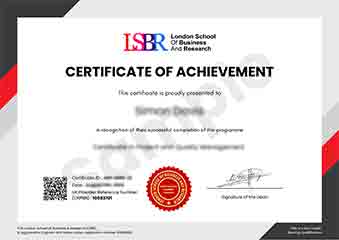
Sample Certificate
Preview the certificate you'll receive upon successful completion of this program.
Get Free Course Info
Enter your details and we'll send you a comprehensive course information pack straight to your inbox.
Employer Sponsored Training
Let your employer invest in your professional development. Request a corporate invoice and get your training funded.
Request Corporate InvoiceWhat People Say About Us
Hear from our students about their experience with the Executive Development Programme in Threat Prediction using Machine Learning at LSBRX - Executive Education.
Sophie Brown
United Kingdom"The course content was incredibly detailed and well-structured, providing a solid foundation in threat prediction using machine learning. I gained practical skills that I can directly apply to enhance security measures in my organization, which has already shown significant career benefits."
Hans Weber
Germany"The Executive Development Programme in Threat Prediction using Machine Learning has significantly enhanced my ability to predict and mitigate cyber threats, making me a more valuable asset in my organization. This course has not only deepened my technical skills but also provided practical insights that are directly applicable in real-world scenarios, propelling my career forward."
Priya Sharma
India"The course structure was well-organized, providing a clear path from foundational concepts to advanced topics in threat prediction, which significantly enhanced my understanding and practical skills in applying machine learning techniques to real-world scenarios."