
Executive Development Programme in Transportation Emergency Response
Innovate with confidence using modern transportation emergency response methodologies. Create solutions for tomorrow's challenges.
Executive Development Programme in Transportation Emergency Response
Programme Overview
The Executive Development Programme in Transportation Emergency Response is designed for senior executives and managers responsible for ensuring the safety and continuity of transportation networks during crises. This program aims to equip participants with the strategic and operational skills necessary to manage complex emergency situations in the transportation sector. Participants will learn to integrate risk management, crisis communication, and emergency preparedness into their organizational strategies, enhancing their ability to lead effectively during critical times.
Key skills and knowledge developed through this program include advanced emergency response planning, the application of risk assessment methodologies, and the enhancement of crisis communication strategies. Learners will gain proficiency in leading cross-functional teams, utilizing technology for situational awareness, and implementing effective decision-making frameworks under high-pressure scenarios. The program also emphasizes the importance of stakeholder engagement and the development of comprehensive recovery plans.
Upon completion of the programme, participants will be better positioned to navigate the challenges of transportation emergency response, contributing to safer and more resilient transportation systems. This will not only enhance their individual career prospects but also significantly impact their organizations by improving emergency response readiness and operational continuity.
What You'll Learn
The Executive Development Programme in Transportation Emergency Response is a comprehensive initiative designed to elevate professionals to leadership roles in the complex field of transportation emergency management. This program equips participants with advanced skills in crisis management, strategic planning, and data-driven decision-making. Key topics include emergency response protocols, risk assessment, supply chain resilience, and the integration of technology in disaster response.
Participants engage in hands-on simulations and real-world case studies, enhancing their ability to navigate high-stress situations and coordinate effective responses. Upon completion, graduates are well-prepared to lead teams in mitigating risks, ensuring safety, and facilitating recovery efforts. The program also focuses on developing interpersonal skills, such as communication and collaboration, crucial for effective leadership in diverse and dynamic environments.
Graduates of this program can pursue careers as emergency response directors, transportation safety managers, and crisis communication coordinators. The program’s alumni network provides ongoing support and opportunities for professional growth, positioning graduates to make significant contributions to the field of transportation emergency management.
Programme Highlights
Industry-Aligned Curriculum
Developed with industry leaders for job-ready skills valued by employers worldwide.
Globally Recognised Certificate
Recognised by employers across 180+ countries as a mark of professional excellence.
Flexible Online Learning
Study at your own pace with lifetime access to all course materials and updates.
Instant Access
Start learning immediately — no application process or waiting period required.
Constantly Updated Content
Stay ahead with the latest industry trends, best practices, and emerging insights.
Career Advancement
87% of graduates report measurable career progression within 6 months of completion.
Topics Covered
- 1. Introduction to Transportation Emergency Response: Learners will be introduced to the basic principles of transportation emergency response, including types of emergencies, emergency management frameworks, and the role of different stakeholders. They will gain foundational knowledge necessary for understanding the complexities of emergency response in the transportation sector.
- 2. Risk Assessment and Management in Transportation: This module focuses on the identification, assessment, and mitigation of risks in transportation systems. Learners will study methods for risk assessment, learn to develop risk mitigation strategies, and understand the importance of continuous risk management in transportation emergency response.
- 3. Emergency Operations Centers (EOCs) and Coordination: Learners will explore the structure and functions of EOCs, focusing on effective communication, information sharing, and coordination among various agencies during emergencies. Practical skills in managing an EOC will be developed through case studies and simulations.
- 4. Crisis Communication and Public Information: This module covers the principles of crisis communication, including developing effective communication strategies, managing public information, and dealing with media during transportation emergencies. Practical exercises will help learners enhance their communication skills.
- 5. Legal and Ethical Considerations in Emergency Response: Learners will examine the legal and ethical frameworks governing transportation emergency response, including liability issues, privacy concerns, and the ethical considerations in decision-making under pressure. Knowledge of relevant laws and regulations will be emphasized.
- 6. Advanced Incident Management Techniques: This module delves into advanced techniques for incident management, including the use of technology in emergency response, multi-agency coordination, and the application of situational awareness in complex emergency scenarios. Practical problem-solving exercises will be conducted.
- 7. Transportation Infrastructure Resilience: Learners will study the resilience of transportation infrastructure against various types of emergencies, including natural disasters and terrorist attacks. They will learn how to identify vulnerabilities and implement resilience measures to enhance the robustness of transportation systems.
- 8. Strategic Planning for Transportation Emergency Response: This module focuses on strategic planning for transportation emergency response, including long-term planning, resource allocation, and the development of comprehensive emergency response plans. Practical planning exercises will be carried out to develop effective response strategies.
- 9. International Best Practices in Emergency Response: Learners will explore international best practices and standards in transportation emergency response, including international cooperation, standard operating procedures, and the sharing of best practices across different countries. Case studies from around the world will be analyzed.
- 10. Leadership and Decision-Making in Crisis Situations: This module develops leadership skills and decision-making abilities under crisis conditions, focusing on ethical leadership, stress management, and making informed decisions in high-pressure situations. Practical scenarios will be used to simulate crisis situations for skill development.
What You Get When You Enroll
Secure checkout • Instant access • Certificate included
Key Facts
Audience: Mid-to-senior level transportation managers
Prerequisites: + years related experience
Outcomes: Enhanced crisis management, improved emergency response skills
Ready to get started?
Join thousands of professionals who already took the next step. Enroll now and get instant access.
Enroll Now — $199Why This Course
Enhanced Leadership and Decision-Making Skills: Professionals enrolled in the Executive Development Programme in Transportation Emergency Response can significantly improve their leadership and decision-making capabilities. This program equips participants with advanced strategies for managing crises, enabling them to handle transportation emergencies more effectively and with greater confidence.
Advanced Crisis Management Techniques: The curriculum focuses on advanced crisis management techniques, providing participants with the tools necessary to analyze and respond to complex emergency situations in the transportation sector. This not only enhances their professional competence but also prepares them to lead during high-stress scenarios, ensuring smoother operations and better outcomes.
Interdisciplinary Collaboration Skills: The programme fosters interdisciplinary collaboration, teaching participants how to work effectively with various stakeholders, including government agencies, emergency services, and transport operators. This interdisciplinary approach is crucial for coordinated responses to emergencies, which can greatly reduce response times and improve overall safety.
Comprehensive Risk Management: Participants learn comprehensive risk management strategies tailored for the transportation sector. This includes understanding potential risks, developing prevention measures, and creating effective contingency plans. These skills are invaluable for preventing or mitigating the impact of future emergencies, contributing to safer and more reliable transportation systems.
Your Path to Certification
Trusted by Professionals Worldwide
Course Brochure
Download our comprehensive course brochure with all details
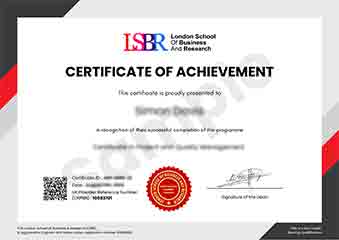
Sample Certificate
Preview the certificate you'll receive upon successful completion of this program.
Get Free Course Info
Enter your details and we'll send you a comprehensive course information pack straight to your inbox.
Employer Sponsored Training
Let your employer invest in your professional development. Request a corporate invoice and get your training funded.
Request Corporate InvoiceWhat People Say About Us
Hear from our students about their experience with the Executive Development Programme in Transportation Emergency Response at LSBRX - Executive Education.
Oliver Davies
United Kingdom"The course content was incredibly detailed and relevant, providing a comprehensive understanding of emergency response strategies in transportation. Gaining insights into real-world scenarios and the tools to handle them effectively has significantly enhanced my problem-solving skills and career prospects in the field."
Jack Thompson
Australia"The Executive Development Programme in Transportation Emergency Response has significantly enhanced my ability to handle real-world crises, making me a more valuable asset in my organization. The practical applications and industry-relevant content have not only deepened my understanding but also opened up new career opportunities in emergency management."
Wei Ming Tan
Singapore"The course structure was meticulously organized, providing a seamless transition from theoretical concepts to practical applications in transportation emergency response, which significantly enhanced my understanding and preparedness for real-world scenarios."