
Executive Development Programme in Value-Based Care: Models and Implementation
This programme equips executives with the knowledge and skills to implement value-based care models, enhancing patient outcomes and operational efficiency.
Executive Development Programme in Value-Based Care: Models and Implementation
Programme Overview
The Executive Development Programme in Value-Based Care: Models and Implementation is designed for healthcare executives, leaders, and professionals who aim to transform their organizations into value-based care (VBC) leaders. This program equips participants with the strategic insights and practical tools needed to navigate the complexities of VBC. It covers a broad spectrum of topics including the principles of value-based care, reimbursement models, population health management, technology integration, and stakeholder engagement. Participants will also explore case studies and best practices from leading healthcare organizations to enhance their understanding of successful VBC implementation strategies.
Key skills and knowledge learners will develop include an understanding of how to align clinical practices with VBC models, manage risk in value-based contracts, leverage data analytics for improved patient outcomes, and foster a culture of continuous improvement. They will gain proficiency in creating and executing value-based care strategies, and learn to measure and report on quality and cost outcomes effectively. The program also emphasizes the importance of interprofessional collaboration and patient engagement in achieving successful outcomes within a value-based care framework.
The programme has a significant impact on career progression, offering participants the opportunity to lead transformative change within their organizations. Graduates will be well-prepared to assume leadership roles in value-based care initiatives, drive performance improvements, and contribute to the broader shift towards sustainable and patient-centered healthcare. The skills and knowledge acquired will enable them to navigate the evolving healthcare landscape and lead their institutions towards improved patient outcomes and financial sustainability.
What You'll Learn
The Executive Development Programme in Value-Based Care: Models and Implementation is designed to equip healthcare leaders with the strategic skills necessary to transform healthcare delivery into a more patient-centered, sustainable, and effective system. This program delves into the core principles of value-based care, including population health management, quality improvement, and the use of data analytics to drive decision-making. Participants will explore diverse models of care delivery, such as accountable care organizations, patient-centered medical homes, and value-based payment models, and learn how to implement these models in their own organizations.
Through interactive workshops, case studies, and expert guest lectures, participants gain practical insights into the challenges and opportunities of transitioning to value-based care. They will develop a comprehensive understanding of how to align clinical, financial, and operational strategies to improve patient outcomes while reducing costs. The program also emphasizes the importance of engaging patients and stakeholders in the care process to foster a culture of collaboration and continuous improvement.
Graduates of this program are well-prepared to lead organizational change and drive innovation in value-based care. They can confidently navigate complex healthcare landscapes, leveraging their new skills to shape policy, improve clinical practices, and enhance patient experiences. Upon completion, participants will have the tools and knowledge to pursue leadership roles in healthcare management, health policy, and clinical leadership, contributing to a future where healthcare is more equitable, efficient, and patient-focused.
Programme Highlights
Industry-Aligned Curriculum
Developed with industry leaders for job-ready skills valued by employers worldwide.
Globally Recognised Certificate
Recognised by employers across 180+ countries as a mark of professional excellence.
Flexible Online Learning
Study at your own pace with lifetime access to all course materials and updates.
Instant Access
Start learning immediately — no application process or waiting period required.
Constantly Updated Content
Stay ahead with the latest industry trends, best practices, and emerging insights.
Career Advancement
87% of graduates report measurable career progression within 6 months of completion.
Topics Covered
- 1. Introduction to Value-Based Care: Learners will understand the principles of value-based care, its importance in modern healthcare, and the economic and ethical benefits. They will gain foundational knowledge to assess and evaluate value-based care models.
- 2. Models of Value-Based Care: This module will explore various models of value-based care, such as pay-for-performance, accountable care organizations, and bundled payments. Learners will analyze the strengths and weaknesses of each model and learn how to choose the most suitable model for different healthcare settings.
- 3. Data Analytics for Value-Based Care: Learners will study the role of data analytics in value-based care, including the collection, processing, and interpretation of clinical and financial data. They will develop practical skills in using advanced analytics tools to improve patient outcomes and reduce costs.
- 4. Patient Engagement and Communication: This module focuses on strategies for patient engagement and effective communication in value-based care. Learners will learn how to involve patients in care planning and decision-making, improving their health literacy and satisfaction.
- 5. Quality Improvement Initiatives: Learners will delve into various quality improvement initiatives used in value-based care, such as Lean Six Sigma and Total Quality Management. They will gain hands-on experience in designing and implementing quality improvement projects.
- 6. Interprofessional Collaboration: This module will cover the importance of interprofessional collaboration in value-based care. Learners will learn to build and maintain effective teamwork, enhance communication among healthcare professionals, and improve patient care delivery.
- 7. Legal and Ethical Considerations: Learners will explore the legal and ethical issues associated with value-based care, including liability, confidentiality, and informed consent. They will develop the skills to navigate these challenges and ensure compliance with healthcare regulations.
- 8. Leadership in Value-Based Care: This module will focus on developing leadership skills essential for successful implementation of value-based care. Learners will learn to lead change, motivate teams, and foster a culture of continuous improvement.
- 9. Financial Management in Value-Based Care: Learners will study the financial aspects of value-based care, including cost-effectiveness analysis, budgeting, and reimbursement models. They will gain practical skills in managing healthcare resources to achieve financial sustainability.
- 10. Case Studies in Value-Based Care: This module will involve real-world case studies of value-based care initiatives. Learners will analyze successful and unsuccessful implementations, extract lessons learned, and apply them to their own healthcare settings.
What You Get When You Enroll
Secure checkout • Instant access • Certificate included
Key Facts
Targeted at healthcare leaders
No specific medical background required
Enhances understanding of value-based care
Develops strategic implementation skills
Improves patient outcomes and satisfaction
Strengthens organizational leadership
Ready to get started?
Join thousands of professionals who already took the next step. Enroll now and get instant access.
Enroll Now — $199Why This Course
Enhanced Competence in Value-Based Care Models: Participating in the Executive Development Programme in Value-Based Care provides professionals with in-depth knowledge of the latest models and frameworks. This skill set is crucial as healthcare shifts from volume to value-based care, focusing on improving health outcomes while reducing costs.
Strategic Implementation Skills: The programme equips participants with the tools and strategies needed to implement value-based care effectively in their organizations. This includes understanding how to align clinical, financial, and operational processes to support patient-centered care and sustainable healthcare delivery.
Leadership and Interdisciplinary Collaboration: Through the programme, professionals develop leadership skills essential for guiding and motivating teams towards value-based care goals. Additionally, the interdisciplinary focus fosters collaboration between healthcare providers, payers, and patients, which is vital for successful implementation of these models.
Your Path to Certification
Trusted by Professionals Worldwide
Course Brochure
Download our comprehensive course brochure with all details
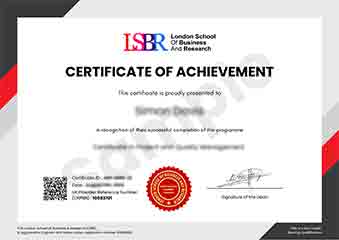
Sample Certificate
Preview the certificate you'll receive upon successful completion of this program.
Get Free Course Info
Enter your details and we'll send you a comprehensive course information pack straight to your inbox.
Employer Sponsored Training
Let your employer invest in your professional development. Request a corporate invoice and get your training funded.
Request Corporate InvoiceWhat People Say About Us
Hear from our students about their experience with the Executive Development Programme in Value-Based Care: Models and Implementation at LSBRX - Executive Education.
Sophie Brown
United Kingdom"The course provided deep insights into value-based care models, equipping me with practical tools to implement them in real-world settings, which has significantly enhanced my career prospects in healthcare management."
Wei Ming Tan
Singapore"This program has significantly enhanced my understanding of value-based care models, equipping me with practical tools to implement them in my organization. It has not only deepened my industry knowledge but also opened up new career opportunities by highlighting the importance of patient-centered care and cost-effectiveness."
Isabella Dubois
Canada"The course structure was well-organized, providing a clear pathway to understanding complex models of value-based care, which has significantly enhanced my ability to apply these concepts in real-world scenarios, fostering my professional growth."