
Executive Development Programme in Virtual Reality Interaction Design
This programme enhances leadership skills through immersive virtual reality interaction design, fostering innovative problem-solving and team collaboration.
Executive Development Programme in Virtual Reality Interaction Design
Programme Overview
The Executive Development Programme in Virtual Reality (VR) Interaction Design is a comprehensive, cutting-edge programme designed for senior professionals from various industries who wish to enhance their expertise in VR interaction design. This programme equips participants with the necessary skills to design, develop, and implement interactive VR experiences that meet the demands of modern digital environments. It covers a broad spectrum of topics including VR technology fundamentals, user experience (UX) design principles, D modeling, and real-time graphics processing, ensuring a well-rounded education that encompasses both theoretical and practical aspects of VR interaction design.
Participants will develop key skills such as creating immersive VR environments, understanding user behavior in virtual spaces, and effectively integrating design elements to enhance user engagement and satisfaction. The programme also focuses on advanced techniques for optimizing VR performance, addressing issues related to motion sickness, and ensuring inclusive design for diverse user populations. Upon completion, learners will be proficient in using industry-standard tools and technologies, enabling them to lead innovative VR projects and contribute to the evolution of digital interaction design.
The programme has a significant impact on career advancement, preparing participants to take on leadership roles in VR development teams or to launch their own VR design studios. Graduates are well-equipped to drive the development of VR applications across sectors including healthcare, education, entertainment, and retail, contributing to the broader adoption and integration of VR technology in society.
What You'll Learn
Embark on a transformative journey with our Executive Development Programme in Virtual Reality Interaction Design, designed to propel you into the forefront of innovative technology. This program equips executives and professionals with the skills to design and develop interactive virtual environments, leveraging cutting-edge VR technologies. Key topics include user-centered design principles, immersive storytelling, spatial audio and visual design, and advanced VR programming. Participants will explore how to integrate these elements to create compelling VR experiences that enhance user engagement and interaction.
Through hands-on projects and collaboration with industry experts, graduates will gain practical experience in designing VR applications for various sectors, including healthcare, education, and entertainment. This program not only enhances your ability to lead innovative projects but also prepares you for emerging roles such as VR Interaction Designers, VR Project Managers, and Innovation Directors. By the end of the program, you will be well-equipped to drive digital transformation and create impactful VR solutions that redefine user experiences in the digital age.
Programme Highlights
Industry-Aligned Curriculum
Developed with industry leaders for job-ready skills valued by employers worldwide.
Globally Recognised Certificate
Recognised by employers across 180+ countries as a mark of professional excellence.
Flexible Online Learning
Study at your own pace with lifetime access to all course materials and updates.
Instant Access
Start learning immediately — no application process or waiting period required.
Constantly Updated Content
Stay ahead with the latest industry trends, best practices, and emerging insights.
Career Advancement
87% of graduates report measurable career progression within 6 months of completion.
Topics Covered
- 1. Introduction to Virtual Reality (VR) Interaction Design: Learners will study the basics of VR technology, including hardware and software, and explore key concepts like immersion, presence, and interaction design. They will gain foundational skills in setting up VR environments and understanding user experience principles.
- 2. Human-Centric Design Principles: This module focuses on designing VR interactions that are intuitive and user-friendly. Learners will learn about cognitive load theory, user interface design, and inclusive design practices to create accessible VR experiences.
- 3. 3D Modeling and Scenography: In this module, learners will get hands-on experience with 3D modeling tools and techniques for creating realistic and engaging VR environments. They will learn about lighting, texturing, and scene composition.
- 4. Interaction Techniques for VR: Learners will explore various interaction methods in VR, including natural gestures, voice commands, and haptic feedback. They will design and implement interactive elements that enhance user engagement and usability.
- 5. VR User Experience (UX) Research Methods: This module covers qualitative and quantitative research methods for evaluating VR UX. Learners will conduct user testing, gather feedback, and analyze data to improve the design process and user satisfaction.
- 6. Advanced Interaction Design for VR: Building on previous modules, learners will delve into advanced topics such as spatial interaction, object manipulation, and environmental storytelling. They will apply these concepts to create complex and immersive VR experiences.
- 7. VR Project Management and Team Collaboration: In this module, learners will learn how to manage VR projects effectively, from planning and budgeting to scheduling and resource allocation. They will also practice collaborative skills and cross-functional team dynamics.
- 8. Business and Marketing for VR Products: Learners will understand the business aspects of developing VR products, including market analysis, branding, and marketing strategies. They will also explore monetization models and analyze the ROI of VR projects.
- 9. Ethical Considerations in VR Design: This module focuses on the ethical implications of VR design, such as privacy concerns, social impact, and moral considerations. Learners will develop a framework for ethical design practices and consider the broader societal implications of VR technology.
- 10. Future Trends in VR Interaction Design: The final module will introduce emerging trends and cutting-edge technologies in VR, such as augmented reality, mixed reality, and emerging interaction paradigms. Learners will explore how these technologies will shape the future of VR interaction design.
What You Get When You Enroll
Secure checkout • Instant access • Certificate included
Key Facts
Audience: Professionals in interactive media, UX design
Prerequisites: Basic VR knowledge, design experience
Outcomes: Master VR interaction techniques, enhance design skills
Ready to get started?
Join thousands of professionals who already took the next step. Enroll now and get instant access.
Enroll Now — $199Why This Course
Enhanced Interactivity Skills: Executives can significantly enhance their ability to design interactive experiences that engage users in virtual environments. This program equips professionals with the skills to create immersive content, ensuring that their virtual reality (VR) projects are not only innovative but also highly interactive, thus driving user engagement and satisfaction.
Leadership in Digital Transformation: By participating in this program, professionals can stay ahead in the digital transformation of their industries. VR is becoming a critical tool for business operations, training, and customer engagement. Gaining expertise in VR interaction design can help professionals lead their organizations through digital transformations, offering new opportunities and competitive advantages.
Data-Driven Decision Making: The course provides insights into how to collect and analyze data from VR interactions. This capability is vital for making informed decisions that can optimize user experiences and business outcomes. Professionals who can leverage data from VR interactions will be better positioned to refine their strategies and improve business performance.
Innovative Problem Solving: VR interaction design requires creative problem-solving skills. This program fosters an environment where executives can develop these skills, enabling them to tackle complex challenges in their industries more effectively. By integrating design thinking and VR technology, professionals can innovate solutions that were previously unimagined, contributing to their organization's growth and success.
Your Path to Certification
Trusted by Professionals Worldwide
Course Brochure
Download our comprehensive course brochure with all details
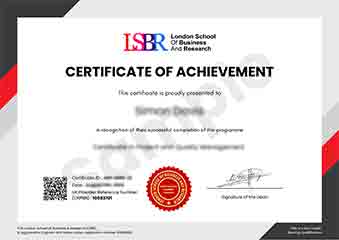
Sample Certificate
Preview the certificate you'll receive upon successful completion of this program.
Get Free Course Info
Enter your details and we'll send you a comprehensive course information pack straight to your inbox.
Employer Sponsored Training
Let your employer invest in your professional development. Request a corporate invoice and get your training funded.
Request Corporate InvoiceWhat People Say About Us
Hear from our students about their experience with the Executive Development Programme in Virtual Reality Interaction Design at LSBRX - Executive Education.
Charlotte Williams
United Kingdom"The course content was incredibly rich and well-structured, providing a deep dive into virtual reality interaction design that truly enhanced my understanding and practical skills. I now feel much more confident in applying these skills to real-world projects, which will be invaluable for my career advancement."
Ahmad Rahman
Malaysia"The Executive Development Programme in Virtual Reality Interaction Design has significantly enhanced my ability to create immersive experiences, making my skills highly relevant in the current tech landscape. This course has not only deepened my technical knowledge but also provided practical insights that have directly contributed to career advancement opportunities in my field."
Oliver Davies
United Kingdom"The course structure is meticulously organized, providing a seamless transition from theoretical concepts to practical applications in virtual reality interaction design, which has significantly enhanced my understanding and prepared me for real-world challenges."