
Executive Development Programme in Virtual Reality User Interface Design Principles
This programme equips executives with essential VR UI design principles, enhancing digital strategy and innovation capabilities.
Executive Development Programme in Virtual Reality User Interface Design Principles
Programme Overview
The Executive Development Programme in Virtual Reality User Interface Design Principles is tailored for senior executives and professionals with a keen interest in leveraging virtual reality (VR) technologies to enhance user experience in digital environments. This program focuses on the latest advancements in VR user interface (UI) design, offering insights into the creation of intuitive, engaging, and accessible VR experiences. Participants will explore the technical underpinnings of VR UI design, including spatial navigation, interaction techniques, and visual communication, as well as the psychological and cognitive aspects that drive user engagement and satisfaction.
By the end of the programme, learners will have developed a comprehensive understanding of VR UI design principles, enabling them to lead projects, make informed decisions, and drive innovation within their organizations. Key skills and knowledge include the design and implementation of interactive VR interfaces, the application of human-computer interaction (HCI) theories, and the use of VR tools and software for prototyping and testing. Learners will also gain proficiency in assessing user needs, conducting usability studies, and integrating inclusive design practices to optimize VR experiences for diverse user populations.
The career impact of this programme is significant, as participants will be better positioned to lead strategic initiatives that incorporate VR into their organizations' digital strategies. They will be able to influence the development of new VR products and services, enhance customer engagement through innovative UI design, and contribute to the broader adoption of VR technologies across industries. This programme equips executives with the knowledge and skills necessary to navigate the rapidly evolving landscape of virtual reality and
What You'll Learn
Transform your career with the Executive Development Programme in Virtual Reality User Interface Design Principles. This cutting-edge program equips you with the knowledge and skills to design intuitive and engaging VR interfaces, catering to the rapidly growing field of virtual reality. You will delve into the core principles of user experience (UX) design, interaction design, and visual design, specifically tailored for VR environments. Through hands-on projects and case studies, you will learn to develop user-centered design strategies, create immersive experiences, and optimize VR interfaces for various applications, including gaming, education, healthcare, and more.
Upon completion, graduates will be well-prepared to apply their expertise in designing effective VR user interfaces. You will be able to lead design teams, contribute to the development of innovative VR products, and enhance user engagement and satisfaction. The program also provides access to a robust alumni network of professionals in the VR industry, offering potential for mentorship, collaboration, and career advancement.
This program opens doors to a multitude of career opportunities across multiple sectors. Graduates can pursue roles such as VR User Experience Designer, VR Interaction Designer, or VR Product Manager. With the increasing adoption of VR technology, the demand for skilled professionals in this field is on the rise, making this program a valuable investment in your career.
Programme Highlights
Industry-Aligned Curriculum
Developed with industry leaders for job-ready skills valued by employers worldwide.
Globally Recognised Certificate
Recognised by employers across 180+ countries as a mark of professional excellence.
Flexible Online Learning
Study at your own pace with lifetime access to all course materials and updates.
Instant Access
Start learning immediately — no application process or waiting period required.
Constantly Updated Content
Stay ahead with the latest industry trends, best practices, and emerging insights.
Career Advancement
87% of graduates report measurable career progression within 6 months of completion.
Topics Covered
- 1. Introduction to Virtual Reality (VR) User Interface Design: Learners will explore the basics of VR technology and its applications, focusing on user interface design principles. They will gain foundational knowledge in VR technology and learn to create basic UI elements.
- 2. Human-Computer Interaction (HCI) in VR Environments: This module covers the core principles of HCI as applied to VR, including interaction techniques and usability. Learners will develop skills in designing interactive UIs that enhance user experience in VR.
- 3. Spatial User Interfaces (SUI) for VR: Learners will study the design of spatial interfaces in VR, focusing on navigation and spatial awareness. They will practice creating SUI elements that are intuitive and enhance spatial computing.
- 4. Interaction Design in VR: This module delves into the design of user interactions within VR environments, covering interaction models and tools. Learners will learn to design and implement interactive elements that are responsive and engaging.
- 5. Audio and Visual Design for VR UI: Learners will explore the role of audio and visual design in VR UI, including spatial audio and visual storytelling. They will create engaging and immersive UI experiences through the use of advanced multimedia techniques.
- 6. Advanced UI Prototyping Techniques: This module focuses on advanced prototyping tools and techniques for VR UI design. Learners will use industry-standard software to create detailed and interactive prototypes.
- 7. VR UI Design for Accessibility: Learners will study the importance of accessibility in VR UI design, including designing for users with disabilities. They will learn to create inclusive UIs that cater to a diverse range of users.
- 8. VR UI Design Case Studies: This module examines real-world case studies of successful VR UI designs. Learners will analyze and critique these designs to gain insights into best practices and innovative design approaches.
- 9. Advanced VR Interaction Techniques: Learners will explore advanced interaction techniques in VR, such as haptic feedback and natural user interfaces. They will develop skills in integrating these techniques into UI designs.
- 10. Project Development and Presentation: In this final module, learners will work on a comprehensive project that integrates all aspects of VR UI design learned throughout the programme. They will present their projects to peers and instructors, receiving feedback and insights for further development.
What You Get When You Enroll
Secure checkout • Instant access • Certificate included
Key Facts
Audience: Experienced executives, VR enthusiasts
Prerequisites: Basic knowledge of VR technology
Outcomes: Master VR UI design principles, enhance strategic vision
Ready to get started?
Join thousands of professionals who already took the next step. Enroll now and get instant access.
Enroll Now — $199Why This Course
Enhanced Digital Competency: Professionals who undertake the Executive Development Programme in Virtual Reality (VR) User Interface Design Principles will gain a comprehensive understanding of VR technologies and user interface design. This knowledge is crucial as VR is increasingly being integrated into various industries, from healthcare and education to entertainment and retail. By mastering these skills, professionals can better design user-friendly VR experiences that meet business objectives and user needs.
Competitive Edge in the Market: As the demand for VR professionals grows, those with specialized training in VR user interface design will stand out in the job market. The programme equips participants with the latest design tools and techniques, such as Unity, Unreal Engine, and VR development frameworks. These tools are essential for creating immersive and interactive VR environments that can enhance user engagement and satisfaction. Employers value candidates who can bring innovative and practical solutions to the table, and this programme provides the necessary skills to do so.
Career Advancement and Versatility: The programme not only enhances technical skills but also boosts managerial and leadership abilities. Participants learn to manage cross-functional teams, understand user design psychology, and implement effective project management strategies. These skills are valuable for career advancement and can make professionals more versatile, capable of handling a wide range of roles and responsibilities within a company. For instance, a designer who can also lead a VR development project is more likely to be promoted or chosen for critical roles that require both creative and managerial expertise.
Your Path to Certification
Trusted by Professionals Worldwide
Course Brochure
Download our comprehensive course brochure with all details
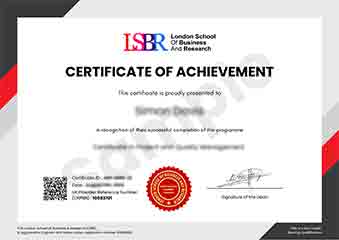
Sample Certificate
Preview the certificate you'll receive upon successful completion of this program.
Get Free Course Info
Enter your details and we'll send you a comprehensive course information pack straight to your inbox.
Employer Sponsored Training
Let your employer invest in your professional development. Request a corporate invoice and get your training funded.
Request Corporate InvoiceWhat People Say About Us
Hear from our students about their experience with the Executive Development Programme in Virtual Reality User Interface Design Principles at LSBRX - Executive Education.
Oliver Davies
United Kingdom"The course provided high-quality material that deeply enhanced my understanding of virtual reality user interface design principles, equipping me with practical skills to create more intuitive and user-friendly VR experiences. This knowledge has significantly boosted my career prospects in the tech industry."
Priya Sharma
India"This course has been instrumental in bridging the gap between theoretical knowledge and practical application in virtual reality interface design. It has significantly enhanced my ability to design user-friendly VR interfaces, making me more competitive in the job market and opening up new career opportunities in this rapidly growing field."
Fatimah Ibrahim
Malaysia"The course structure was well-organized, providing a clear progression from foundational concepts to advanced design principles, which greatly enhanced my understanding of virtual reality user interface design. The comprehensive content and real-world applications have significantly broadened my perspective and prepared me for professional challenges in the field."