
Executive Development Programme in Within-Group Variation Analysis
This programme enhances leaders' ability to analyze and leverage within-group variation for strategic decision-making and improved organizational performance.
Executive Development Programme in Within-Group Variation Analysis
Programme Overview
The Executive Development Programme in Within-Group Variation Analysis is designed for senior executives and managers who seek to enhance their analytical capabilities to drive strategic decision-making. This programme focuses on advanced statistical techniques and methodologies for analyzing within-group variation to uncover hidden patterns and insights that are critical for optimizing business operations and achieving strategic objectives. Participants are from various industries, including manufacturing, healthcare, finance, and technology, where understanding internal data variability is essential for innovation and competitiveness.
Key skills and knowledge developed through this programme include proficiency in advanced statistical analysis tools, such as ANOVA, regression analysis, and multivariate techniques, specifically tailored for within-group variation. Learners will also develop a deep understanding of how to interpret complex data, communicate findings effectively, and translate insights into actionable strategies. The programme emphasizes practical application through case studies and real-world projects, ensuring that participants can apply these skills directly in their organizations.
Career impact of this programme is significant, as participants will gain the ability to lead data-driven initiatives, improve process efficiency, and make informed decisions based on robust analytical frameworks. This not only enhances their individual performance but also contributes to organizational success by fostering a data-centric culture and driving strategic innovation.
What You'll Learn
The Executive Development Programme in Within-Group Variation Analysis is a transformative course designed for executives and leaders seeking to enhance their decision-making capabilities through advanced data analytics. This program equips participants with the skills to analyze and interpret within-group variations, enabling them to make data-driven decisions that drive business success. Key topics include statistical methods for within-group variation, regression analysis, and predictive modeling, all tailored to real-world business scenarios.
Participants will learn to identify patterns, assess risks, and optimize strategies using cutting-edge analytical tools. By applying these skills, graduates can lead their organizations to better understand customer behavior, improve operational efficiency, and enhance product development. The program also focuses on developing leadership skills, enabling participants to mentor and inspire teams to adopt data-driven practices.
Graduates of this program are well-prepared for senior management roles that require a deep understanding of data analytics. They can take on leadership positions in data science, product innovation, marketing strategy, and operations management, where their ability to analyze within-group variations can significantly impact business outcomes. This program is not just about learning new techniques; it’s about transforming how leaders think and act in today’s data-driven world.
Programme Highlights
Industry-Aligned Curriculum
Developed with industry leaders for job-ready skills valued by employers worldwide.
Globally Recognised Certificate
Recognised by employers across 180+ countries as a mark of professional excellence.
Flexible Online Learning
Study at your own pace with lifetime access to all course materials and updates.
Instant Access
Start learning immediately — no application process or waiting period required.
Constantly Updated Content
Stay ahead with the latest industry trends, best practices, and emerging insights.
Career Advancement
87% of graduates report measurable career progression within 6 months of completion.
Topics Covered
- 1. Introduction to Within-Group Variation Analysis: Learners will study the basic concepts of within-group variation, including definitions, importance in data analysis, and foundational statistical theories. They will gain skills in recognizing and interpreting within-group variation data.
- 2. Descriptive Statistics for Within-Group Analysis: This module covers the calculation and interpretation of descriptive statistics relevant to within-group variation, such as mean, median, mode, variance, and standard deviation. Learners will develop skills in using these statistics to summarize and describe data effectively.
- 3. Hypothesis Testing and Confidence Intervals: Learners will explore the principles of hypothesis testing and confidence intervals in the context of within-group variation. They will learn how to set up and conduct hypothesis tests, interpret results, and construct confidence intervals to make informed decisions based on data.
- 4. Analysis of Variance (ANOVA) Fundamentals: This module introduces ANOVA, focusing on its role in analyzing within-group variation across multiple groups. Learners will understand the assumptions underlying ANOVA, perform ANOVA tests, and interpret the results to draw meaningful conclusions.
- 5. Factorial ANOVA and Interaction Effects: Building on the foundational ANOVA knowledge, this module delves into factorial ANOVA and the analysis of interaction effects. Learners will learn to design factorial ANOVA studies, analyze interaction effects, and interpret complex data structures.
- 6. Repeated Measures ANOVA: This module covers the application of repeated measures ANOVA in the analysis of within-subjects designs. Learners will learn how to conduct repeated measures ANOVA, handle sphericity assumptions, and interpret results to understand changes over time or conditions.
- 7. Mixed-Effects Models for Within-Group Analysis: Learners will be introduced to mixed-effects models, which combine fixed and random effects to analyze within-group variation. They will learn how to fit and interpret mixed-effects models, understand the impact of random effects, and apply these models to real-world data.
- 8. Advanced Topics in Within-Group Analysis: This module explores advanced topics such as multivariate ANOVA (MANOVA), post-hoc tests, and non-parametric alternatives. Learners will deepen their understanding of complex data analysis techniques and learn to choose the most appropriate method for their research questions.
- 9. Practical Applications and Case Studies: In this module, learners will apply their knowledge through practical case studies and real-world examples. They will learn how to design, implement, and analyze within-group variation studies in various fields, enhancing their ability to solve practical problems.
- 10. Reporting and Communicating Within-Group Variation Analysis: This final module focuses on the skills needed to report and communicate findings from within-group variation analysis effectively. Learners will learn how to write clear and concise reports, present results in a compelling manner, and use appropriate visual aids to communicate their findings.
What You Get When You Enroll
Secure checkout • Instant access • Certificate included
Key Facts
Audience: Mid-to-senior managers
Prerequisites: Basic statistics knowledge
Outcomes: Improved analytical skills, enhanced decision-making capabilities
Ready to get started?
Join thousands of professionals who already took the next step. Enroll now and get instant access.
Enroll Now — $199Why This Course
Enhance Analytical Skills: Participating in an Executive Development Programme focused on Within-Group Variation Analysis (WGVA) will significantly enhance your ability to analyze complex data sets. WGVA helps in understanding the variability within groups, which is crucial for making informed decisions. This skill is particularly valuable in roles involving strategic planning, market research, and operations management.
Improve Decision-Making: The programme equips you with advanced statistical tools and techniques that are essential for making data-driven decisions. By mastering these methods, you can better predict trends, optimize processes, and make strategic choices that align with business objectives. This can lead to more effective resource allocation and increased efficiency.
Strengthen Leadership Competencies: Through this programme, you will learn to communicate complex data insights to non-technical stakeholders. This skill is vital for leadership roles, as it enables you to articulate analytical findings in a clear and compelling manner, thereby influencing decision-making at higher levels. Additionally, the programme fosters critical thinking and problem-solving skills, which are key attributes for effective leadership.
Your Path to Certification
Trusted by Professionals Worldwide
Course Brochure
Download our comprehensive course brochure with all details
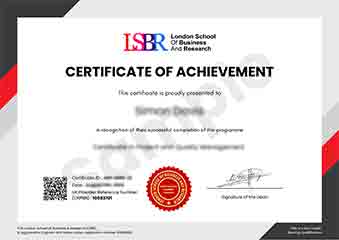
Sample Certificate
Preview the certificate you'll receive upon successful completion of this program.
Get Free Course Info
Enter your details and we'll send you a comprehensive course information pack straight to your inbox.
Employer Sponsored Training
Let your employer invest in your professional development. Request a corporate invoice and get your training funded.
Request Corporate InvoiceWhat People Say About Us
Hear from our students about their experience with the Executive Development Programme in Within-Group Variation Analysis at LSBRX - Executive Education.
Sophie Brown
United Kingdom"The course provided deep insights into within-group variation analysis, equipping me with robust tools to analyze complex data sets. Gaining these practical skills has significantly enhanced my ability to solve real-world business problems, making the course highly valuable for my career advancement."
Liam O'Connor
Australia"The Executive Development Programme in Within-Group Variation Analysis has significantly enhanced my ability to analyze complex data sets, which is crucial in my role managing cross-functional teams. This skill has not only improved my decision-making processes but also opened up new opportunities for career advancement within my organization."
Anna Schmidt
Germany"The course structure was meticulously organized, providing a clear path from foundational concepts to advanced applications in within-group variation analysis, which significantly enhanced my understanding and practical skills in this area. The comprehensive content and real-world examples were particularly beneficial, offering insights that have directly contributed to my professional growth in data analysis."