
Global Certificate in Dynamic Robotics: Prototype Development and Testing
Develop in-demand dynamic robotics: prototype development and testing skills with our comprehensive curriculum. Prepare for tomorrow's opportunities today.
Global Certificate in Dynamic Robotics: Prototype Development and Testing
Programme Overview
The Global Certificate in Dynamic Robotics: Prototype Development and Testing is designed for engineers, researchers, and professionals who aim to advance their expertise in the dynamic aspects of robotics, with a focus on prototype development and rigorous testing. This comprehensive programme equips learners with the skills necessary to design, develop, and test complex robotic systems, ensuring they can address the challenges of dynamic environments and operations. Key components include hands-on experience with advanced robotics software and hardware, understanding of control systems, and the application of sensor technology to ensure robust performance and safety.
Learners will develop critical skills such as programming and simulation of dynamic robotic systems, integrating various sensors for real-time data analysis, and conducting thorough testing protocols to validate system performance. Additionally, the programme emphasizes the importance of safety and regulatory compliance, preparing participants to navigate the ethical and legal considerations associated with dynamic robotics. By the end of the programme, participants will be well-prepared to contribute to the development of innovative robotic solutions across various industries, including manufacturing, healthcare, and defense.
The career impact of this programme is significant, as graduates will be better equipped to lead projects in dynamic robotics, innovate in robotic technologies, and address complex operational challenges. The skills gained are highly sought after in both academic and industrial settings, making participants valuable assets in organizations focused on technological advancement and robotics innovation.
What You'll Learn
The Global Certificate in Dynamic Robotics: Prototype Development and Testing is a cutting-edge program tailored for students and professionals seeking to advance their expertise in robotics technology. This intensive, five-month program combines theoretical knowledge with practical application, focusing on the design, development, and testing of dynamic robotic prototypes. Participants will explore fundamental concepts in robotics, including mechanical design, control systems, sensor integration, and artificial intelligence, as well as advanced topics such as rapid prototyping, machine learning, and autonomous navigation.
Through hands-on projects, students will engage in the complete lifecycle of robotic product development, from concept to deployment, gaining invaluable experience in prototyping and testing. They will utilize state-of-the-art facilities and industry-standard software, ensuring they are well-prepared to tackle real-world challenges in the field.
Graduates of this program are well-positioned to pursue careers in robotics research, engineering, and product development across various industries, including manufacturing, healthcare, automotive, and aerospace. They can also explore entrepreneurial opportunities, leveraging their skills to innovate and create new robotic solutions that transform industries and improve lives.
This program is an invaluable stepping stone for those passionate about robotics who aim to contribute to the rapid evolution of this exciting field.
Programme Highlights
Industry-Aligned Curriculum
Developed with industry leaders for job-ready skills valued by employers worldwide.
Globally Recognised Certificate
Recognised by employers across 180+ countries as a mark of professional excellence.
Flexible Online Learning
Study at your own pace with lifetime access to all course materials and updates.
Instant Access
Start learning immediately — no application process or waiting period required.
Constantly Updated Content
Stay ahead with the latest industry trends, best practices, and emerging insights.
Career Advancement
87% of graduates report measurable career progression within 6 months of completion.
Topics Covered
- 1: Fundamentals of Robotics: Learners will study the basic principles of robotics, including kinematics, dynamics, and control systems. They will gain foundational knowledge in designing and building robotic prototypes.
- 2: Sensors and Actuators: This module covers the types and applications of various sensors and actuators used in robotics. Learners will learn how to select appropriate components for different robotic systems and understand their integration into robotic prototypes.
- 3: Programming for Robotics: Learners will delve into programming languages and tools used in robotics, focusing on both high-level scripting and low-level firmware development. Practical skills include writing efficient and robust code for robotic control.
- 4: Modeling and Simulation: This module teaches how to use simulation tools to model and test robotic systems before physical prototyping. Learners will develop skills in creating accurate simulations to predict and optimize robot behavior.
- 5: Prototyping Techniques: Learners will explore different prototyping methods and materials for building robotic systems. Practical skills include using CAD software, 3D printing, and traditional manufacturing techniques to create prototypes.
- 6: Embedded Systems and Microcontrollers: This module covers the use of microcontrollers in robotic systems, focusing on real-time processing and control. Learners will gain hands-on experience in programming and integrating microcontrollers into robotic prototypes.
- 7: Advanced Control Algorithms: Learners will study advanced control strategies, including feedback control, model predictive control, and adaptive control. Practical skills include implementing these algorithms to enhance the performance of robotic systems.
- 8: Sensor Fusion and Perception: This module focuses on integrating multiple sensor data to improve the perception capabilities of robots. Learners will learn techniques for sensor fusion and develop algorithms for robust perception in dynamic environments.
- 9: Testing and Validation: Learners will learn how to design and conduct comprehensive tests on robotic prototypes to ensure they meet performance and safety standards. Practical skills include creating test plans and analyzing test results to identify and resolve issues.
- 10: Real-World Applications and Case Studies: The final module provides an overview of real-world applications of dynamic robotics, with case studies from industry and research. Learners will analyze successful robotic systems and understand the challenges and solutions in deploying robotics in various domains.
What You Get When You Enroll
Secure checkout • Instant access • Certificate included
Key Facts
For industry professionals, engineers, and researchers
Basic knowledge of robotics and programming
Gain hands-on experience in prototype development
Understand dynamic robotics principles
Develop testing methodologies for prototypes
Learn advanced simulation tools and techniques
Ready to get started?
Join thousands of professionals who already took the next step. Enroll now and get instant access.
Enroll Now — $99Why This Course
Enhanced Skill Set in Robotics: The Global Certificate in Dynamic Robotics: Prototype Development and Testing equips professionals with advanced skills in robotics, including design, prototype development, and testing. This knowledge is crucial as the robotics industry rapidly grows, with applications in manufacturing, healthcare, and transportation. For instance, those in mechanical engineering find this training invaluable for developing innovative robotic solutions.
Industry-Recognized Qualification: The certificate is industry-recognized, offering professionals a tangible credential that validates their expertise in robotics technology. This can significantly enhance their resume and open doors to higher-paying positions or new career opportunities. Employers often prioritize candidates with specific certifications, as they represent a benchmark of competence.
Practical Application and Problem-Solving: The program focuses on practical application, enabling participants to develop and test prototypes in real-world scenarios. This hands-on experience improves problem-solving skills and innovation, which are highly sought after in the tech sector. For example, professionals can learn to address common challenges in robotic design, such as improving efficiency or safety features, thereby adding value to their projects.
Your Path to Certification
Trusted by Professionals Worldwide
Course Brochure
Download our comprehensive course brochure with all details
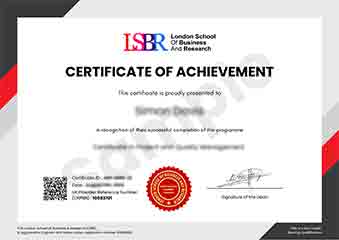
Sample Certificate
Preview the certificate you'll receive upon successful completion of this program.
Get Free Course Info
Enter your details and we'll send you a comprehensive course information pack straight to your inbox.
Employer Sponsored Training
Let your employer invest in your professional development. Request a corporate invoice and get your training funded.
Request Corporate InvoiceWhat People Say About Us
Hear from our students about their experience with the Global Certificate in Dynamic Robotics: Prototype Development and Testing at LSBRX - Executive Education.
Sophie Brown
United Kingdom"The course content was incredibly comprehensive, covering everything from basic principles to advanced applications in dynamic robotics, which has significantly enhanced my practical skills in prototype development and testing. I now feel much more confident in applying these skills to real-world problems, which is invaluable for my career in robotics."
Charlotte Williams
United Kingdom"This course has been instrumental in bridging the gap between theoretical knowledge and practical application in robotics. It has significantly enhanced my ability to develop and test dynamic robotic prototypes, making me more competitive in the job market and opening up new career opportunities in advanced manufacturing and automation."
Liam O'Connor
Australia"The course structure was meticulously organized, providing a seamless progression from theoretical concepts to practical applications, which greatly enhanced my understanding and prepared me for real-world challenges in robotics. It offered a comprehensive overview of prototype development and testing, equipping me with valuable skills for professional growth in the dynamic field of robotics."