
Global Certificate in Phonetic Software Development for Speech Processing
This global certificate equips professionals with advanced skills in developing phonetic software for speech processing, enhancing accuracy and applications in speech technology.
Global Certificate in Phonetic Software Development for Speech Processing
Programme Overview
The Global Certificate in Phonetic Software Development for Speech Processing is an intensive, hands-on program designed for professionals and students in the fields of computer science, linguistics, and engineering who are seeking to develop advanced skills in speech processing and phonetic software development. This program covers a comprehensive range of topics, including signal processing techniques, acoustic modeling, speech recognition, natural language processing, and the integration of phonetic knowledge into software applications. Learners will also gain experience in developing algorithms for speech enhancement, speaker verification, and language translation, as well as in deploying these technologies in real-world applications.
Participants in this program will develop key skills in software development for speech processing, including proficiency in programming languages such as Python and C++, as well as experience with machine learning frameworks like TensorFlow and PyTorch. They will also learn to apply statistical methods and computational models to analyze and process speech data, and to design and implement effective speech recognition systems. Additionally, learners will understand the role of phonetics in speech processing, enabling them to create more accurate and context-aware speech applications.
Upon completion of the program, learners will be well-equipped to pursue careers in a variety of roles within the speech processing industry, such as software developers, speech recognition engineers, and data scientists. Graduates may find opportunities in tech companies, research institutions, and government organizations, contributing to advancements in fields such as artificial intelligence, healthcare, and education. The program also provides a strong foundation for those interested in further academic pursuits, such as a master
What You'll Learn
The Global Certificate in Phonetic Software Development for Speech Processing is a cutting-edge program designed to equip professionals with the skills necessary to develop advanced software for speech recognition, synthesis, and processing. This program is particularly valuable for individuals aiming to contribute to the rapidly evolving field of speech technology, which underpins applications ranging from virtual assistants to healthcare diagnostics.
Key topics covered include phonetic analysis, language modeling, acoustic modeling, and deep learning techniques tailored for speech processing. Students will explore the latest tools and frameworks, such as Python and TensorFlow, to build and optimize phonetic software. Practical projects allow learners to apply these concepts, developing solutions for real-world challenges.
Graduates of this program are well-prepared to enter diverse roles, such as software engineers, data scientists, and researchers in the tech industry. They can work on projects that enhance natural language processing capabilities, improve accessibility for speech-impaired individuals, or develop innovative speech interfaces for smart devices. The program’s emphasis on hands-on learning ensures that participants are not only knowledgeable but also adept at translating theoretical knowledge into practical applications, positioning them as leaders in the field of speech processing technology.
Programme Highlights
Industry-Aligned Curriculum
Developed with industry leaders for job-ready skills valued by employers worldwide.
Globally Recognised Certificate
Recognised by employers across 180+ countries as a mark of professional excellence.
Flexible Online Learning
Study at your own pace with lifetime access to all course materials and updates.
Instant Access
Start learning immediately — no application process or waiting period required.
Constantly Updated Content
Stay ahead with the latest industry trends, best practices, and emerging insights.
Career Advancement
87% of graduates report measurable career progression within 6 months of completion.
Topics Covered
- 1. Fundamentals of Speech Processing: Learners will study basic concepts of speech signals, including sampling, quantization, and digital representation. They will gain practical skills in using software tools for basic signal processing tasks.
- 2. Digital Signal Processing Techniques: This module covers advanced DSP techniques such as filtering, spectral analysis, and time-frequency representations. Learners will apply these techniques to analyze and manipulate speech signals.
- 3. Speech Feature Extraction: Learners will study various feature extraction methods for speech processing, including MFCCs, pitch, and cepstral coefficients. Practical skills will include implementing and optimizing feature extraction pipelines.
- 4. Speech Recognition Fundamentals: This module introduces foundational concepts in speech recognition, including Hidden Markov Models (HMMs) and the Viterbi algorithm. Learners will gain skills in building and training simple speech recognition systems.
- 5. Acoustic Modeling and Phonetic Analysis: Learners will delve into acoustic modeling techniques and phonetic analysis, focusing on how to represent and model the acoustic properties of speech sounds. Practical skills include using tools for phonetic transcription and analysis.
- 6. Language Modeling and Contextual Processing: This module covers language modeling techniques and their application in speech processing. Learners will gain skills in developing context-aware speech processing systems that can handle complex linguistic contexts.
- 7. Advanced Speech Recognition Systems: Learners will study advanced speech recognition systems, including deep learning approaches and neural network architectures. Practical skills will include developing and optimizing modern speech recognition models.
- 8. Speaker Recognition and Identification: This module focuses on speaker recognition and identification techniques, including speaker verification and speaker diarization. Learners will gain skills in developing systems that can identify and authenticate speakers.
- 9. Speech Synthesis and Natural Language Processing: Learners will explore speech synthesis techniques and their integration with natural language processing. Practical skills include building text-to-speech systems and improving the naturalness of synthesized speech.
- 10. Interfacing and Deployment: This final module covers the practical aspects of deploying speech processing software in real-world applications. Learners will gain skills in interfacing with other systems, testing, and deploying speech processing solutions.
What You Get When You Enroll
Secure checkout • Instant access • Certificate included
Key Facts
Audience: Software developers, linguists, engineers
Prerequisites: Basic programming skills, understanding of phonetics
Outcomes: Proficient in phonetic software, speech processing techniques
Ready to get started?
Join thousands of professionals who already took the next step. Enroll now and get instant access.
Enroll Now — $99Why This Course
Enhanced Skill Set: Professionals pursuing the Global Certificate in Phonetic Software Development for Speech Processing gain expertise in advanced speech processing techniques, including acoustic modeling and natural language processing. This specialization can significantly differentiate them in a competitive job market, making them more versatile and valuable to employers.
Career Advancement: The certificate offers a pathway to higher-level roles in software development, particularly in the rapidly growing area of speech technology. With skills in developing phonetic software, professionals can transition into roles such as speech recognition engineers, voice interface developers, and speech analytics specialists, which often command higher salaries and better career prospects.
Industry Relevance: The curriculum is designed in collaboration with leading speech technology companies, ensuring that the training aligns with current industry needs. This alignment equips professionals with the latest knowledge and tools, preparing them to tackle real-world challenges and innovate in speech processing technologies.
Networking Opportunities: The certificate program connects participants with industry experts and peers, fostering a network that can provide mentorship, collaboration opportunities, and potential job leads. This professional community can be invaluable for career growth and staying informed about the latest developments in the field.
Your Path to Certification
Trusted by Professionals Worldwide
Course Brochure
Download our comprehensive course brochure with all details
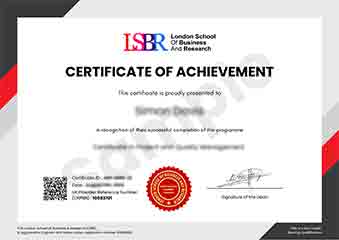
Sample Certificate
Preview the certificate you'll receive upon successful completion of this program.
Get Free Course Info
Enter your details and we'll send you a comprehensive course information pack straight to your inbox.
Employer Sponsored Training
Let your employer invest in your professional development. Request a corporate invoice and get your training funded.
Request Corporate InvoiceWhat People Say About Us
Hear from our students about their experience with the Global Certificate in Phonetic Software Development for Speech Processing at LSBRX - Executive Education.
James Thompson
United Kingdom"The course content is incredibly comprehensive, covering all the essential aspects of phonetic software development for speech processing with real-world applications that truly enhance practical skills. Gaining a solid foundation in this field has significantly boosted my career prospects and provided me with valuable tools to tackle complex speech processing challenges."
Tyler Johnson
United States"This course has been incredibly valuable, equipping me with the latest tools and techniques in phonetic software development that are directly applicable in the industry. It has not only enhanced my technical skills but also opened up new career opportunities in speech processing."
Muhammad Hassan
Malaysia"The course structure is well-organized, providing a comprehensive overview of phonetic software development that seamlessly bridges theoretical concepts with practical applications, enhancing my understanding and preparing me for real-world challenges in speech processing."