
Global Certificate in Simulation Environment Optimization Techniques
Earn a Global Certificate in Simulation Environment Optimization Techniques to enhance model accuracy, reduce computational costs, and improve decision-making processes.
Global Certificate in Simulation Environment Optimization Techniques
Programme Overview
The Global Certificate in Simulation Environment Optimization Techniques is a comprehensive program designed for professionals in the fields of engineering, technology, and data science who seek to enhance their skills in optimizing and utilizing simulation environments for complex problem-solving. The program is tailored for individuals working in industries such as aerospace, automotive, healthcare, and manufacturing, where simulation plays a critical role in the development and testing of new technologies and systems.
Participants will gain a deep understanding of advanced simulation techniques, including Monte Carlo simulations, discrete event simulations, and agent-based modeling. They will learn to use industry-standard software tools for simulation and optimization, and develop proficiency in data analysis and visualization to interpret simulation results effectively. Key skills include the ability to design and implement efficient simulation models, evaluate their performance, and integrate simulation results into the broader context of project management and decision-making processes.
The career impact of this program is significant, as graduates will be well-equipped to lead simulation projects, optimize complex systems, and innovate in their respective fields. They will be able to make informed decisions based on robust simulation data, enhance product design and development cycles, and contribute to the development of cutting-edge technologies. The program also prepares learners for advanced roles in research and development, project management, and senior leadership positions where simulation plays a crucial role in driving business success.
What You'll Learn
The Global Certificate in Simulation Environment Optimization Techniques is designed for professionals aiming to harness the power of simulation to solve complex environmental challenges. This comprehensive program equips participants with advanced skills in developing and optimizing digital twins, stochastic modeling, and machine learning techniques to predict and mitigate environmental impacts. Key topics include climate change modeling, renewable energy optimization, and sustainable urban planning, all delivered through a blend of theoretical instruction and hands-on laboratory sessions.
Upon completion, graduates will be adept at applying simulation tools to real-world scenarios, enhancing decision-making processes in industries such as energy, construction, and environmental conservation. They will be prepared to lead projects that integrate simulation technologies to achieve sustainable outcomes, ensuring compliance with global environmental standards and contributing to the development of resilient infrastructure.
This certificate opens doors to diverse career opportunities, including roles as simulation analysts, environmental consultants, and sustainability specialists. Graduates will be well-suited for positions in government agencies, private sector firms, and research institutions, driving innovation and sustainability in the global environmental landscape.
Programme Highlights
Industry-Aligned Curriculum
Developed with industry leaders for job-ready skills valued by employers worldwide.
Globally Recognised Certificate
Recognised by employers across 180+ countries as a mark of professional excellence.
Flexible Online Learning
Study at your own pace with lifetime access to all course materials and updates.
Instant Access
Start learning immediately — no application process or waiting period required.
Constantly Updated Content
Stay ahead with the latest industry trends, best practices, and emerging insights.
Career Advancement
87% of graduates report measurable career progression within 6 months of completion.
Topics Covered
- 1. Introduction to Simulation Environments: Learners will be introduced to the basics of simulation environments, including their importance and applications. They will gain foundational knowledge on how to set up and run basic simulations.
- 2. Simulation Modeling Fundamentals: Learners will study the principles of simulation modeling, including discrete event simulation, continuous simulation, and agent-based modeling. They will learn how to create and validate simulation models.
- 3. Optimization Techniques in Simulation: This module covers various optimization methods used in simulation, such as Monte Carlo simulation, genetic algorithms, and linear programming. Learners will understand how to apply these techniques to improve system performance.
- 4. Advanced Simulation Modeling: Learners will delve into advanced simulation modeling techniques, including multi-agent systems and complex event processing. They will gain skills in modeling large-scale and highly dynamic systems.
- 5. Simulation Software Tools: This module focuses on the use of software tools for simulation, including commercial and open-source platforms. Learners will become proficient in using these tools to create, run, and analyze simulations.
- 6. Simulation Data Analysis: Learners will study techniques for analyzing simulation data, including statistical analysis and data visualization. They will learn how to extract meaningful insights from simulation results.
- 7. Simulation in Interdisciplinary Applications: This module explores the application of simulation techniques across different fields, such as healthcare, manufacturing, and urban planning. Learners will understand the unique challenges and opportunities in these areas.
- 8. Simulation for Decision Making: Learners will learn how to use simulation for strategic decision-making, including scenario planning and risk assessment. They will gain skills in developing and communicating simulation-based decision support systems.
- 9. Simulation Optimization and Control: This module covers advanced topics in simulation optimization and control, including reinforcement learning and adaptive control systems. Learners will learn how to design and implement control strategies in simulation models.
- 10. Simulation Best Practices and Ethics: Learners will study best practices in simulation design, implementation, and reporting. They will also explore ethical considerations in the use of simulation, including privacy and bias in data.
What You Get When You Enroll
Secure checkout • Instant access • Certificate included
Key Facts
Audience: Professionals in simulation, training industries
Prerequisites: Basic knowledge of simulation software
Outcomes: Master optimization techniques, enhance simulation efficiency
Ready to get started?
Join thousands of professionals who already took the next step. Enroll now and get instant access.
Enroll Now — $99Why This Course
Enhanced Skillset: The Global Certificate in Simulation Environment Optimization Techniques equips professionals with advanced skills in simulation software and optimization algorithms, which are critical for improving operational efficiency and reducing costs in various industries, including manufacturing, healthcare, and logistics.
Industry Relevance: This certificate aligns with emerging trends in data-driven decision-making and predictive analytics. By mastering these techniques, professionals can stay ahead in their careers, as more organizations are increasingly relying on simulations to optimize their processes and make data-informed decisions.
Career Advancement: Obtaining this certification can significantly boost career prospects, opening up opportunities for leadership roles in simulation and optimization. It also enhances credentials for roles that require a deep understanding of complex systems, such as project managers, data scientists, and operations research analysts.
Networking Opportunities: The program offers a platform for professionals to connect with industry experts and peers, fostering a network that can lead to mentorship, collaboration, and job opportunities. These professional connections are invaluable for career growth and staying updated with the latest industry practices and innovations.
Your Path to Certification
Trusted by Professionals Worldwide
Course Brochure
Download our comprehensive course brochure with all details
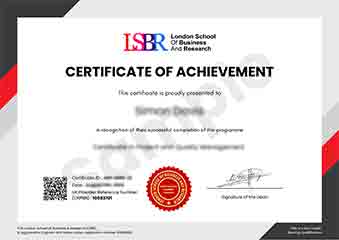
Sample Certificate
Preview the certificate you'll receive upon successful completion of this program.
Get Free Course Info
Enter your details and we'll send you a comprehensive course information pack straight to your inbox.
Employer Sponsored Training
Let your employer invest in your professional development. Request a corporate invoice and get your training funded.
Request Corporate InvoiceWhat People Say About Us
Hear from our students about their experience with the Global Certificate in Simulation Environment Optimization Techniques at LSBRX - Executive Education.
Sophie Brown
United Kingdom"The course content is incredibly comprehensive, covering a wide range of optimization techniques that are directly applicable to real-world scenarios. I've gained valuable skills that have already improved my ability to solve complex simulation problems, which is a huge asset for my career in engineering."
Jack Thompson
Australia"This course has been incredibly valuable, equipping me with advanced simulation techniques that are directly applicable in my field. It has not only enhanced my technical skills but also opened up new career opportunities in areas that require optimization and simulation expertise."
Fatimah Ibrahim
Malaysia"The course structure is well-organized, providing a clear path from foundational concepts to advanced simulation techniques, which has greatly enhanced my understanding and application of optimization methods in various industries. The comprehensive content and real-world case studies have been particularly beneficial for my professional growth, offering practical insights that I can apply directly in my work."