
Postgraduate Certificate in Fpga Based Ai Microprocessor Programming
This program equips graduates with advanced skills in FPGA-based AI microprocessor programming, enhancing career prospects in hardware acceleration and AI computing.
Postgraduate Certificate in Fpga Based Ai Microprocessor Programming
Programme Overview
The Postgraduate Certificate in FPGA-Based AI Microprocessor Programming is designed for professionals and students with a background in computer engineering, computer science, or related fields who seek to deepen their expertise in the integration of Field-Programmable Gate Arrays (FPGAs) with Artificial Intelligence (AI) microprocessors. This programme equips learners with the advanced skills necessary to design, implement, and optimize AI algorithms on FPGA-based hardware, bridging the gap between software and hardware in AI applications.
Key skills and knowledge developed through this programme include a comprehensive understanding of AI algorithms, such as neural networks and machine learning models, tailored for efficient execution on FPGAs. Learners will master the use of synthesis and verification tools for FPGA development, gain expertise in hardware description languages (HDLs) like VHDL and Verilog, and learn to optimize AI processing pipelines for improved performance. The programme also emphasizes the importance of power efficiency and real-time processing in AI applications, preparing students to address the unique challenges of FPGA-based AI microprocessors.
Upon completing this programme, learners will be well-positioned to pursue careers in the design and development of AI-enabled systems, particularly those involving high-performance and low-power computing. Graduates can work as FPGA and AI architects, system designers, or software/hardware engineers, contributing to the development of innovative AI technologies in sectors ranging from automotive and aerospace to healthcare and telecommunications.
What You'll Learn
The Postgraduate Certificate in FPGA-Based AI Microprocessor Programming is a cutting-edge program designed to equip professionals with the skills to design and implement AI microprocessors using Field-Programmable Gate Arrays (FPGAs). This program is invaluable for those seeking to bridge the gap between AI theory and practical hardware implementation, offering a unique blend of theoretical knowledge and hands-on experience.
Key topics include the design and optimization of AI algorithms for FPGA implementation, the use of hardware description languages, and the integration of AI microprocessors into real-world applications. Graduates will gain proficiency in tools like VHDL and Verilog, and will learn to optimize AI models for energy efficiency and performance.
This program enables participants to apply their skills in developing edge AI solutions, such as intelligent sensors and autonomous systems. Graduates are well-prepared to work in industries ranging from automotive to healthcare, where AI microprocessors play a critical role in innovation and efficiency. Career opportunities include positions such as AI Hardware Engineer, FPGA Developer, and Embedded Systems Architect, where professionals can contribute to the design and deployment of advanced AI technologies.
Programme Highlights
Industry-Aligned Curriculum
Developed with industry leaders for job-ready skills valued by employers worldwide.
Globally Recognised Certificate
Recognised by employers across 180+ countries as a mark of professional excellence.
Flexible Online Learning
Study at your own pace with lifetime access to all course materials and updates.
Instant Access
Start learning immediately — no application process or waiting period required.
Constantly Updated Content
Stay ahead with the latest industry trends, best practices, and emerging insights.
Career Advancement
87% of graduates report measurable career progression within 6 months of completion.
Topics Covered
- 1. Introduction to FPGA Architecture: Learners will study the basic architecture of FPGAs, including logic cells, interconnects, and block RAMs. This module will provide the foundational knowledge needed to understand how FPGAs operate and their potential in AI microprocessor design.
- 2. RTL Design for FPGAs: Students will learn how to write Register-Transfer Level (RTL) code for FPGAs using VHDL or Verilog. Practical skills include designing simple digital circuits and understanding the trade-offs between hardware complexity and performance.
- 3. AI Algorithms and FPGA Implementation: This module covers common AI algorithms such as neural networks and how they can be implemented on FPGAs. Learners will gain experience in optimizing these algorithms for FPGA hardware, focusing on reducing latency and power consumption.
- 4. Debugging and Testing Techniques: Students will learn various techniques for debugging and testing FPGA-based systems, including simulation, functional testing, and hardware validation. Practical skills include using tools like ModelSim and ChipScope.
- 5. Memory Systems in FPGAs: This module delves into the design and optimization of memory systems within FPGAs, including SRAM, block RAM, and external memory interfaces. Learners will understand how to optimize memory access patterns for AI microprocessors.
- 6. Power Management in FPGAs: Students will study power management strategies for FPGAs, including dynamic voltage and frequency scaling (DVFS), sleep modes, and clock gating. Practical skills include implementing these techniques to reduce power consumption in AI microprocessor designs.
- 7. Advanced FPGA Programming Techniques: This module covers advanced programming techniques for FPGAs, including multi-threading, pipelining, and parallel processing. Learners will gain experience in optimizing AI microprocessor designs for high performance and efficiency.
- 8. System Integration and Verification: Students will learn how to integrate FPGA-based AI microprocessors into larger systems and verify their functionality. Practical skills include using IP cores, system-level simulations, and hardware-in-the-loop testing.
- 9. Case Studies in FPGA-Based AI Microprocessors: This module features in-depth case studies of real-world FPGA-based AI microprocessor designs. Learners will analyze these designs, understand their strengths and weaknesses, and gain insights into best practices.
- 10. Final Project: Designing an FPGA-Based AI Microprocessor: In this capstone project, students will design and implement their own FPGA-based AI microprocessor from scratch. They will apply all the knowledge and skills gained throughout the programme to create a functional prototype.
What You Get When You Enroll
Secure checkout • Instant access • Certificate included
Key Facts
Audience: Engineers, programmers, researchers
Prerequisites: Bachelor’s degree, basic programming skills
Outcomes: FPGA design, AI microprocessor programming
Ready to get started?
Join thousands of professionals who already took the next step. Enroll now and get instant access.
Enroll Now — $149Why This Course
Specialized Skill Development: A Postgraduate Certificate in FPGA-Based AI Microprocessor Programming equips professionals with advanced knowledge in programming Field-Programmable Gate Arrays (FPGAs) for AI applications. This specialization is crucial as FPGAs offer high performance and low power consumption, making them ideal for real-time AI processing. For instance, professionals can enhance AI systems in autonomous vehicles, where real-time decision-making is critical.
Industry-Relevant Expertise: The curriculum focuses on the latest tools and technologies used in FPGA design and AI implementation. This ensures that graduates are well-versed in contemporary methodologies and standards, which are in high demand in the tech industry. For example, the course might cover popular tools like Vivado and High-Level Synthesis (HLS) compilers, which are essential for developing efficient AI microprocessors.
Career Advancement Opportunities: As AI and FPGA technologies continue to evolve, there is a growing need for specialized talent in this field. Graduates with this certificate are well-positioned for roles such as AI System Developer, FPGA Engineer, or Embedded AI Developer. The combination of AI and FPGA expertise can open doors to high-demand positions in sectors like automotive, healthcare, and consumer electronics, where innovative AI solutions are increasingly integrated into products.
Your Path to Certification
Trusted by Professionals Worldwide
Course Brochure
Download our comprehensive course brochure with all details
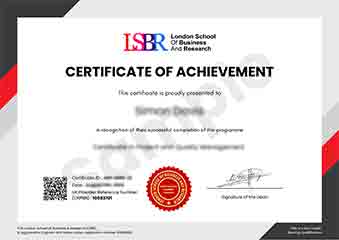
Sample Certificate
Preview the certificate you'll receive upon successful completion of this program.
Get Free Course Info
Enter your details and we'll send you a comprehensive course information pack straight to your inbox.
Employer Sponsored Training
Let your employer invest in your professional development. Request a corporate invoice and get your training funded.
Request Corporate InvoiceWhat People Say About Us
Hear from our students about their experience with the Postgraduate Certificate in Fpga Based Ai Microprocessor Programming at LSBRX - Executive Education.
Sophie Brown
United Kingdom"The course content is robust and deeply dives into the practical aspects of FPGA-based AI microprocessor programming, equipping me with the skills to design and implement efficient AI solutions. Gaining hands-on experience in this field has significantly enhanced my career prospects in the tech industry."
Liam O'Connor
Australia"This postgraduate certificate has been incredibly industry-relevant, equipping me with advanced skills in FPGA-based AI microprocessor programming that directly enhance my ability to design and optimize complex systems. It has opened up new career opportunities in the tech sector, particularly in areas focusing on AI and hardware acceleration."
Brandon Wilson
United States"The course structure is well-organized, providing a comprehensive foundation in FPGA-based AI microprocessor programming that seamlessly bridges theoretical knowledge with practical applications, significantly enhancing my understanding and capability in developing AI microprocessors."