
Postgraduate Certificate in Parallel Processing: Enhancing Program Flow Efficiency
This program enhances efficiency and flow in parallel processing, equipping graduates with advanced skills to optimize complex computational tasks.
Postgraduate Certificate in Parallel Processing: Enhancing Program Flow Efficiency
Programme Overview
The Postgraduate Certificate in Parallel Processing: Enhancing Program Flow Efficiency is designed for software engineers, computer scientists, and IT professionals seeking to enhance their expertise in parallel computing and its applications. This program equips learners with advanced knowledge and practical skills in managing and optimizing parallel processing techniques to improve the efficiency and scalability of software applications. The curriculum includes topics such as parallel architecture, parallel algorithms, distributed systems, and performance analysis, providing a comprehensive understanding of how to implement and optimize parallel processing in various computing environments.
Learners will develop key skills in designing and implementing efficient parallel algorithms, analyzing the performance of parallel programs, and selecting appropriate parallel processing techniques for different computational tasks. They will also gain proficiency in using parallel programming languages and frameworks, such as OpenMP, MPI, and CUDA, to develop robust and scalable software applications. This program aims to bridge the gap between theoretical knowledge and practical application, ensuring learners are well-prepared to tackle complex computational challenges in the modern tech landscape.
The career impact of this program is significant. Graduates will be well-suited for roles in high-performance computing, big data processing, and cloud computing environments, where parallel processing is essential. They can work in industries such as finance, healthcare, research, and technology, contributing to the development of innovative solutions that leverage parallel processing to enhance program flow efficiency and deliver superior performance. The skills acquired will also be valuable in advancing in existing roles or transitioning into leadership positions focused on parallel computing and performance optimization.
What You'll Learn
The Postgraduate Certificate in Parallel Processing: Enhancing Program Flow Efficiency is designed to empower professionals in the field of computer science and software engineering by providing advanced knowledge and skills in parallel computing. This program equips learners with a robust understanding of parallel architectures, parallel programming models, and performance optimization techniques, enabling them to enhance the efficiency and scalability of software applications.
Key topics covered include parallel algorithm design, distributed computing, GPU programming, and performance analysis tools. Students will engage in hands-on projects and case studies that apply these concepts to real-world challenges, preparing them to optimize complex systems and improve the computational efficiency of their applications.
Upon completion, graduates will be well-prepared to work in industries such as finance, healthcare, and scientific research, where parallel processing is crucial for handling large datasets and complex simulations. They will also be adept at leading teams in the development and maintenance of parallel software systems, contributing to advancements in areas like artificial intelligence, machine learning, and big data analytics.
The program is ideal for software developers, system architects, and researchers looking to advance their careers by mastering the art of parallel processing. With demand for skilled professionals in this field growing, graduates can expect opportunities to work in cutting-edge tech companies or pursue further academic research in parallel computing.
Programme Highlights
Industry-Aligned Curriculum
Developed with industry leaders for job-ready skills valued by employers worldwide.
Globally Recognised Certificate
Recognised by employers across 180+ countries as a mark of professional excellence.
Flexible Online Learning
Study at your own pace with lifetime access to all course materials and updates.
Instant Access
Start learning immediately — no application process or waiting period required.
Constantly Updated Content
Stay ahead with the latest industry trends, best practices, and emerging insights.
Career Advancement
87% of graduates report measurable career progression within 6 months of completion.
Topics Covered
- 1. Introduction to Parallel Processing: Learners will study the basics of parallel computing, including shared and distributed memory models, and gain an understanding of how to design simple parallel programs. This module lays the groundwork for more advanced topics by introducing essential concepts.
- 2. Parallel Algorithms and Techniques: This module covers design patterns for parallel algorithms, such as divide and conquer, pipeline processing, and load balancing, along with practical techniques for optimizing program flow efficiency.
- 3. Parallel Programming Models: Learners will explore various parallel programming models, including OpenMP, MPI, and CUDA, and learn how to implement these models in practice to enhance program performance.
- 4. Performance Analysis and Optimization: This module focuses on tools and methods for analyzing and optimizing parallel programs, enabling learners to identify bottlenecks and implement strategies to improve program efficiency.
- 5. Scalability and Fault Tolerance: Students will study the principles of scalability in parallel systems and learn how to design fault-tolerant parallel algorithms and applications to ensure robustness.
- 6. Advanced Topics in Parallel Processing: This module delves into specialized topics such as parallel I/O, parallel databases, and parallel scientific computing, providing learners with a deeper understanding of advanced parallel processing techniques.
- 7. High-Performance Computing Environments: Learners will be introduced to high-performance computing (HPC) environments, including cluster architecture, job scheduling, and resource management, to prepare them for working in HPC settings.
- 8. Case Studies in Parallel Processing: This module involves analyzing real-world case studies of parallel processing applications, allowing learners to apply theoretical knowledge to practical scenarios and enhancing their problem-solving skills.
- 9. Project Management in Parallel Processing: Students will learn project management techniques specific to parallel processing, including team collaboration, task allocation, and deadline planning, to effectively manage parallel computing projects.
- 10. Ethical and Social Implications of Parallel Processing: The final module explores the ethical and social implications of parallel processing, including data privacy, security, and the impact on society, fostering a well-rounded understanding of the field.
What You Get When You Enroll
Secure checkout • Instant access • Certificate included
Key Facts
Target professionals in IT, software engineering
No specific prior experience needed
Understand parallel processing concepts
Optimize program performance and efficiency
Implement parallel algorithms effectively
Ready to get started?
Join thousands of professionals who already took the next step. Enroll now and get instant access.
Enroll Now — $149Why This Course
Enhanced Career Opportunities: Professionals who earn a Postgraduate Certificate in Parallel Processing gain advanced knowledge in optimizing program efficiency through parallel computing. This qualification opens doors to high-demand roles in industries like finance, healthcare, and technology, where processing large data sets is critical. For instance, in financial modeling, parallel processing can significantly reduce computational time, enabling faster decision-making and enhanced competitive advantage.
Skill Development for Practical Application: The certificate equips professionals with practical skills in designing, implementing, and managing parallel systems. Skills such as parallel algorithm design, distributed memory systems, and parallel programming languages are essential for optimizing application performance. These skills are particularly valuable in fields such as data analytics and machine learning, where the ability to process vast amounts of data efficiently is paramount.
Increased Marketability and Competitive Edge: Obtaining this certificate demonstrates a commitment to professional development and a deep understanding of cutting-edge technologies. Employers value candidates who can bring advanced technical skills to the table. For example, a certificate holder can lead complex projects involving parallel processing, which can significantly improve the efficiency and scalability of software solutions. This not only enhances the individual's value proposition but also positions them as a key player in their organization’s technology initiatives.
Your Path to Certification
Trusted by Professionals Worldwide
Course Brochure
Download our comprehensive course brochure with all details
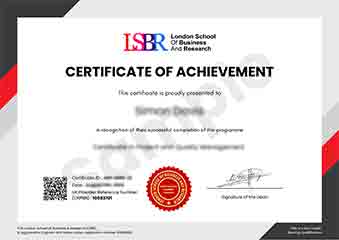
Sample Certificate
Preview the certificate you'll receive upon successful completion of this program.
Get Free Course Info
Enter your details and we'll send you a comprehensive course information pack straight to your inbox.
Employer Sponsored Training
Let your employer invest in your professional development. Request a corporate invoice and get your training funded.
Request Corporate InvoiceWhat People Say About Us
Hear from our students about their experience with the Postgraduate Certificate in Parallel Processing: Enhancing Program Flow Efficiency at LSBRX - Executive Education.
James Thompson
United Kingdom"The course content is incredibly comprehensive, covering a wide range of parallel processing techniques that significantly enhance program flow efficiency. I've gained practical skills that have already improved my ability to optimize code, making my projects run much faster and more efficiently."
Priya Sharma
India"This postgraduate certificate has significantly enhanced my ability to optimize program flow in parallel processing, making my code more efficient and scalable. The practical applications I've learned have directly translated into career advancement opportunities in high-demand tech roles."
Greta Fischer
Germany"The course structure is well-organized, providing a clear path from basic concepts to advanced parallel processing techniques, which has greatly enhanced my understanding and ability to apply these principles in real-world scenarios, significantly boosting my professional growth."