
Professional Certificate in Computer Interface Accessibility Standards
Elevate skills in designing accessible user interfaces; comply with standards, enhance usability for all users.
Professional Certificate in Computer Interface Accessibility Standards
Programme Overview
The Professional Certificate in Computer Interface Accessibility Standards is an intensive program designed for professionals in the technology sector, including software developers, UI/UX designers, and product managers, who seek to enhance their skills in creating accessible user interfaces. The curriculum covers a broad range of topics, including the latest accessibility standards such as WCAG , Section of the Rehabilitation Act, and the European Accessibility Act. Learners will explore how to design, develop, and test interfaces that are usable by people with disabilities, ensuring compliance with both legal requirements and user needs.
This program equips participants with key skills in accessibility design principles, practical coding practices, and user testing methods. Participants will learn to apply semantic HTML, use ARIA roles and properties, and implement keyboard navigation and screen reader support. They will also gain proficiency in using accessibility evaluation tools and techniques to identify and correct issues in user interfaces. By the end of the course, learners will be adept at integrating accessibility into the design and development process, making their products more inclusive and compliant.
The career impact of this program is significant, as it prepares participants to lead accessibility initiatives within their organizations, ensuring that their products are accessible to all users. Graduates can pursue roles such as accessibility lead, UX accessibility consultant, or accessibility engineer, with enhanced job prospects in a growing field. The program also provides a solid foundation for those aiming to become certified accessibility professionals, further boosting their career potential in the tech industry.
What You'll Learn
Embark on a transformative journey with the Professional Certificate in Computer Interface Accessibility Standards. This comprehensive program equips professionals with the knowledge and skills necessary to design, develop, and evaluate accessible digital interfaces that cater to users with various disabilities. You will delve into the fundamentals of accessibility standards, including WCAG , and learn how to implement these standards in real-world scenarios. The curriculum covers essential topics such as keyboard navigation, screen reader compatibility, color contrast, and responsive design, ensuring that all digital products are inclusive and user-friendly.
Upon completion, you will be able to assess and improve the accessibility of existing interfaces, contribute to the development of new accessible technologies, and advocate for inclusive design practices within your organization. This certificate is invaluable for professionals in web development, software engineering, user experience design, and digital content creation, preparing you to meet the growing demand for accessible technology in both public and private sectors.
Graduates of this program are well-positioned for roles such as accessibility engineers, user experience designers, and digital accessibility consultants. The skills gained will not only enhance your employability but also enable you to make a meaningful impact by ensuring that technology is accessible to everyone, regardless of their abilities.
Programme Highlights
Industry-Aligned Curriculum
Developed with industry leaders for job-ready skills valued by employers worldwide.
Globally Recognised Certificate
Recognised by employers across 180+ countries as a mark of professional excellence.
Flexible Online Learning
Study at your own pace with lifetime access to all course materials and updates.
Instant Access
Start learning immediately — no application process or waiting period required.
Constantly Updated Content
Stay ahead with the latest industry trends, best practices, and emerging insights.
Career Advancement
87% of graduates report measurable career progression within 6 months of completion.
Topics Covered
- 1. Introduction to Accessibility: Learners will explore the importance of accessibility in computer interfaces and understand the legal and ethical considerations. They will gain foundational knowledge on how to identify and address accessibility barriers.
- 2. User-Centered Design for Accessibility: This module covers the principles of user-centered design specifically tailored for accessibility, including user research and inclusive design techniques. Learners will develop skills in creating accessible user personas and scenarios.
- 3. Web Accessibility Standards: Focusing on the Web Content Accessibility Guidelines (WCAG), learners will study the core principles, success criteria, and techniques for making web content more accessible. They will learn to apply these standards to real-world web projects.
- 4. Accessibility in Mobile Applications: This module delves into the accessibility features and guidelines for mobile app development, including screen reader compatibility and touch accessibility. Learners will implement accessibility features in a mobile app project.
- 5. Assistive Technologies and User Needs: Learners will study various assistive technologies and the diverse needs of users with disabilities. They will gain practical skills in testing and evaluating the accessibility of software using assistive technologies.
- 6. Accessibility in Software Development: This module covers accessibility considerations throughout the software development lifecycle, from planning to deployment. Learners will practice integrating accessibility into development processes and tools.
- 7. Policy and Implementation Strategies: Focusing on organizational policies and strategies for implementing accessibility in the workplace, this module prepares learners to advocate for and oversee accessibility initiatives.
- 8. Accessible User Interfaces: This module teaches the design and implementation of accessible user interfaces, including color contrast, font size, and navigation. Learners will create an accessible user interface for a case study.
- 9. Testing and Quality Assurance in Accessibility: Learners will learn various testing methodologies and tools for ensuring the accessibility of software and web applications. They will conduct accessibility testing on a project.
- 10. Continuous Improvement and Emerging Trends: This final module explores the latest trends and best practices in accessibility, emphasizing the importance of continuous improvement in accessibility standards and technologies.
What You Get When You Enroll
Secure checkout • Instant access • Certificate included
Key Facts
For professionals in UI/UX design
No prior certification required
Understands WCAG guidelines
Learns accessibility best practices
Enhances inclusive design skills
Receives official certificate
Ready to get started?
Join thousands of professionals who already took the next step. Enroll now and get instant access.
Enroll Now — $149Why This Course
Enhance Professional Competence: Obtaining a Professional Certificate in Computer Interface Accessibility Standards significantly enhances your technical skills in designing accessible user interfaces. This certification ensures proficiency in adhering to standards like WCAG (Web Content Accessibility Guidelines) and Section , making you a valuable asset in any digital product development team.
Expand Marketability: With a certificate in this field, professionals can broaden their job prospects across various sectors including government, education, healthcare, and technology. Employers value candidates who can ensure digital products are accessible to people with disabilities, aligning with inclusive design principles.
Drive Career Advancement: This certification not only bolsters current roles but also opens pathways to leadership positions in accessibility or user experience design. It positions professionals as experts capable of spearheading initiatives that improve accessibility, thereby contributing to organizational success and reputation.
Stay Updated on Best Practices: The certificate ensures that professionals are up-to-date with the latest trends, technologies, and regulatory requirements in accessibility. Regular updates to the certification content help professionals maintain a cutting-edge understanding of the field, ensuring they can implement the most effective solutions for accessibility.
Your Path to Certification
Trusted by Professionals Worldwide
Course Brochure
Download our comprehensive course brochure with all details
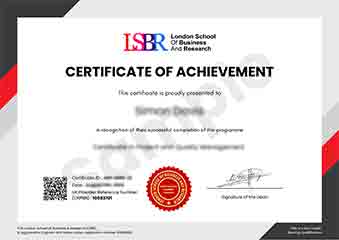
Sample Certificate
Preview the certificate you'll receive upon successful completion of this program.
Get Free Course Info
Enter your details and we'll send you a comprehensive course information pack straight to your inbox.
Employer Sponsored Training
Let your employer invest in your professional development. Request a corporate invoice and get your training funded.
Request Corporate InvoiceWhat People Say About Us
Hear from our students about their experience with the Professional Certificate in Computer Interface Accessibility Standards at LSBRX - Executive Education.
Oliver Davies
United Kingdom"The course content is incredibly thorough and well-organized, providing a solid foundation in accessibility standards that I can directly apply to my work. Gaining these practical skills has not only enhanced my professional toolkit but also opened up new opportunities in the tech industry."
Connor O'Brien
Canada"This course has been incredibly valuable in enhancing my understanding of accessibility standards, making my technical skills more industry-relevant and opening up new career opportunities in inclusive design. Learning about the practical applications of these standards has not only improved my professional portfolio but also my ability to contribute meaningfully to projects that aim to make digital interfaces accessible to everyone."
Mei Ling Wong
Singapore"The course structure is well-organized, providing a clear path from foundational concepts to advanced accessibility standards, which has significantly enhanced my understanding and practical application in designing user-friendly interfaces."