
Professional Certificate in High Performance Microprocessor Optimization
Elevate skills in microprocessor optimization for high-performance computing, earning a professional certificate with practical outcomes and industry recognition.
Professional Certificate in High Performance Microprocessor Optimization
Programme Overview
The Professional Certificate in High Performance Microprocessor Optimization is designed for software engineers, system architects, and hardware designers who aim to enhance the performance and efficiency of microprocessors in diverse computing environments. This program offers comprehensive training in advanced optimization techniques, including parallel processing, instruction-level parallelism, and memory hierarchy optimization. Learners will gain in-depth knowledge of microarchitecture, compiler optimizations, and performance analysis tools, enabling them to design and optimize microprocessors for specific applications.
Participants will develop key skills in identifying bottlenecks, utilizing advanced profiling tools, and applying microarchitecture-aware optimization strategies. They will also learn to design efficient algorithms and data structures that maximize processor resource utilization and minimize latency. By the end of the program, learners will be proficient in using modern compilers, debuggers, and simulation tools to optimize microprocessor performance. These skills are essential for professionals aiming to work on cutting-edge computing systems, where performance and energy efficiency are critical.
The career impact of this program is significant, as it equips professionals with the expertise to lead complex optimization projects, contribute to the development of high-performance computing systems, and enhance the capabilities of existing hardware and software solutions. Graduates will be well-prepared to take on roles such as microprocessor architects, performance engineers, and system designers, where they can drive innovation and deliver impactful solutions in industries ranging from data centers to mobile devices.
What You'll Learn
The Professional Certificate in High Performance Microprocessor Optimization is an intensive, month program designed to equip professionals with the advanced skills needed to optimize microprocessors for maximum performance and efficiency. This program is ideal for software engineers, system architects, and hardware developers seeking to enhance their expertise in cutting-edge computational techniques.
Key topics include architectural design principles, parallel processing techniques, low-level programming, and performance analysis tools. Students will learn to leverage modern microprocessor architectures, optimize code for efficiency, and apply advanced debugging and profiling techniques to identify and resolve performance bottlenecks.
Upon completion, graduates will be able to design and implement high-performance applications that take full advantage of microprocessor capabilities. They will also gain valuable experience in optimizing both software and hardware components to achieve superior performance in real-world scenarios.
The program’s applications span a wide range of industries, including data centers, high-performance computing, autonomous vehicles, and artificial intelligence. Graduates can pursue careers as microprocessor optimization specialists, system architects, software developers, or hardware engineers, with opportunities in tech giants, startups, and research institutions. The hands-on projects and industry partnerships ensure that learners are well-prepared to tackle complex challenges in the field of high-performance computing.
Programme Highlights
Industry-Aligned Curriculum
Developed with industry leaders for job-ready skills valued by employers worldwide.
Globally Recognised Certificate
Recognised by employers across 180+ countries as a mark of professional excellence.
Flexible Online Learning
Study at your own pace with lifetime access to all course materials and updates.
Instant Access
Start learning immediately — no application process or waiting period required.
Constantly Updated Content
Stay ahead with the latest industry trends, best practices, and emerging insights.
Career Advancement
87% of graduates report measurable career progression within 6 months of completion.
Topics Covered
- 1. Introduction to Microprocessors: Learners will be introduced to the fundamental concepts of microprocessors, including architecture, instruction sets, and performance metrics. They will gain practical skills in analyzing microprocessor specifications and understanding basic performance trade-offs.
- 2. Assembly Language Programming: This module covers the fundamentals of assembly language programming, focusing on low-level control of microprocessors. Learners will study x86 assembly, learn to write optimized code, and understand the relationship between assembly code and microprocessor architecture.
- 3. Microprocessor Performance Analysis: Learners will study techniques for analyzing and optimizing microprocessor performance, including cache management, branch prediction, and pipeline optimization. Practical skills include using performance analysis tools and planning optimizations for specific microprocessor architectures.
- 4. Compiler Optimization Techniques: This module delves into compiler optimization techniques aimed at enhancing microprocessor performance. Learners will learn to use compiler flags, understand intermediate representations, and apply optimization passes to improve code efficiency and execution speed.
- 5. Advanced Microarchitecture Concepts: Covering more complex microarchitecture topics such as superscalar execution, out-of-order execution, and vector processing. Learners will gain insights into the design and optimization of modern microprocessors and apply this knowledge to specific microarchitectures.
- 6. Power and Energy Efficiency Optimization: This module focuses on strategies to optimize microprocessor power consumption and energy efficiency. Learners will learn about power gating, frequency scaling, and dynamic voltage and frequency scaling (DVFS), and apply these techniques to reduce energy usage while maintaining performance.
- 7. High-Performance Parallel Programming: Emphasizing parallel programming techniques and architectures for high-performance microprocessors. Learners will study parallel algorithms, thread management, and distributed memory systems, and gain practical experience in developing high-performance parallel applications.
- 8. Microprocessor-Based Systems Design: This module covers the design and implementation of microprocessor-based systems, including system-level optimization and integration. Learners will learn to design systems that efficiently utilize microprocessor resources and understand the impact of system-level optimizations on overall performance.
- 9. Microprocessor Testing and Validation: Focusing on methods for testing and validating microprocessor designs. Learners will learn about test generation, fault injection techniques, and performance evaluation methods, and apply these skills to ensure the reliability and performance of microprocessors.
- 10. Case Studies in Microprocessor Optimization: Through in-depth case studies, learners will apply their knowledge to real-world optimization challenges. This module includes hands-on projects where learners optimize existing microprocessor-based systems, analyze performance, and propose improvements.
What You Get When You Enroll
Secure checkout • Instant access • Certificate included
Key Facts
Target professionals, engineers, researchers
No specific prerequisites required
Understand advanced optimization techniques
Enhance microprocessor performance knowledge
Develop practical design skills
Ready to get started?
Join thousands of professionals who already took the next step. Enroll now and get instant access.
Enroll Now — $149Why This Course
Enhance Technical Expertise: The Professional Certificate in High Performance Microprocessor Optimization equips professionals with advanced knowledge in optimizing microprocessors, which is crucial for developing high-performance computing systems. This specialized skill set is highly valued in tech industries, particularly in areas like artificial intelligence, machine learning, and data centers.
Career Advancement: Obtaining this certificate can significantly boost career prospects by making professionals more competitive in the job market. It demonstrates a deep understanding of cutting-edge technologies and the ability to optimize complex systems, which are critical skills in today's tech-driven economy.
Industry Relevance: The certificate focuses on real-world applications and emerging trends in microprocessor optimization. By keeping up with the latest advancements, professionals can stay ahead in their field, ensuring their expertise remains relevant and in demand. This is particularly important as technology evolves rapidly, and professionals need to continuously update their skills to remain effective.
Your Path to Certification
Trusted by Professionals Worldwide
Course Brochure
Download our comprehensive course brochure with all details
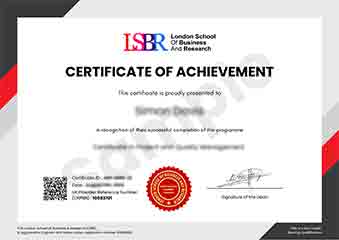
Sample Certificate
Preview the certificate you'll receive upon successful completion of this program.
Get Free Course Info
Enter your details and we'll send you a comprehensive course information pack straight to your inbox.
Employer Sponsored Training
Let your employer invest in your professional development. Request a corporate invoice and get your training funded.
Request Corporate InvoiceWhat People Say About Us
Hear from our students about their experience with the Professional Certificate in High Performance Microprocessor Optimization at LSBRX - Executive Education.
Oliver Davies
United Kingdom"The course content is incredibly detailed and relevant, providing a solid foundation in optimizing microprocessors for high performance. I've gained practical skills that are directly applicable to real-world scenarios, enhancing my ability to design more efficient systems."
Muhammad Hassan
Malaysia"This course has been incredibly valuable in bridging the gap between theoretical knowledge and practical application in microprocessor optimization. It has not only enhanced my technical skills but also provided me with industry-relevant insights that have significantly boosted my career prospects."
Ashley Rodriguez
United States"The course structure is meticulously organized, providing a seamless progression from foundational concepts to advanced topics, which significantly enhances understanding and retention. The comprehensive content not only covers theoretical aspects but also delves into practical applications, making the learning experience highly beneficial for professional growth in microprocessor optimization."