
Professional Certificate in Materials Performance Evaluation Methods
Elevate your skills in evaluating materials performance with this certificate, offering expertise in testing methods and quality assurance.
Professional Certificate in Materials Performance Evaluation Methods
Programme Overview
The Professional Certificate in Materials Performance Evaluation Methods is designed for engineers, scientists, and technicians who seek to enhance their expertise in assessing and optimizing material performance. This program covers a comprehensive range of advanced evaluation techniques, including mechanical testing, non-destructive inspection, corrosion assessment, and failure analysis. Participants will learn how to apply these methods to various materials used in industrial and research settings, ensuring they can make informed decisions based on accurate material performance data.
Throughout the program, learners will develop key skills such as selecting appropriate testing methods for different material types, interpreting test results, and using statistical analysis to validate material performance data. They will also gain practical experience in using advanced testing equipment and software, which are essential for modern materials science and engineering practices. By the end of the course, participants will be proficient in evaluating materials under diverse conditions and will be able to contribute effectively to projects that require a deep understanding of material behavior and performance.
The career impact of this program is substantial, as graduates will be equipped to improve product quality, enhance safety standards, and drive innovation in materials science across various industries, including aerospace, automotive, construction, and electronics. Employers will benefit from the enhanced analytical capabilities of their employees, leading to more reliable and durable products, reduced material waste, and increased operational efficiency.
What You'll Learn
Embark on a transformative journey with our Professional Certificate in Materials Performance Evaluation Methods. This program equips professionals with advanced skills in evaluating and optimizing materials properties across various industries. Through a comprehensive curriculum, you will delve into cutting-edge techniques such as mechanical testing, spectroscopy, and microstructural analysis, all tailored to meet industry standards and cutting-edge research requirements.
The program's practical focus ensures that you can immediately apply these skills in real-world scenarios. Graduates are well-prepared to assess material performance in diverse applications, from aerospace and automotive to electronics and construction. With hands-on training and access to state-of-the-art laboratories, you will gain the confidence to design, implement, and interpret performance evaluations for a variety of materials.
Upon completion, you will be ready to pursue exciting career opportunities in R&D, quality control, and materials science. Positions such as materials engineer, quality assurance specialist, and research scientist are within reach, offering competitive salaries and the potential for significant professional growth. This certificate not only enhances your technical expertise but also broadens your career prospects, positioning you as a leading expert in materials performance evaluation.
Programme Highlights
Industry-Aligned Curriculum
Developed with industry leaders for job-ready skills valued by employers worldwide.
Globally Recognised Certificate
Recognised by employers across 180+ countries as a mark of professional excellence.
Flexible Online Learning
Study at your own pace with lifetime access to all course materials and updates.
Instant Access
Start learning immediately — no application process or waiting period required.
Constantly Updated Content
Stay ahead with the latest industry trends, best practices, and emerging insights.
Career Advancement
87% of graduates report measurable career progression within 6 months of completion.
Topics Covered
- 1. Introduction to Materials Science: Learners will study the basic principles of materials science and the properties of different materials. They will gain foundational knowledge in material classification and the relationship between structure and properties.
- 2. Microstructural Analysis Techniques: Learners will explore various techniques for analyzing microstructures, including optical microscopy and electron microscopy. They will develop skills in interpreting microstructural data to understand material behavior.
- 3. Mechanical Testing Fundamentals: Learners will learn about the principles and practices of mechanical testing, including tensile, compression, and impact testing. They will gain practical skills in conducting mechanical tests and interpreting results.
- 4. Thermal Analysis Techniques: Learners will study thermal analysis methods such as Differential Scanning Calorimetry (DSC) and Thermogravimetric Analysis (TGA). They will learn to analyze thermal data to understand material changes with temperature.
- 5. Corrosion Evaluation Methods: Learners will investigate the mechanisms of corrosion and various methods for evaluating corrosion resistance, including electrochemical testing and weight loss assays. They will gain skills in conducting corrosion tests and interpreting corrosion data.
- 6. Non-Destructive Testing Techniques: Learners will study non-destructive testing (NDT) methods such as ultrasonic testing, radiographic testing, and magnetic particle inspection. They will learn to perform NDT procedures and interpret test results.
- 7. Advanced Spectroscopic Techniques: Learners will delve into advanced spectroscopic methods like X-ray diffraction (XRD) and Raman spectroscopy. They will gain expertise in using these techniques to determine material composition and phase identification.
- 8. Composites and Nanomaterials: Learners will explore the characteristics and performance evaluation of composite materials and nanomaterials. They will develop skills in analyzing the unique properties and behaviors of these advanced materials.
- 9. Materials in Extreme Environments: Learners will examine how materials behave in extreme conditions, such as high temperature, pressure, and radiation. They will learn about specialized testing methods for evaluating materials in these environments.
- 10. Quality Assurance and Reliability: Learners will study quality assurance practices and reliability testing methods to ensure material performance meets standards. They will gain skills in developing and implementing quality control procedures.
What You Get When You Enroll
Secure checkout • Instant access • Certificate included
Key Facts
For professionals in materials science
No specific prerequisites required
Understand various evaluation methods
Apply techniques for performance analysis
Interpret test results effectively
Develop competence in material assessment
Ready to get started?
Join thousands of professionals who already took the next step. Enroll now and get instant access.
Enroll Now — $149Why This Course
Enhance Expertise: Obtaining a Professional Certificate in Materials Performance Evaluation Methods can significantly enhance a professional’s expertise in assessing and analyzing material properties. This certification highlights a deep understanding of various testing methods and standards, making professionals more competent and reliable in their field.
Career Advancement: The certificate opens up opportunities for career advancement by demonstrating a proactive approach to professional development. Employers often value candidates who are committed to staying current with the latest testing methodologies and standards in materials science. This can lead to promotions and higher job responsibilities.
Improved Problem-Solving Skills: The course equips professionals with the ability to apply scientific principles and methodologies to solve complex material performance issues. This not only improves their problem-solving skills but also enhances their ability to innovate and contribute to the development of new materials and technologies.
Enhanced Client Relationships: Professionals with this certification can provide more accurate and detailed reports to clients, which can strengthen business relationships and increase client trust. The ability to perform thorough and precise material performance evaluations is highly valued in industries such as aerospace, automotive, and construction, where material selection and performance are critical.
Your Path to Certification
Trusted by Professionals Worldwide
Course Brochure
Download our comprehensive course brochure with all details
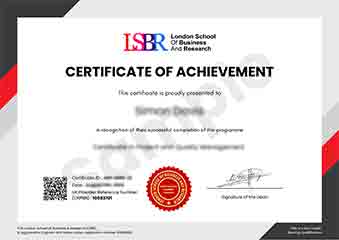
Sample Certificate
Preview the certificate you'll receive upon successful completion of this program.
Get Free Course Info
Enter your details and we'll send you a comprehensive course information pack straight to your inbox.
Employer Sponsored Training
Let your employer invest in your professional development. Request a corporate invoice and get your training funded.
Request Corporate InvoiceWhat People Say About Us
Hear from our students about their experience with the Professional Certificate in Materials Performance Evaluation Methods at LSBRX - Executive Education.
James Thompson
United Kingdom"The course content is incredibly comprehensive, covering a wide range of materials performance evaluation techniques that have directly enhanced my analytical skills. Gaining hands-on experience with these methods has been invaluable for my career, providing me with a robust skill set to tackle real-world challenges."
Ryan MacLeod
Canada"This course has been incredibly valuable, equipping me with the latest techniques in materials performance evaluation that are directly applicable in my field. It has not only enhanced my analytical skills but also opened up new opportunities for career advancement in material science."
Ashley Rodriguez
United States"The course structure is well-organized, providing a comprehensive overview of materials performance evaluation methods that directly translates into practical skills for analyzing and improving material properties in real-world applications."