
Professional Certificate in Nutrient Flow Simulation Techniques
Elevate skills in simulating nutrient flow for sustainable agriculture with this certificate, enhancing crop management and environmental stewardship.
Professional Certificate in Nutrient Flow Simulation Techniques
Programme Overview
The Professional Certificate in Nutrient Flow Simulation Techniques is designed for professionals in agriculture, environmental science, and resource management, aiming to enhance their expertise in the latest simulation methodologies for nutrient management. This program equips learners with comprehensive skills in the application of both quantitative and qualitative methods to assess and predict nutrient dynamics in agricultural and natural systems. Through a combination of theoretical instruction and practical workshops, participants will gain proficiency in using advanced software tools and models to simulate nutrient cycles, evaluate the impact of agricultural practices on soil health, and develop strategies to optimize nutrient use efficiency and reduce environmental pollution.
Upon completion of this program, learners will have the key skills to design, execute, and interpret nutrient flow simulations, understand the principles of nutrient management, and apply these insights to real-world scenarios. These skills are highly relevant for roles in agricultural consulting, environmental research, policy development, and sustainable agriculture. The program's practical focus ensures that graduates are well-prepared to contribute effectively to sustainable agricultural practices and environmental conservation efforts, making a significant impact on the fields of resource management and environmental science.
What You'll Learn
The Professional Certificate in Nutrient Flow Simulation Techniques is an intensive, hands-on program designed for professionals and students in agriculture, environmental science, and related fields. This program equips participants with advanced skills in simulating nutrient cycles and their impacts on soil health and crop productivity. Key topics include soil chemistry, nutrient management, and the use of state-of-the-art software for modeling nutrient flow in agricultural ecosystems.
Participants will learn to design and implement simulation models to predict nutrient behavior under various management practices, enabling them to make informed decisions that enhance sustainability and productivity. The curriculum includes practical sessions where learners apply their knowledge to real-world scenarios, ensuring they can effectively manage nutrient levels in soils and crops.
Graduates of this program are well-prepared to advance their careers in agricultural consulting, environmental consultancy, research, and policy development. They can also pursue roles in governmental agencies, non-profits, and private industries focused on sustainable agricultural practices and environmental stewardship. With a certificate from this program, professionals are uniquely qualified to contribute to the global effort to improve food security and environmental sustainability through precise nutrient management.
Programme Highlights
Industry-Aligned Curriculum
Developed with industry leaders for job-ready skills valued by employers worldwide.
Globally Recognised Certificate
Recognised by employers across 180+ countries as a mark of professional excellence.
Flexible Online Learning
Study at your own pace with lifetime access to all course materials and updates.
Instant Access
Start learning immediately — no application process or waiting period required.
Constantly Updated Content
Stay ahead with the latest industry trends, best practices, and emerging insights.
Career Advancement
87% of graduates report measurable career progression within 6 months of completion.
Topics Covered
- 1. Fundamentals of Nutrient Cycling: Learners will study the basic principles of nutrient cycling in ecosystems and gain an understanding of key nutrient pools and fluxes. They will learn to apply foundational concepts to analyze nutrient dynamics in various environmental settings.
- 2. Soil Chemistry and Mineral Cycling: This module covers the chemical processes that govern nutrient cycling in soil, including the role of soil minerals and pH in nutrient availability. Learners will develop skills in interpreting soil chemistry data and predicting nutrient behavior in soil.
- 3. Plant Nutrient Uptake and Metabolism: Learners will explore how plants take up nutrients from the soil and utilize them for growth and development. Practical skills include analyzing nutrient uptake patterns and understanding the physiological processes involved.
- 4. Water and Nutrient Interactions: This module focuses on the relationship between water availability and nutrient cycling in ecosystems. Learners will learn to model water-nutrient interactions and predict the impact of water stress on nutrient dynamics.
- 5. Advanced Nutrient Modeling Techniques: Learners will delve into advanced modeling techniques for simulating nutrient flows in complex ecosystems. Practical skills include using software tools for nutrient cycle modeling and interpreting model outputs.
- 6. Environmental Impact Assessment: This module covers methods for assessing the environmental impact of nutrient management practices. Learners will learn to apply impact assessment techniques and develop strategies for mitigating negative environmental effects.
- 7. Sustainable Nutrient Management Practices: Learners will study sustainable strategies for managing nutrients in agricultural and natural systems. Practical skills include designing nutrient management plans that balance nutrient supply and demand while minimizing environmental impact.
- 8. Nutrient Flow in Aquatic Ecosystems: This module focuses on nutrient cycling in aquatic environments, including lakes, rivers, and coastal ecosystems. Learners will learn to model nutrient dynamics in water bodies and understand the role of aquatic ecosystems in nutrient cycling.
- 9. Nutrient Cycling in Urban Environments: Learners will explore nutrient cycling in urban settings, including waste management, stormwater runoff, and urban agriculture. Practical skills include analyzing urban nutrient flows and developing strategies for sustainable urban nutrient management.
- 10. Innovations in Nutrient Flow Simulation: This module introduces cutting-edge technologies and methodologies for simulating nutrient flows in diverse ecosystems. Learners will learn about the latest research and tools in the field and develop skills in applying these innovations to real-world problems.
What You Get When You Enroll
Secure checkout • Instant access • Certificate included
Key Facts
For professionals in agriculture, horticulture
No prior certification required
Understand nutrient cycling in soils
Apply simulation techniques effectively
Enhance soil fertility management skills
Ready to get started?
Join thousands of professionals who already took the next step. Enroll now and get instant access.
Enroll Now — $149Why This Course
Enhance Career Opportunities: Acquiring a Professional Certificate in Nutrient Flow Simulation Techniques can open doors to specialized roles in environmental science, agriculture, and resource management. This certification equips professionals with the skills to model nutrient dynamics in ecosystems, which is crucial for sustainable farming practices and environmental conservation.
Advanced Skill Set: This certificate provides a deep understanding of nutrient cycling processes, enabling professionals to develop more accurate simulations. Skills in using advanced software tools for nutrient flow analysis can enhance decision-making in agricultural planning and environmental policy, contributing to more effective resource management.
Competitive Edge: In a rapidly evolving field where precision and data-driven decision-making are key, professionals with this certification can stand out. Employers value candidates who can apply advanced simulation techniques to solve complex problems, making professionals with this certification highly sought after in research, consultancy, and governmental organizations.
Research and Innovation: The certificate also fosters innovation by allowing professionals to contribute to cutting-edge research and development in sustainable agriculture and environmental protection. Knowledge of nutrient flow simulation can lead to the development of new methods and technologies that improve soil health and reduce environmental impact.
Your Path to Certification
Trusted by Professionals Worldwide
Course Brochure
Download our comprehensive course brochure with all details
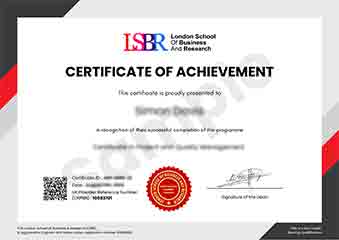
Sample Certificate
Preview the certificate you'll receive upon successful completion of this program.
Get Free Course Info
Enter your details and we'll send you a comprehensive course information pack straight to your inbox.
Employer Sponsored Training
Let your employer invest in your professional development. Request a corporate invoice and get your training funded.
Request Corporate InvoiceWhat People Say About Us
Hear from our students about their experience with the Professional Certificate in Nutrient Flow Simulation Techniques at LSBRX - Executive Education.
James Thompson
United Kingdom"The course content is incredibly comprehensive and well-structured, providing a solid foundation in nutrient flow simulation techniques that have direct applicability in agricultural management. Gaining hands-on experience with the latest software tools has significantly enhanced my ability to model nutrient dynamics in various soil types, which I believe will be invaluable for my career in environmental consulting."
Muhammad Hassan
Malaysia"This course has been incredibly valuable, equipping me with advanced simulation techniques that are directly applicable in my field. It has not only enhanced my professional skills but also opened up new opportunities for career advancement in nutrient management and agricultural technology."
Oliver Davies
United Kingdom"The course structure is well-organized, providing a clear path from basic concepts to advanced nutrient flow simulation techniques, which has significantly enhanced my understanding and practical skills in this field. The comprehensive content and real-world applications have been particularly beneficial for my professional growth."