
Professional Certificate in Parallel Computing: Multicore Implementation
Earn a Professional Certificate in Parallel Computing: Multicore Implementation to master efficient algorithm design and multicore system optimization for high-performance computing.
Professional Certificate in Parallel Computing: Multicore Implementation
Programme Overview
The Professional Certificate in Parallel Computing: Multicore Implementation is designed for software developers, system administrators, and IT professionals seeking to enhance their skills in leveraging parallel computing techniques for efficient application development. This program is ideal for those working in environments that require high-performance computing or those looking to optimize their current applications for multi-core architectures.
Upon completion of this program, learners will develop a comprehensive understanding of parallel computing principles and multicore architecture. They will gain expertise in parallel programming paradigms, including thread-based and message-passing models, and will be proficient in using parallel computing libraries and frameworks such as OpenMP, MPI, and CUDA. Additionally, learners will be able to analyze the performance of parallel applications and optimize them for better scalability and efficiency.
This program equips participants with the knowledge and skills necessary to design and implement high-performance applications that can fully utilize the power of modern multicore processors. Graduates can pursue careers as parallel computing specialists, performance engineers, or software architects in industries ranging from finance to scientific research. The ability to implement parallel computing solutions is highly valued in today’s data-intensive and computationally demanding environments, making this certificate a valuable asset for advancing one’s career in the tech industry.
What You'll Learn
The Professional Certificate in Parallel Computing: Multicore Implementation is designed to equip professionals with advanced skills in leveraging parallel processing for efficient and scalable applications. This immersive program covers essential topics such as parallel algorithm design, multi-threading, concurrency control, and performance optimization techniques, using state-of-the-art tools and platforms. Participants will learn to implement parallel solutions on multicore architectures, enhancing their ability to handle large-scale data processing and complex computational tasks.
By mastering these skills, graduates can significantly improve the performance and responsiveness of their software applications. They will be adept at optimizing applications to run on modern hardware, ensuring that systems can handle increased loads without compromising on speed or reliability. This certificate is particularly valuable for professionals in fields such as data science, artificial intelligence, and software development, where the ability to process vast amounts of data quickly is crucial.
Upon completion, graduates will be well-prepared for careers in advanced software development, parallel computing research, and data analytics. They will have the expertise to innovate in high-demand areas such as machine learning, big data processing, and cloud computing, positioning themselves as leaders in their respective fields. The program’s practical approach ensures that participants not only understand the theoretical underpinnings but also gain hands-on experience in real-world applications, making them highly sought after in today’s tech-driven landscape.
Programme Highlights
Industry-Aligned Curriculum
Developed with industry leaders for job-ready skills valued by employers worldwide.
Globally Recognised Certificate
Recognised by employers across 180+ countries as a mark of professional excellence.
Flexible Online Learning
Study at your own pace with lifetime access to all course materials and updates.
Instant Access
Start learning immediately — no application process or waiting period required.
Constantly Updated Content
Stay ahead with the latest industry trends, best practices, and emerging insights.
Career Advancement
87% of graduates report measurable career progression within 6 months of completion.
Topics Covered
- 1. Introduction to Parallel Computing: Learners will study the basics of parallel computing, including its importance, benefits, and limitations. They will gain foundational knowledge on how to identify parallelism in algorithms and data structures.
- 2. Parallel Programming Models: This module covers various parallel programming models such as shared memory, message passing, and hybrid models. Learners will understand the strengths and weaknesses of each model and be able to choose appropriate models for different scenarios.
- 3. Concurrency Control and Synchronization: Learners will delve into concurrency control techniques and synchronization mechanisms, including locks, semaphores, and monitors. They will learn how to ensure data consistency and prevent race conditions in parallel programs.
- 4. Parallel Algorithms: This module focuses on designing and implementing parallel algorithms for common computational problems. Learners will study algorithms for sorting, searching, and graph processing, and understand how to optimize these for parallel execution.
- 5. Parallel Computing Architectures: Learners will explore different types of parallel computing architectures, including multi-core processors, clusters, and GPUs. They will learn about the hardware components and their impact on parallel performance.
- 6. Performance Analysis and Profiling: This module teaches learners how to analyze and profile parallel applications to identify bottlenecks and optimize performance. They will use tools and techniques to measure and improve the efficiency of parallel programs.
- 7. Advanced Synchronization Techniques: Learners will study advanced synchronization techniques such as atomic operations, concurrent data structures, and transactional memory. They will gain skills in designing systems that can handle complex concurrency scenarios efficiently.
- 8. Parallel I/O and Data Management: This module covers techniques for managing data in parallel environments, including parallel file systems, distributed databases, and data partitioning strategies. Learners will learn how to optimize data access and storage for parallel applications.
- 9. Parallelism in Big Data Processing: Learners will explore parallel computing techniques for big data processing, including MapReduce, Spark, and other big data frameworks. They will understand how to scale and parallelize data processing tasks effectively.
- 10. Case Studies and Project Implementation: In this final module, learners will work on real-world case studies and a project to implement a parallel computing solution. They will apply the knowledge and skills gained throughout the programme to a practical, hands-on project.
What You Get When You Enroll
Secure checkout • Instant access • Certificate included
Key Facts
For IT professionals, software developers
Basic programming knowledge required
Understand parallel algorithms and architectures
Implement parallel programs on multicore systems
Analyze performance and optimize algorithms
Ready to get started?
Join thousands of professionals who already took the next step. Enroll now and get instant access.
Enroll Now — $149Why This Course
Enhance Career Opportunities: Acquiring the Professional Certificate in Parallel Computing: Multicore Implementation can significantly boost career prospects in technology. As industries increasingly adopt parallel computing to process vast amounts of data efficiently, professionals with this certificate stand out, making them more desirable candidates for roles in data science, high-performance computing, and software engineering.
Skill Development and Specialization: The certificate equips individuals with advanced skills in managing and optimizing multicore systems. This includes proficiency in parallel algorithm design, thread management, and load balancing. Such skills are crucial for developing efficient and scalable software solutions, which can directly contribute to improving the performance and reliability of applications.
Industry Relevance and Demand: The demand for professionals skilled in parallel computing is growing as businesses seek to leverage the power of multicore processors to speed up complex computations and data processing tasks. Holding this certificate can position professionals at the forefront of this trend, ensuring they remain relevant and competitive in the job market. Additionally, it can open doors to high-demand roles that require expertise in optimizing computational resources for maximum efficiency.
Your Path to Certification
Trusted by Professionals Worldwide
Course Brochure
Download our comprehensive course brochure with all details
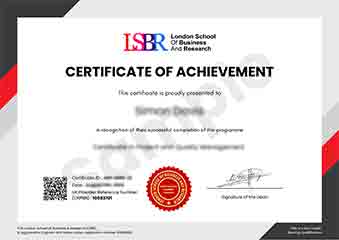
Sample Certificate
Preview the certificate you'll receive upon successful completion of this program.
Get Free Course Info
Enter your details and we'll send you a comprehensive course information pack straight to your inbox.
Employer Sponsored Training
Let your employer invest in your professional development. Request a corporate invoice and get your training funded.
Request Corporate InvoiceWhat People Say About Us
Hear from our students about their experience with the Professional Certificate in Parallel Computing: Multicore Implementation at LSBRX - Executive Education.
James Thompson
United Kingdom"The course provided in-depth material on parallel computing, which significantly enhanced my ability to develop efficient multicore applications. I gained practical skills that have already proven valuable in optimizing performance for complex computational tasks in my current role."
Arjun Patel
India"This course has been incredibly valuable, equipping me with the skills to optimize software for multicore processors, which is directly applicable in my role at a tech firm. It has opened up new opportunities for me to work on high-performance computing projects that were previously out of reach."
Zoe Williams
Australia"The course structure was well-organized, providing a clear path from basic concepts to advanced topics in parallel computing, which greatly enhanced my understanding and practical skills in multicore implementation. The comprehensive content and real-world applications made the learning process engaging and directly applicable to my professional growth."