
Professional Certificate in Reliability Engineering for Software
Elevate your skills in ensuring software reliability with this certificate, offering expertise in risk management, system design, and failure analysis.
Professional Certificate in Reliability Engineering for Software
Programme Overview
The Professional Certificate in Reliability Engineering for Software is designed to equip professionals with the knowledge and skills necessary to ensure system reliability in complex software environments. This program is ideal for software engineers, system architects, and IT professionals who are tasked with designing, maintaining, and optimizing software systems to enhance their reliability and robustness. It also caters to managers and executives looking to integrate reliability best practices into their organizations' software development lifecycle.
Learners will develop a comprehensive understanding of reliability engineering principles, including failure analysis, risk assessment, and reliability modeling. They will gain expertise in applying statistical methods to predict and mitigate software failures, and will learn to implement reliability-centered design and maintenance strategies. The program also covers the integration of reliability into agile and DevOps environments, enabling participants to optimize software delivery while maintaining high reliability standards. Upon completion, learners will be proficient in using tools and techniques to enhance software reliability and will be better prepared to lead or contribute to projects that require a strong focus on reliability.
The career impact of this program is significant, as it prepares professionals to take on leadership roles in software reliability, quality assurance, and system engineering. Graduates can pursue roles such as reliability engineer, software quality assurance specialist, or system reliability manager. The program also enhances career advancement opportunities in organizations that prioritize the reliability and robustness of their software systems, ensuring that professionals are well-equipped to contribute to more resilient and dependable software solutions.
What You'll Learn
The Professional Certificate in Reliability Engineering for Software is designed to equip professionals with the knowledge and skills necessary to ensure the reliability and robustness of complex software systems. This comprehensive program delves into key areas such as software quality assurance, risk management, and failure analysis, providing students with a robust framework for predicting and mitigating software reliability issues.
Graduates of this program are well-prepared to tackle challenges in software development by applying advanced statistical methods and reliability engineering principles. They learn to design systems that can withstand unexpected failures, ensuring high availability and consistent performance. The curriculum includes practical case studies and hands-on exercises that prepare participants to implement reliability engineering practices in real-world scenarios.
This certificate opens doors to a wide range of career opportunities, including roles as software reliability engineers, quality assurance managers, and system reliability analysts. Graduates can work across various industries, from automotive and aviation to healthcare and finance, ensuring that critical software systems operate efficiently and safely. By mastering the latest techniques and tools in software reliability engineering, graduates are poised to drive innovation and enhance the reliability of software solutions, contributing to more dependable and secure technological ecosystems.
Programme Highlights
Industry-Aligned Curriculum
Developed with industry leaders for job-ready skills valued by employers worldwide.
Globally Recognised Certificate
Recognised by employers across 180+ countries as a mark of professional excellence.
Flexible Online Learning
Study at your own pace with lifetime access to all course materials and updates.
Instant Access
Start learning immediately — no application process or waiting period required.
Constantly Updated Content
Stay ahead with the latest industry trends, best practices, and emerging insights.
Career Advancement
87% of graduates report measurable career progression within 6 months of completion.
Topics Covered
- 1. Introduction to Reliability Engineering: Learners will study the basics of reliability engineering and its importance in software development. They will gain foundational knowledge on how to define reliability, measure it, and understand the impact of software reliability on system performance.
- 2. Probability and Statistics in Reliability: This module covers essential probability and statistical concepts used in assessing software reliability. Learners will learn to apply statistical methods to predict and analyze software failures.
- 3. Models for Reliability Analysis: Learners will explore various models used to analyze and predict software reliability, including fault tree analysis and reliability block diagrams. Practical skills in using these models to improve software quality will be developed.
- 4. Software Failure Modes and Effects Analysis (FMEA): This module focuses on identifying potential failure modes and their effects on software systems. Learners will gain skills in conducting FMEA to proactively identify and mitigate risks.
- 5. Reliability Testing and Validation: Learners will study methodologies for testing and validating software reliability, including techniques for stress testing, load testing, and regression testing. Practical skills in designing and executing reliability tests will be emphasized.
- 6. Reliability Metrics and Standards: This module covers the use of reliability metrics and industry standards in assessing software reliability. Learners will learn to apply these metrics to measure and improve software reliability.
- 7. Reliability-Centric Software Development: Learners will delve into the principles of reliability-centric software development, including design for reliability, formal verification, and testing. Practical skills in integrating reliability into the software development lifecycle will be developed.
- 8. Predictive Maintenance and Prognostics: This module covers advanced topics in predicting software component failures and implementing maintenance strategies. Learners will gain skills in using data analytics and machine learning for predictive maintenance.
- 9. Software Reliability in Distributed Systems: Learners will study the unique challenges and solutions for ensuring reliability in distributed software systems. Practical skills in designing and managing reliable distributed systems will be developed.
- 10. Case Studies in Software Reliability: This module involves analyzing real-world case studies of software reliability engineering. Learners will gain insights into practical applications and best practices in addressing reliability challenges in various software environments.
What You Get When You Enroll
Secure checkout • Instant access • Certificate included
Key Facts
For professionals in software engineering
No prior certification required
Understand reliability engineering principles
Analyze software reliability data
Implement reliability improvement strategies
Comply with industry standards
Ready to get started?
Join thousands of professionals who already took the next step. Enroll now and get instant access.
Enroll Now — $149Why This Course
Enhanced Professional Competence: Obtaining a Professional Certificate in Reliability Engineering for Software equips professionals with advanced knowledge and practical skills in software reliability engineering. This includes understanding statistical methods for reliability analysis, learning failure modes and effects analysis (FMEA), and mastering techniques for reliability growth testing. These skills are crucial for designing and maintaining software systems that are robust and reliable, thereby enhancing professional competence.
Improved Career Opportunities: The certification highlights a professional's expertise in a specialized field, making them more attractive to employers. It can lead to career advancements in roles such as reliability engineer, quality assurance specialist, or software development manager. Employers often value candidates who have this certification, as it demonstrates a commitment to excellence and a deep understanding of the latest reliability engineering principles and practices.
Better Risk Management: Reliability engineering focuses on identifying and mitigating risks associated with software failures. Professionals with this certification can apply advanced reliability techniques to predict, prevent, and manage risks more effectively. This not only reduces the likelihood of software failures but also helps in creating more resilient and dependable systems, which is increasingly important in today's digital landscape.
Your Path to Certification
Trusted by Professionals Worldwide
Course Brochure
Download our comprehensive course brochure with all details
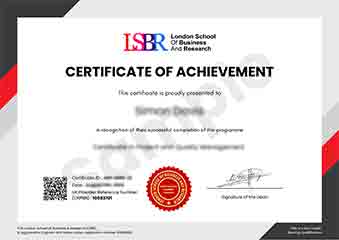
Sample Certificate
Preview the certificate you'll receive upon successful completion of this program.
Get Free Course Info
Enter your details and we'll send you a comprehensive course information pack straight to your inbox.
Employer Sponsored Training
Let your employer invest in your professional development. Request a corporate invoice and get your training funded.
Request Corporate InvoiceWhat People Say About Us
Hear from our students about their experience with the Professional Certificate in Reliability Engineering for Software at LSBRX - Executive Education.
Sophie Brown
United Kingdom"The course content was comprehensive and well-structured, providing a solid foundation in reliability engineering principles that are directly applicable to real-world software development challenges. Gaining insights into failure analysis and risk management has significantly enhanced my ability to ensure software reliability, which is crucial for my career in tech."
Anna Schmidt
Germany"This course has significantly enhanced my ability to apply reliability engineering principles in software development, making my solutions more robust and reliable. It has opened up new career opportunities in tech companies that prioritize software reliability, positioning me as a valuable asset in ensuring product longevity and user satisfaction."
James Thompson
United Kingdom"The course structure is well-organized, providing a clear progression from fundamental concepts to advanced topics in reliability engineering, which significantly enhances my understanding and prepares me for real-world challenges in software development."