
Professional Certificate in Secure DevOps and Continuous Integration
Elevate skills in secure DevOps practices and continuous integration for enhanced software security and efficiency.
Professional Certificate in Secure DevOps and Continuous Integration
Programme Overview
The Professional Certificate in Secure DevOps and Continuous Integration is a comprehensive program designed for software developers, DevOps engineers, and cybersecurity professionals who wish to enhance their skills in integrating security practices throughout the software development lifecycle. This program covers a wide array of topics, including secure coding practices, secure software development lifecycles, container security, and integrating DevOps tools for continuous integration and deployment. Learners will also delve into the latest security testing methodologies, such as static and dynamic application security testing, and explore how to implement secure configuration management.
Participants will develop key skills in secure coding standards, vulnerability assessment, and risk management, which are essential for protecting software against security breaches. Through hands-on labs and real-world case studies, learners will gain expertise in using security frameworks and tools to automate security checks and integrate security into the DevOps pipeline. This will enable them to design, implement, and maintain secure and efficient DevOps environments.
The career impact of this program is significant, as it equips professionals with the knowledge and skills necessary to secure complex software systems and DevOps workflows. Graduates of this program are well-prepared to take on leadership roles in cybersecurity and DevOps, or to specialize in security-focused DevOps positions. Employers will value the ability of these professionals to integrate security into every phase of the software development process, thereby reducing the risk of security vulnerabilities and ensuring compliance with industry standards and regulations.
What You'll Learn
Embark on a transformative journey with our 'Professional Certificate in Secure DevOps and Continuous Integration.' This comprehensive program equips you with the essential skills to build and maintain secure and efficient software development pipelines. You will delve into key areas such as DevOps principles, secure coding practices, automated testing, containerization, and cloud deployment strategies. Through hands-on projects and real-world case studies, you will learn to integrate security into every phase of the development lifecycle, ensuring your applications are robust against threats.
As a graduate, you will be well-prepared to implement CI/CD pipelines that enhance development efficiency while maintaining security standards. You will master tools like Jenkins, Docker, and Kubernetes, and gain expertise in implementing CI/CD practices in various environments, from traditional data centers to cloud platforms. This certificate opens doors to a wide range of career opportunities, including DevSecOps engineer, CI/CD specialist, and security analyst. Whether you are a software developer looking to enhance your skill set or a seasoned IT professional aiming to lead secure DevOps initiatives, this program is your roadmap to success in today's dynamic tech landscape.
Programme Highlights
Industry-Aligned Curriculum
Developed with industry leaders for job-ready skills valued by employers worldwide.
Globally Recognised Certificate
Recognised by employers across 180+ countries as a mark of professional excellence.
Flexible Online Learning
Study at your own pace with lifetime access to all course materials and updates.
Instant Access
Start learning immediately — no application process or waiting period required.
Constantly Updated Content
Stay ahead with the latest industry trends, best practices, and emerging insights.
Career Advancement
87% of graduates report measurable career progression within 6 months of completion.
Topics Covered
- 1. Introduction to DevOps and Security: Learners will study the basics of DevOps and understand the importance of security in the development and deployment processes. They will gain foundational knowledge on integrating security into DevOps practices and the implications of security in a DevOps environment.
- 2. Secure Software Development Lifecycle (SDLC): This module covers the integration of security throughout the SDLC, from planning and requirements gathering to testing and deployment. Learners will learn how to identify security risks at each stage and implement mitigation strategies.
- 3. Infrastructure as Code (IaC) and Security: Learners will explore how to write secure code for infrastructure management using tools like Terraform or CloudFormation. They will understand the importance of version control and automation in securing IaC.
- 4. Continuous Integration (CI) and Continuous Deployment (CD) Security: This module focuses on securing the CI/CD pipeline. Learners will learn how to integrate security checks into CI/CD processes, configure secure builds, and deploy applications securely.
- 5. Container Security: Learners will study containerization security, including best practices for securing Docker images and Kubernetes clusters. They will understand how to perform security assessments and implement security controls in container environments.
- 6. Cloud Security for DevOps: This module covers cloud-specific security challenges and best practices for secure cloud operations. Learners will learn to secure cloud resources, understand cloud security services, and implement secure cloud architectures.
- 7. Threat Modeling and Security Assessments: Learners will learn how to conduct threat modeling and perform security assessments on applications and infrastructure. They will understand different threat modeling techniques and use them to identify, prioritize, and mitigate security risks.
- 8. Secure Configuration Management: This module focuses on secure configuration management practices for both infrastructure and applications. Learners will learn how to manage and secure configurations, understand the importance of secure configuration policies, and implement secure configuration management tools.
- 9. DevOps Security Tools and Practices: Learners will explore various security tools and practices used in DevOps environments. They will learn how to use tools like SAST, DAST, and IAST to secure software development, and understand how to integrate them into CI/CD pipelines.
- 10. Secure DevOps Leadership: In this final module, learners will develop leadership skills for promoting and maintaining a secure DevOps culture. They will learn how to lead secure DevOps initiatives, communicate security risks effectively, and foster a security-aware DevOps team.
What You Get When You Enroll
Secure checkout • Instant access • Certificate included
Key Facts
For IT professionals, security engineers
No specific prerequisites required
Understand secure DevOps practices
Implement continuous integration/continuous deployment
Identify security vulnerabilities in code
Apply secure coding principles
Automate security testing in CI/CD流程
Ready to get started?
Join thousands of professionals who already took the next step. Enroll now and get instant access.
Enroll Now — $149Why This Course
Enhanced Cybersecurity Skills: Acquiring a Professional Certificate in Secure DevOps and Continuous Integration equips professionals with advanced knowledge in integrating security practices into the DevOps lifecycle. This reduces vulnerabilities and ensures compliance with industry security standards, making teams more adept at preventing cyber threats.
Improved Continuous Integration and Deployment: The certificate offers in-depth training on CI/CD pipelines, enabling professionals to automate testing and deployment processes efficiently. This leads to faster time-to-market for software products, enhances code quality, and minimizes human error, thus improving overall project outcomes.
Competitive Advantage in the Job Market: As organizations increasingly demand professionals who can manage secure and efficient CI/CD processes, obtaining this certificate can significantly boost one's resume. It demonstrates a commitment to professional development and a deep understanding of current industry practices, making job seekers more attractive to potential employers.
Your Path to Certification
Trusted by Professionals Worldwide
Course Brochure
Download our comprehensive course brochure with all details
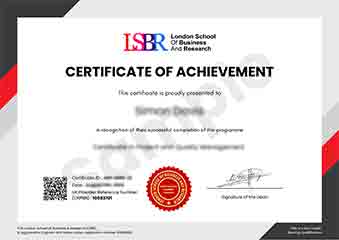
Sample Certificate
Preview the certificate you'll receive upon successful completion of this program.
Get Free Course Info
Enter your details and we'll send you a comprehensive course information pack straight to your inbox.
Employer Sponsored Training
Let your employer invest in your professional development. Request a corporate invoice and get your training funded.
Request Corporate InvoiceWhat People Say About Us
Hear from our students about their experience with the Professional Certificate in Secure DevOps and Continuous Integration at LSBRX - Executive Education.
Sophie Brown
United Kingdom"The course content is comprehensive and deeply dives into the practical aspects of secure DevOps and continuous integration, equipping me with the skills to implement secure pipelines in real-world scenarios. Gaining hands-on experience with tools and techniques has significantly enhanced my ability to secure software development processes, which is invaluable for my career in cybersecurity."
Wei Ming Tan
Singapore"This course has been incredibly valuable, equipping me with the latest tools and practices in secure DevOps and continuous integration, which are directly applicable in the industry. It has not only enhanced my technical skills but also opened up new career opportunities in secure software development."
Hans Weber
Germany"The course structure is well-organized, providing a clear path from foundational concepts to advanced topics in secure DevOps and continuous integration, which has greatly enhanced my understanding and practical skills in the field. The comprehensive content and real-world applications have been invaluable for my professional growth, offering insights that I can directly apply in my work."